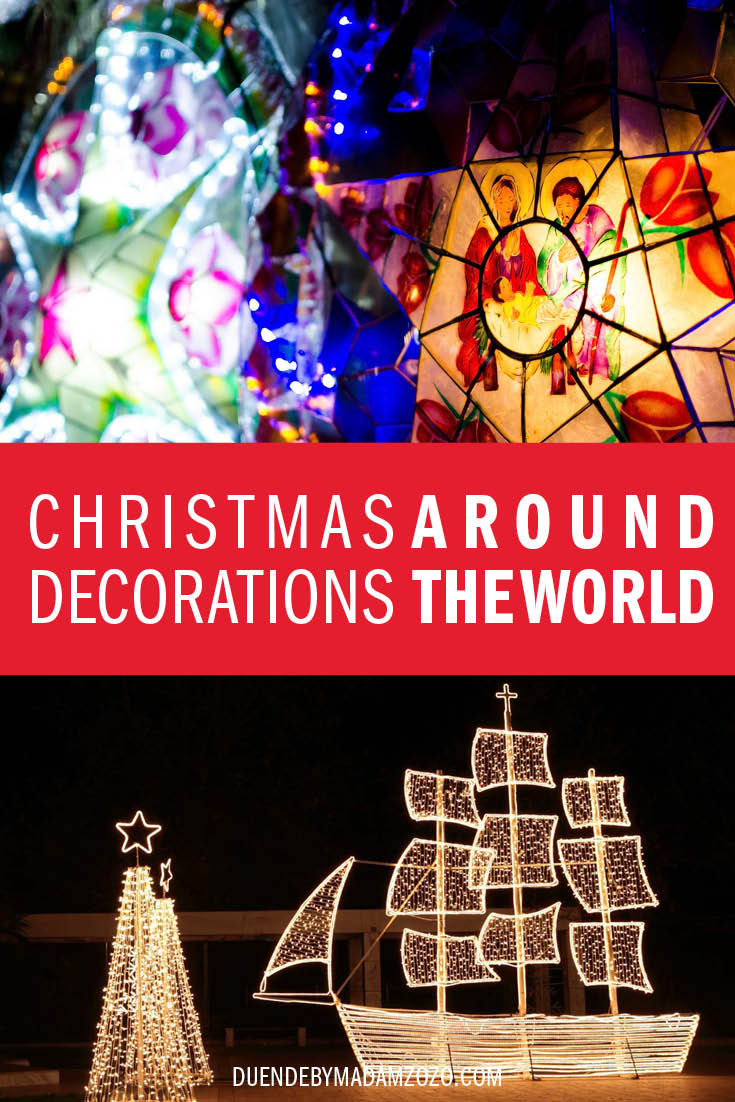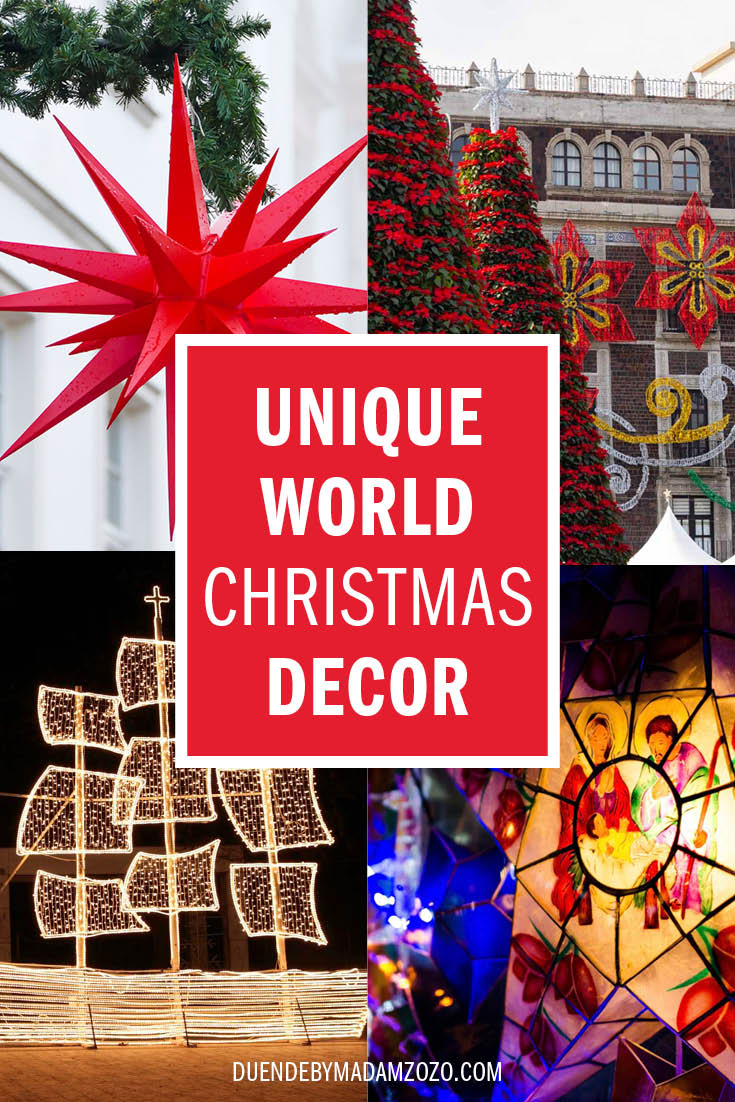
Looking to add a unique twist to your holiday decor? Around the world, different cultures celebrate Christmas with distinctive and meaningful decorations. From Finland’s delicate straw ornaments to the Philippines’ vibrant star-shaped lanterns, these Christmas decorations from around the world bring history, folklore, and festive spirit into homes worldwide. Get inspired by these incredible holiday traditions!
Disclosure: I may earn compensation from the purchase of any product or service linked on this website, at no extra cost to you. I only link to products I use and love, therefore feel comfortable recommending.
Himmeli: Finland’s Traditional Straw Christmas Decorations
Himmeli are those trendy geometric ornaments or mobiles that have become all the rage in recent years. They originated in Finland and are traditionally suspended over the dining table during the harvest turned holiday season.
The name, himmeli, has Norse roots and translates to sky or heaven. Traditionally, himmeli would have been made from straw or reeds. It was thought that the larger and more complex the himmeli, the more abundant the crop for the coming year would be.
Modern himmeli are often made from brass pipes, plywood or even drinking straws. Learn how to make your own with this tutorial.
Ukraine’s Sparkly Sprider Webs & Folklore
Ukrainian folklore tells of a pine sapling appearing through the floor of a poor widow’s hut. When Christmas arrived, the tree had grown tall but the penniless family could not afford to decorate it. They went to bed on Christmas Eve dejected. On Christmas morning they found the tree covered in cobwebs that had turned silver and gold in the sunlight and the family lived prosperously from then on.
This lovely Christmas story is remembered each year by Ukrainians who decorated their trees with decorations resembling spiders and spider webs in gold or silver colours. They are often made from beads, tinsel, glitter or metallic paper.

Moravian Stars: Germany’s 26-point geometry lesson
The Moravian star began as a school project and became a popular Christmas decoration. It all began with a geometry class during the 1830s at the Moravian Boy’s School in Niesky, Germany. Referred to as Herrnhuter Stern in German, the stars were adopted by the Moravian Church, a Protestant denomination, as a representation of God and symbol of the star of Bethlehem. The stars are used to decorate between Advent (four Sundays prior to Christmas) through to Epiphany (early to mid-January depending if you’re following the Gregorian or Julian calendar).
Moravian missionaries took the stars with them around the world spreading them as far as the West Indies, Greenland, Suriname and India. Moravian stars are the official Christmas street decoration of Winston-Salem, North Carolina which was originally settled by members of the Moravian church. A giant 31-foot star also illuminates the tower of Wake Forest University Baptist Medical Center in the town.
There are various forms of Moravian stars, but the traditional style has 26 points. Usually, the 26th point is removed to allow for hanging/mounting. In technical geometric terms, this makes it an “augmented rhombicuboctahedron”– try saying that after a few eggnogs.

Julekurver: Denmark’s Woven Heart Christmas Decorations
A traditional Danish Christmas decoration is a heart-shaped paper basket called julekurver. These were typically hung around the home and contained holiday treats.
It is said that popular children’s story author, Hans Christian Andersen, may have begun making these heart-shaped ornaments in the 1860s though they weren’t intended specifically for Christmas. The oldest julekurver is preserved at the National Museum of Denmark and dates back to 1873.
It took some four decades before they became widespread and homemade julekurver are still popular today. You can find a basic tutorial for making the simplest of woven Danish hearts in the video below. There are patterns for more complex designs available all over the internet including these.

Parol: Starry, starry lanterns from the Philippines
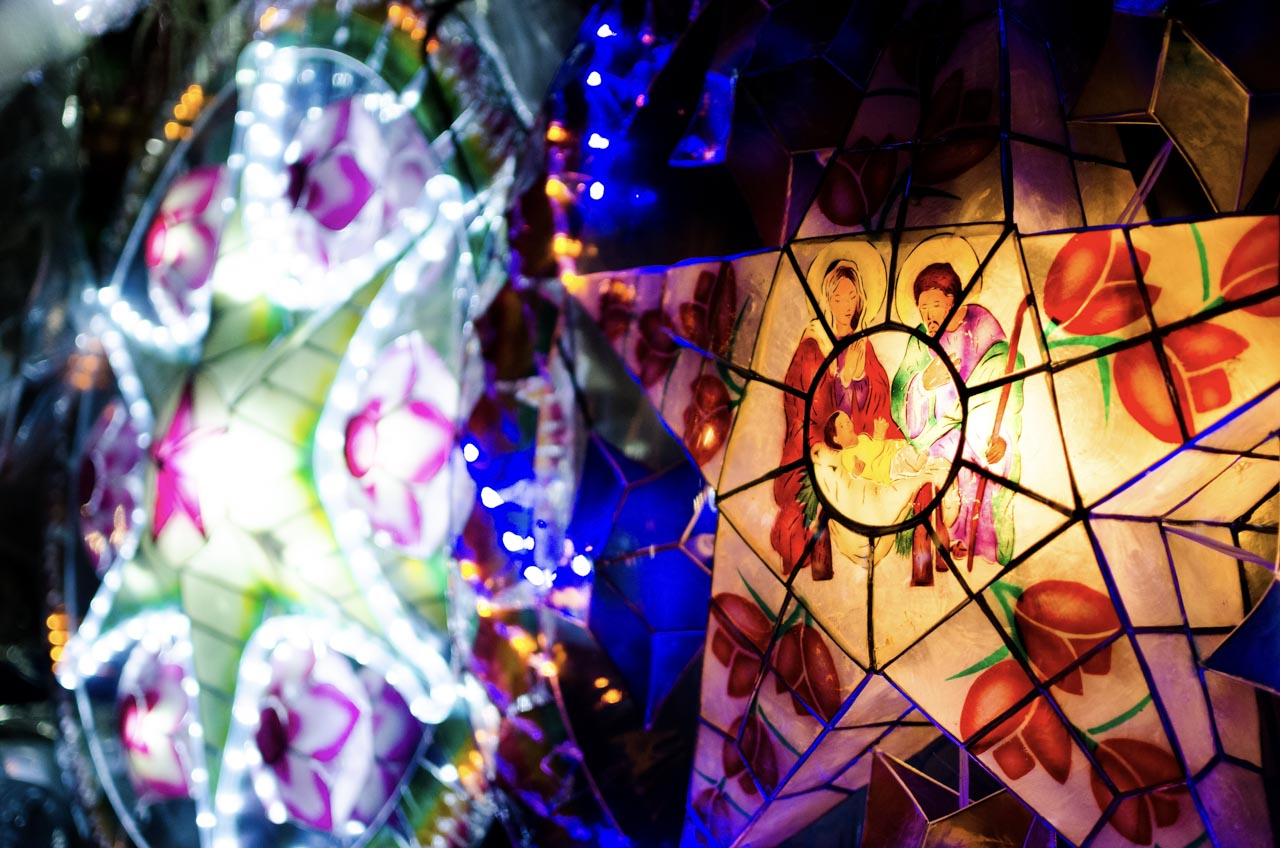
Continuing our journey through Christmas decorations from around the world, we arrive in the Southeast Asian nation of the Philippines. Here parol (also spelt parul), star-shaped lanterns are used to decorate homes, businesses and city streets during the festive period.
Like the poinsettia, the parol’s five-point star formation is symbolic of the Star of Bethlehem. The decorations date back to Spanish colonial times when they were simple rectangular shapes made with bamboo and rice paper, illuminated with candles or oil lamps.
Parols evolved into more complex shapes by the 1830s but did not become the typical, star-shape with two tassels that we know today, until the American colonial period in the late 19th and early 20th centuries.
Modern parols are made of various materials including capiz which comes from the shell of a mollusk common to the waters of Southeast Asia. There are also supercharged, kaleidoscopic versions of parols produced in the Pampanga province of the Philippines and named parul sampernandu.
Pampanga hosts a Giant Lantern Festival annually from mid-December through to the first week of January. Barangays, small administrative districts, enter parol designs into a spectacular competition, showcasing incredible creativity.
Kapampangas are also petitioning to have their craft added to the UNESCO List of Intangible Cultural Heritage, and therefore preserved.
Pretty poinsettias: Mexico’s Vibrant Christmas Flower
The poinsettia is a native plant of Mexico and Guatemala. The red leaves (not flowers) have been associated with Christmas since the 16th century when, according to legend, a poor young girl did not have a gift for the baby Jesus at Christmas service. An angel instructed her to pick weeds and place them in front of the church where the weeds blossomed into vivid red poinsettias.
From that time on, poinsettias became known as Flowers of the Holy Night (Flores de Noche Buena in Spanish), although again they are technically leaves not flowers. The shape of the leaves is said to represent the Star of Bethlehem which led the Wise Men to Jesus. The name poinsettia comes from the name of an American ambassador to Mexico who was responsible for sending the first cuttings back to the US in the early 1800s.

Furoshiki: Japan’s Elegant Gift-Wrapping Tradition
Ok, this isn’t technically a Christmas decoration, but I think we can all agree that the beautiful Japanese gift wrapping, using cloths known as furoshiki, looks trés chic under the tree and it’s eco-friendly! Koreans have a similar technique and they call their wrapping cloth bojagi.
Traditional gift wrapping with a single piece of cloth began in Japan more than 1200 years ago originally to keep valuables for Emporers during the Nara Period (710-784). Later, in the Muromachi Period (1338-1573), Shogun Ashikaga built a great bathhouse in his residence. Feudal lords were invited to enjoy the steam bath and used silk cloths adorned with their family crest to keep their belongings separate while they bathed. This is how furoshiki got it’s modern name: “furo” meaning “bath” and “shiki” meaning “to spread”. From the Edo Period, use of furoshiki to carry items of all types became widespread.
You can source your cloth from so many places, from traditional Japanese furoshiki or bojagi cloths and recycled sari silks bought online, to scrap fabric from around the home including scarves, tea towels or even hankies for very small gifts. The following tutorial demonstrates the most basic furoshiki tie for a rectangular object, but the Japanese have mastered this technique for gifts of all shapes including cylinders, bottles, spheres etc.

Julbock: The Gift Giving Goat
Another unique festive decoration from around the world is the Scandinavian Julbock (Yule Goat). This Christmas decoration popular in Northern Europe, is often made from straw and tied with red ribbons. Originating from ancient pagan traditions, it later became associated with Christmas gift-bringing before Santa Claus became popular.
The best place to experience this tradition is in Gävle, Sweden, where a giant 13-metre goat is erected in the Castle Square each December. This giant version often falls victim to mischievous pranksters who try to burn it down, despite it being illegal and perpetrators charged with arson!
Karavakia: Illuminated Christmas Boats of Greece
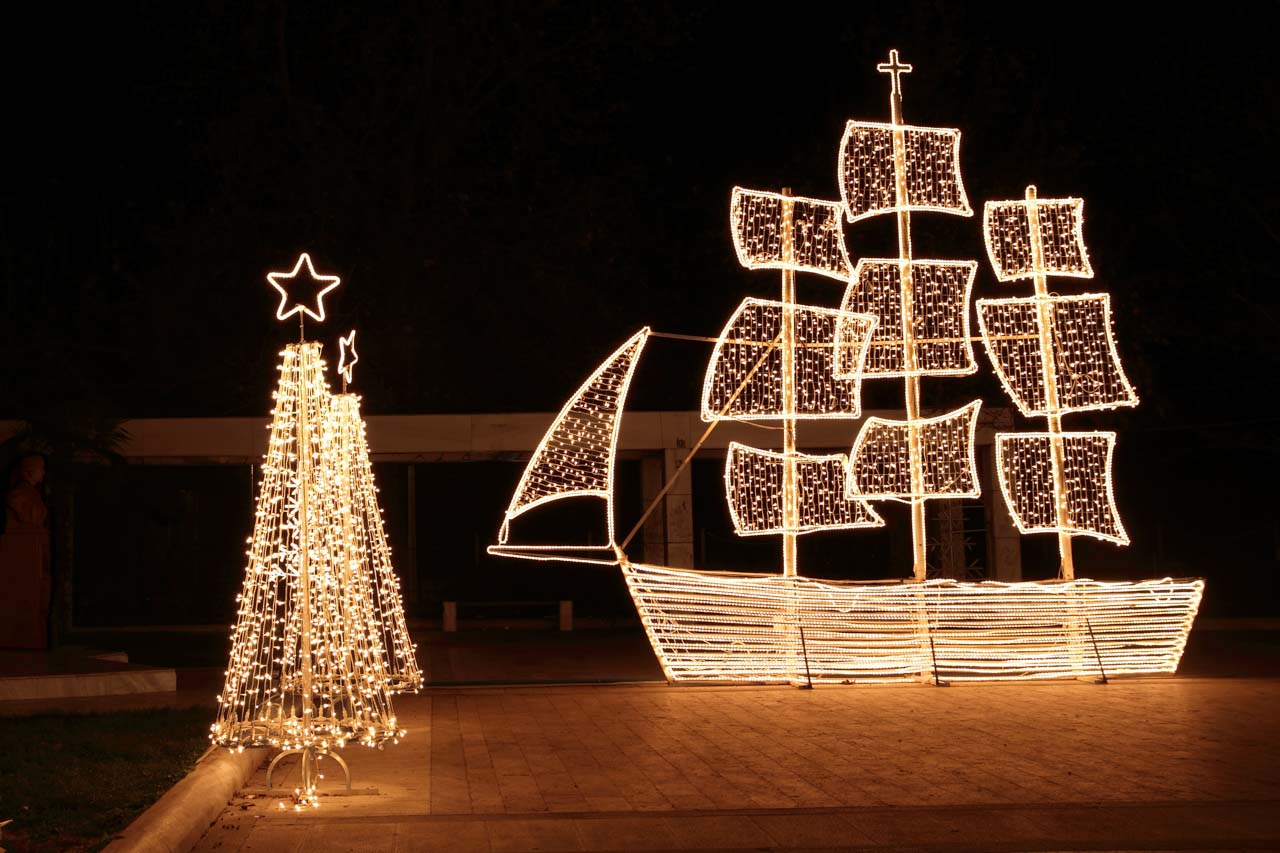
Rather than Christmas trees, many Greek families decorate wooden boats (Karavakia) with lights and ornaments. This tradition honours Greece’s deep maritime history and Saint Nicholas, the patron saint of sailors. It was also a way to honour sailors who were often separated from their families for extended periods while trying to earn a living.
If you’re in Greece during Christmas, many oceanside communities construct a Karavakia in the town square. One of the best places to see this is in coastal cities like Thessaloniki and the Greek islands.
Caga Tió: Pooping Logs of Catalonia
In Catalonia, Spain, children decorate a wooden log with a painted face and a red hat called Caga Tió or Tió de Nadal (Pooping Log). They “feed” it leading up to Christmas and then, on Christmas Eve, beat it with sticks to make it “poop” sweets and gifts—a quirky Catalonian tradition! Like many Christmas customs, this one probably evolved from a pagan Winter Solstice practice.
You can find traditional Caga Tió logs at Christmas markets, such as Fira de Santa Llúcia in Barcelona.

What do you think of these different Christmas decorations from around the world? Did they give you some inspiration and ideas? Do you have a unique style of decoration from your home country? Please share it with us in the comments. For more holiday traditions around the world, see these November and December festivities.
Peace, love & inspiring travel,
Madam ZoZo
Pin this for later…