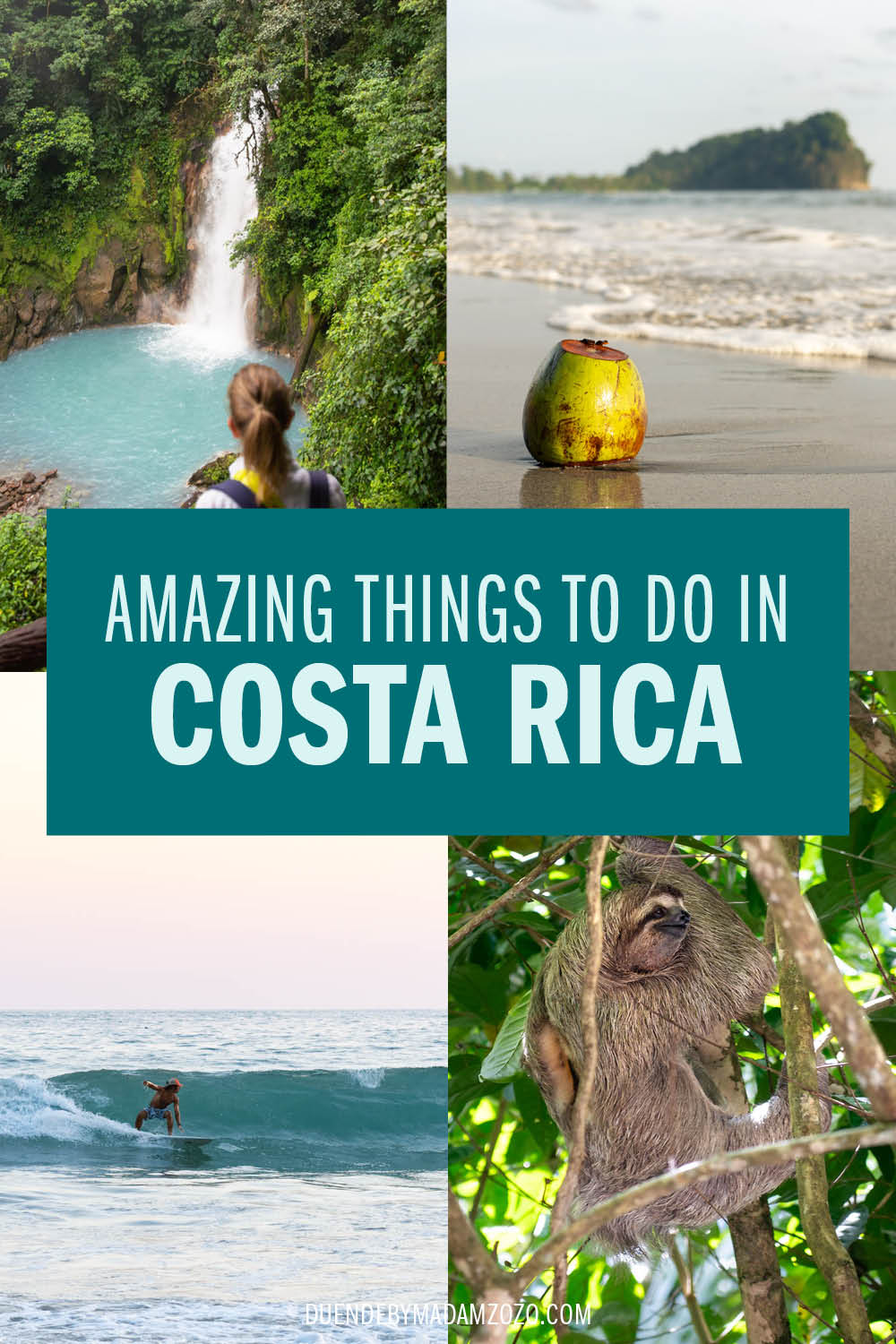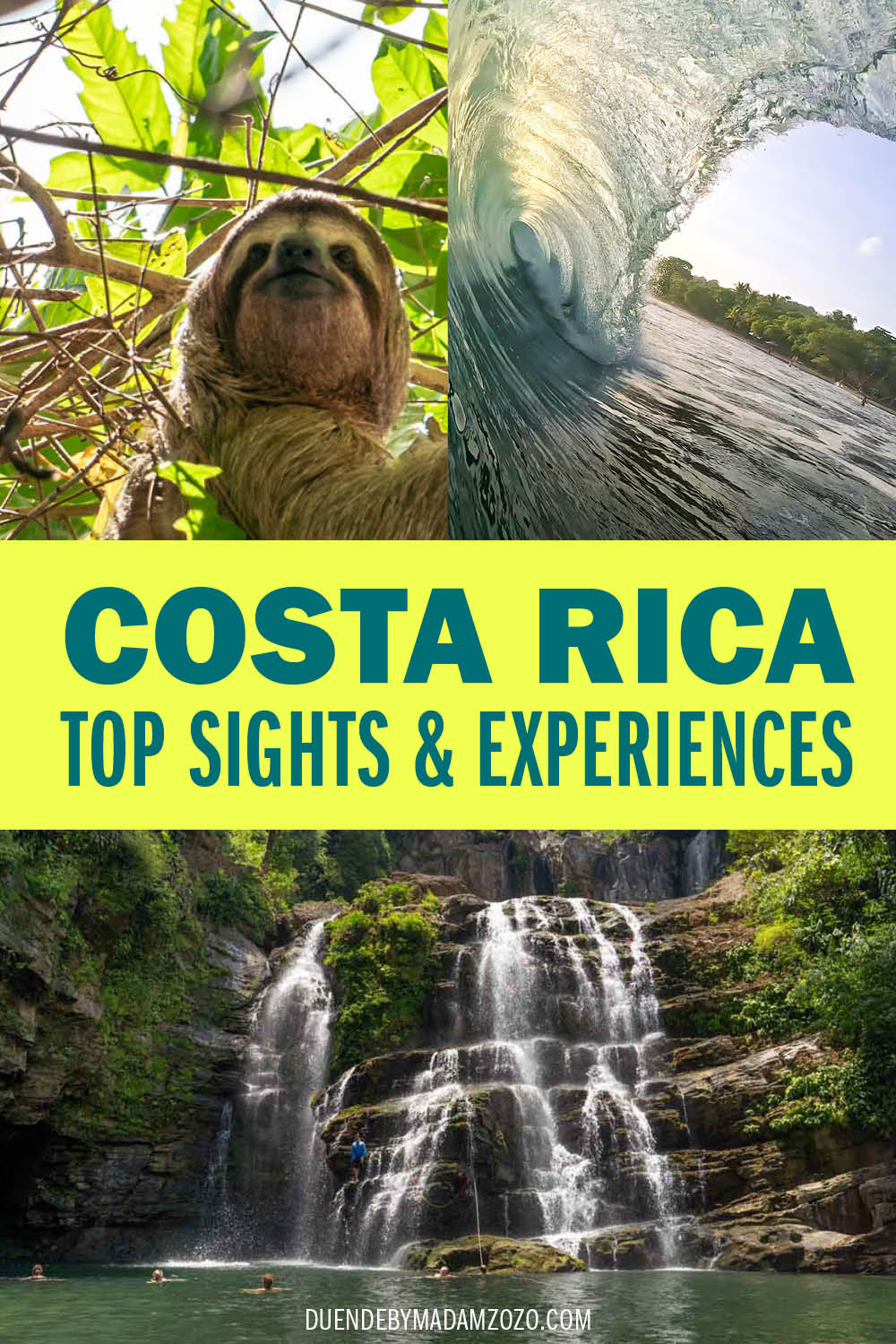
Costa Rica offers a broad array of outdoor activities for adrenaline junkies and nature enthusiasts. Zip Lining through the treetops, tubing scenic river rapids, wildlife spotting and waterfall chasing. These are just a few of the experiences waiting to be discovered in this tropical destination. Check out these top things to do in Costa Rica, and tell us you don’t want to visit. Plus, I’ve linked all these wonderful sights and experiences together in a 10-day itinerary that’s waiting for you to say yes!
Table of contents
What Costa Rica is known for? Why you should visit
Costa Rica is renowned for its diverse landscapes, wildlife watching and adventure activities. From beaches to cloud forest, over 25% of the country’s land and 30% of its marine territory is conserved within National Parks and preservations. These can be enjoyed through various outdoor pursuits from ziplining to surfing, hiking to rafting. There are dozens of ways to take in the varied natural beauty of Costa Rica.
Costa Rica is not the cheapest travel destination in Central America. It’s not what you would call “off the beaten path” either. Although there are some parts more explored than others, just do some extra research (which you clearly already are, since you’re reading this) to find less visited destinations or alternative ways to experience the popular ones. What Costa Rica does offer is a relatively safe and politically stable place for your tropical getaway. Costa Rica has also chosen to make environmental preservation and eco-tourism its specialty and that’s something we can get behind.
Best Time to Visit: Dry Season vs. Green Season
Broadly, the best time to visit Costa Rica is during the May, June, and November shoulder months for lower prices, thinner crowds and decent weather on the Pacific side (keep reading for notes on the Caribbean side).
Costa Rica really only has two seasons: Dry and Wet (aka Green) season. Dry season runs roughly mid-December to April. This is peak tourist time, with the most reliable sunshine and the best beach weather, especially in Guanacaste. If beach days and guaranteed sun are the priority, lean dry season, especially December–April. Though it’s important to note that the Caribbean coast doesn’t follow the same weather pattern as the Pacific side. It can rain unpredictably in any month, so don’t plan a Caribbean coast trip with the same “dry season” expectations.
Green season (marketers rebranded the rainy season, and for good reason) runs May to November. Expect clear mornings and rain-heavy afternoons rather than all-day downpours. During Green season, landscapes are lush, crowds are sparse and prices are noticeably lower on tours and lodging. If zip lining, rappelling, or cloud forest hiking are the priority, green season is generally fine. Trails and canopy tours run year-round, and the cloud forest is… well cloudy, pretty much regardless of season.
Tip: There’s a secret third season! July and August get a short dry spell locals call the veranillo, or “little summer.”
The Best Things to do in Costa Rica
Walk though a cloud forest
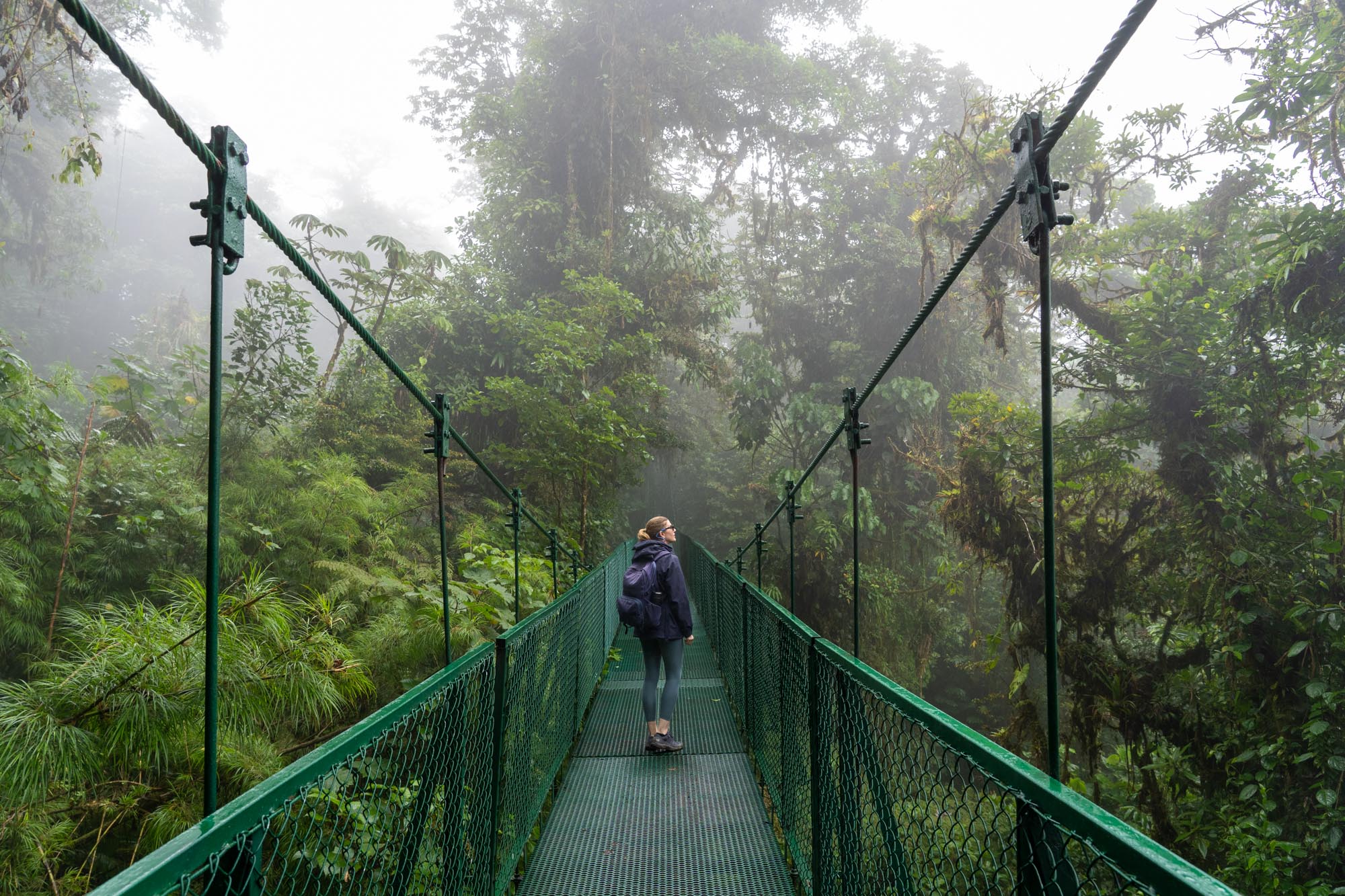
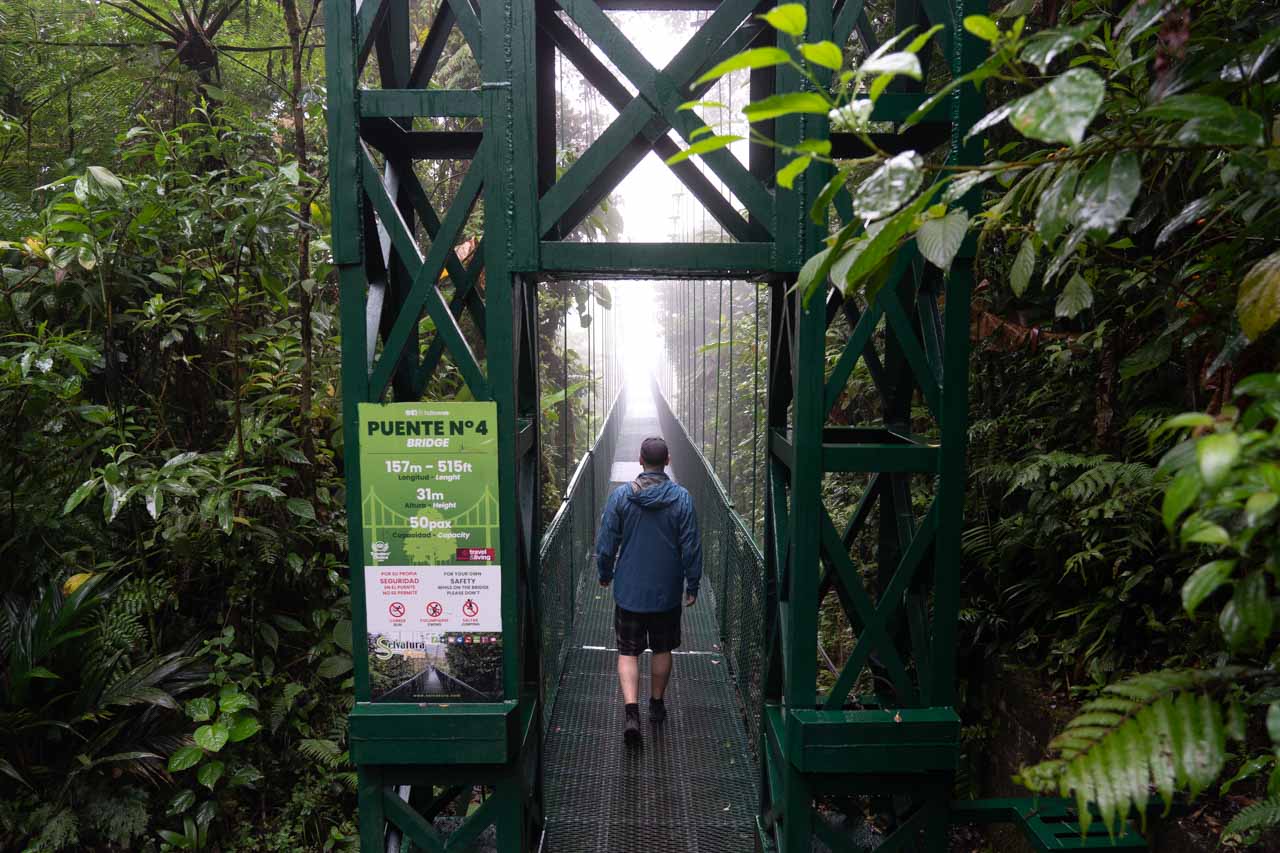
One of the best things to do in Costa Rica is to explore the enchanting Cloud Forests. Conservation areas like Monteverde Cloud Forest Reserve and Santa Elena Cloud Forest Reserve provide a unique opportunity to immerse yourself in the misty canopies, diverse flora and spot elusive wildlife. See the forests from top to bottom (or bottom to top) via tree-top bridges and guided hikes through the cloud-shrouded trails. We highly recommend a guide if you want to experience the full biodiversity of these extraordinary ecosystems as there’s so much hidden in plain sight.
Watch for wildlife
For wildlife enthusiasts, Costa Rica is a paradise teeming with unique and fascinating creatures. Waking up to find a pair of toucans in a tree outside my accommodation, was a highlight of the trip! Wildlife preservations such as the Bogarin Trail in La Fortuna, offer the chance to spot iconic species such as sloths, monkeys, toucans and frogs in their natural habitats. Guides are worth paying, because spotting critters can be more difficult than it sounds. Guides are familiar with the forests and wildlife habits. They know where to look for the best chances of seeing something cool.
National parks like Manuel Antonio and Tortuguero are renowned for their rich biodiversity, making them ideal destinations for wildlife enthusiasts and nature lovers. Birdwatchers in particular, will appreciate the range of feathered fauna you’ll find no matter where you go in Costa Rica.
Tip: Be quiet. It was amazing how much more wildlife I saw when I ditched my chatty co-traveller and walked silently through the forest alone. That’s how I spotted a flock of Great Curassow drying themselves in Arenal Volcano National Park, only a few feet off the trail, and crossed paths with several coatis.


Be a beach babe
Costa Rica’s beaches are another must-visit attraction, perfect for sun-seekers and water sports enthusiasts. The Pacific and Caribbean coasts offer different coastal-scapes and weather, depending on your preferred vibe. We explored the Pacific coastline around Manuel Antonio which is closest coastline to the capital of San Jose and more developed than the Caribbean coast.
The shore is lined in soft, dark volcanic sands and skirted with lush rainforest alive with monkeys, iguanas, sloths and birds. The mangrove-fringed river deltas harbour crocodiles and more wildlife for spotting. While the Pacific swell is favoured by surfers from beginner to experienced.
The Caribbean beaches are known for your more traditionally paradisiacal white sands and clear waters. However, this coastline is more time consuming to access and less developed. This is somewhere you can expect quieter beaches and a more rustic experience.


Explore geothermal giants
No visit to Costa Rica is complete without exploring its impressive volcanoes. The three most accessible volcanos are: Arenal, Poas and Tenorio. Each offers something a little different and are a constant reminder of Costa Rica’s position on the Pacific Ring of Fire!
Tenorio Volcano in the country’s north, is the central feature of Parque Nacional Volcán Tenorio. However, its mostly the distinctive blue Rio Celeste that people go to see. The waterway is perfect for tubing, rafting and waterfall chasing.
Arenal Volcano is the namesake of the Parque Nacional Volcán Arenal known for its young, 1968-era lava flows and geothermal hot springs.
Poas Volcano is part of Costa Rica’s UNESCO-listed biosphere: Cordillera Volcánica Central. The volcano has a reputation for constant activity and a bright blue, super acidic crater lake. The unique geological spectacle is surrounded by accessible cloud forests.


Tour a coffee plantation
Coffee newbs and aficionados alike will delight in the opportunity to visit Costa Rica’s renowned coffee plantations. There’s a range of farms that offer immersive tours where visitors can learn about the coffee-making process, from bean to cup. Sampling freshly brewed coffee, exploring the lush plantations, and gaining insights into the art of coffee cultivation make for a rich and aromatic experience.
Tours are offered from bigger commercialised operations such as Don Juan and Café Britt, as well as smaller family-run estates like Café Monteverde. Some tours go deeper into the coffee making process than others. Read the reviews to match yourself with a tour that meets your level of interest.
We love learning about coffee! We’ve spent a night on a plantation in Colombia, sampled Kopi Luwak in Indonesia and Vietnam, and visited a Blue Mountain plantation in Jamaica. So, we enjoy an informative experience that goes a little deeper into coffee production, but not too technical. El Pueblo, a small family-owned operation in the Monteverde region was a great choice for us. The coffee was good too!


Go tubing down the Rio Celeste
When the Quebrada Agria meets the Rio Buenavista in Tenorio Volcano National Park, something incredible happens. The two clear streams converge into a milky blue river, the Rio Celeste. Local lore says when the gods were painting the sky, they dipped their paintbrushes in the Celeste River, turning it blue. The scientific explanation has more to do with differing pH levels and suspended volcanic minerals that scatter that light.
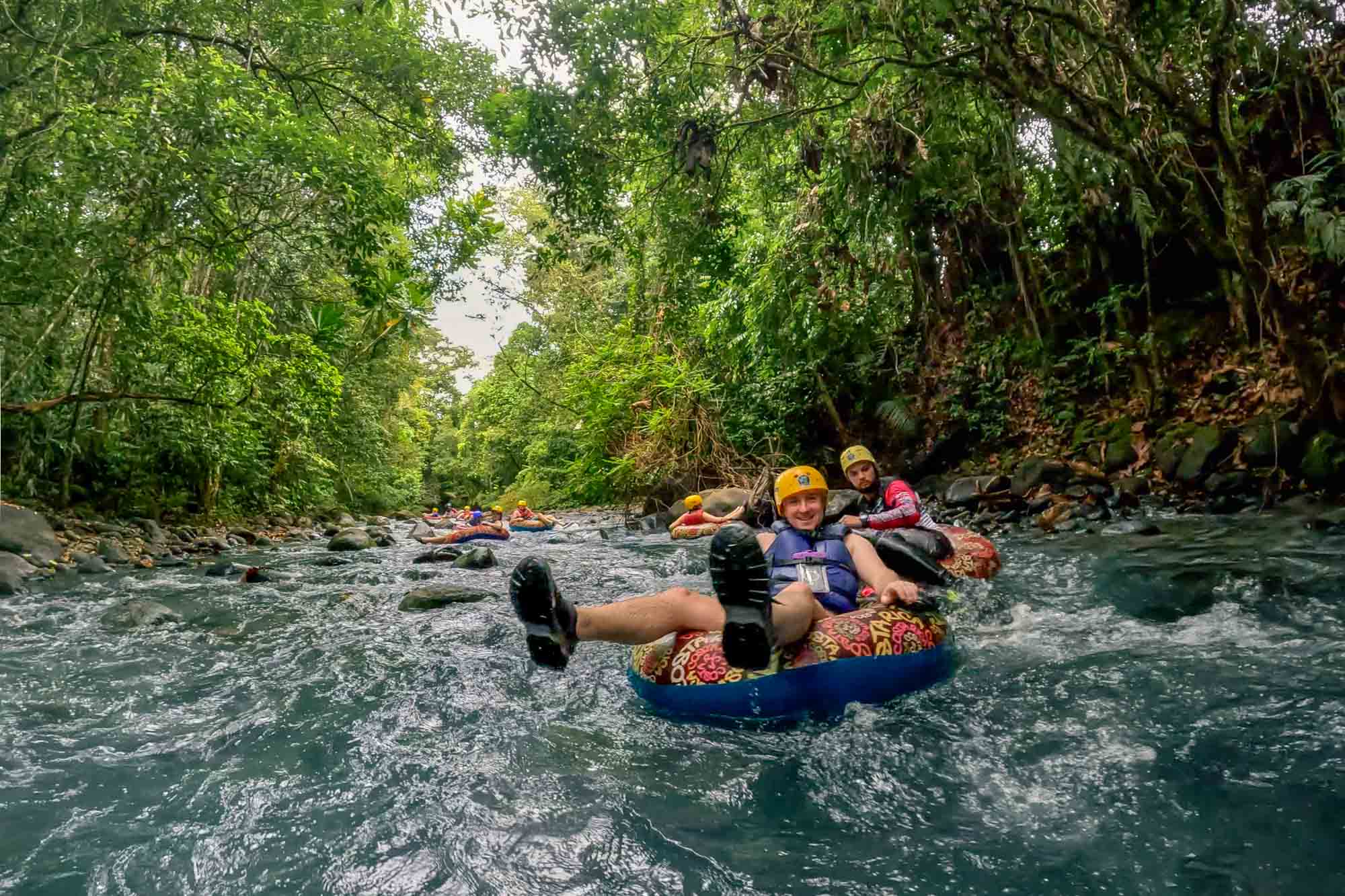
Whichever version you prefer, tubing this stunning blue river is one of the best things to do in Costa Rica. There are various adventure companies that will provide you the gear and escort you down the rapids. This is quite an active excursion, rather than a leisurely float, but you’ll love every minute.
Tip: Take a short-ish hike in nearby Tenorio Volcano National Park to experience a beautiful blue waterfall, and visit the mystical spot where the two streams meet and transform in colour! Note, there is no swimming allowed in the National Park, but there are plenty of private properties with access to different parts of the Rio Celeste, where you can go for a dip.


Get hands-on at a cacao farm
For a sweet adventure, cacao farms in Costa Rica provide a delicious journey into the world of chocolate production. Learning about the cultivation of cacao, the harvesting process, and the transformation of beans into delectable chocolate treats is a sensory delight for visitors of all ages. Chocolate tasting sessions and hands-on workshops offer a fun and educational experience that appeals to chocolate lovers and curious minds alike.
Pro tip: Coffee and cacao grow at different elevations. If you want to visit a farm and not just participate in a tasting, you’ll need to go to the appropriate altitude. Visit a coffee farm in the highlands around Santa Elena (Monteverde). You’ll find cacao plantations at lower elevations like the La Fortuna and Guatuso areas. You can even spend a night on a cacao farm, like we did!


Rappel a waterfall
Rappelling down a waterfall-filled canyon is a thrilling way to experience the natural beauty of Costa Rica, especially if its your first time. Canyoning is an active way to take in some of Costa Rica’s stunning, less-visited cascades. With guidance and equipment provided by licensed professionals, even someone who has never rappelled before (like me) can give it a go. You’ll need a healthy relationship with heights, an able body and an adventurous spirit. Various canyoning companies around Arenal Volcano National Park run excursions close to La Fortuna. If you don’t have your own transport, make sure you book a tour that includes a transfer from your accommodation or a central meeting spot, to the tour starting point.
Zip through the canopy
There are lots of great zip lining opportunities in Costa Rica. Cruising through the clouds above the country’s iconic cloud forests is an experience that’s difficult to beat. Enjoy the mist on your cheeks and as you fly like a toucan through the treetops. It provides the perfect balance of feeling adventuresome without a lot of daring or physical fitness required.
It’s important to note that zip lining is great for a macro view of the rainforests and Costa Rican landscapes. However, you will be moving too quickly for wildlife spotting and really immersing yourself in the ecosystem. It is not a substitute for a hike or canopy bridge walk which allow you to move at a pace more conducive to taking in the flora and fauna.


Costa Rica has abundant experiences for travellers seeking adventure, nature, and relaxation. There is something for everyone in this vibrant Central American destination. You will never run out of places to explore and things to do in Costa Rica! To help you get ready for all the fun and adventure, I also created this comprehensive packing list with a guide to dressing for all the above activities.
Peace, love & pura vida,
Madam ZoZo
Pin for later…