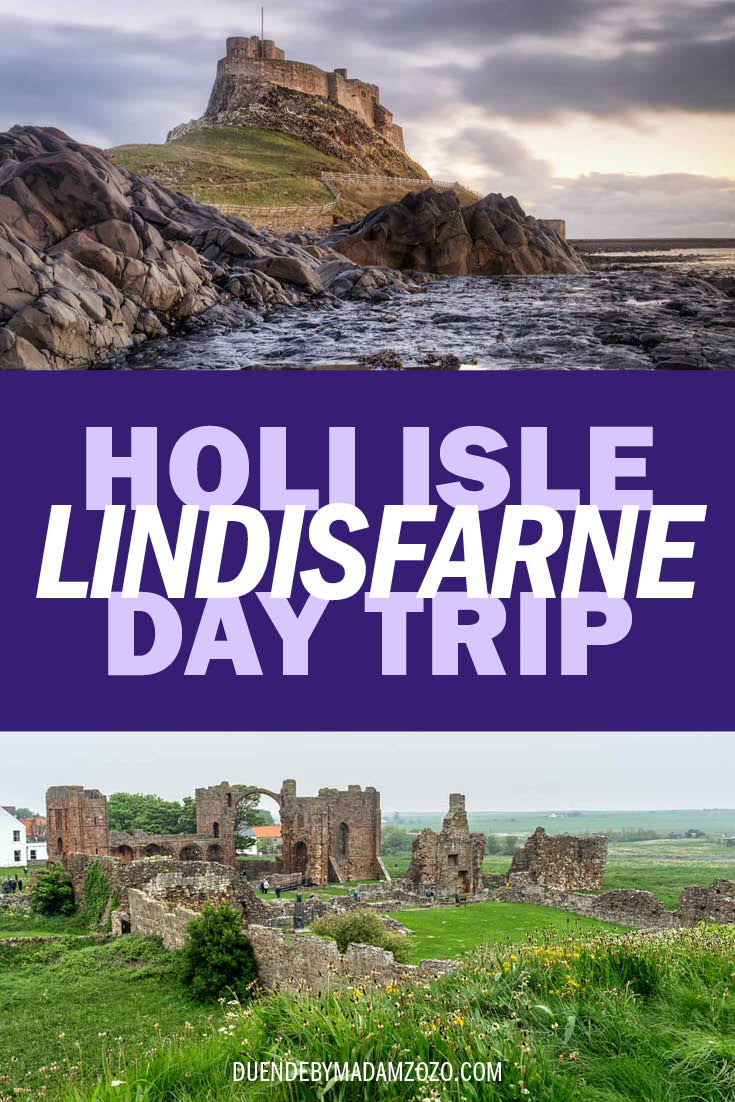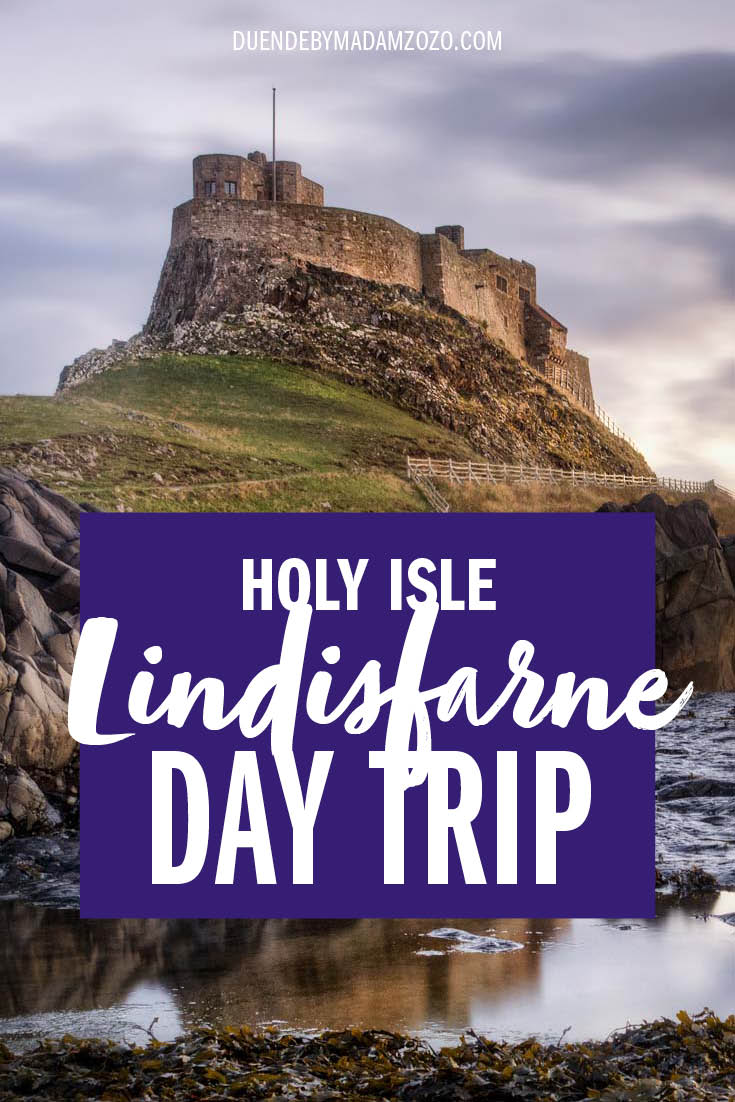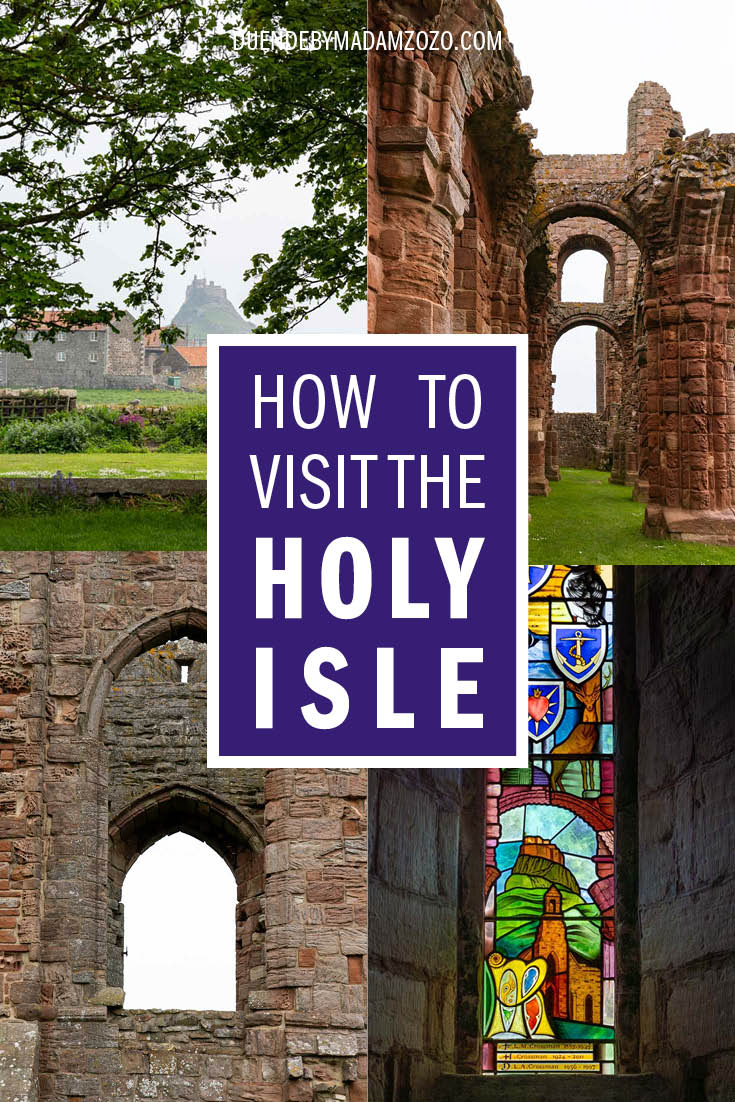
Just off the far northeast coast of England, Lindisfarne—the Holy Isle, is a fascinating tidal island with a rich history and natural beauty. The Holy Isle is renowned for its role in early English Christianity and a location of pilgrimage. From saints to viking raids, this captivating islet has been drawing curious visitors for centuries. Discover the picturesque archaeological ruins and natural beauty of this offshore community.
I think there’s something innately alluring about a place that can only be accessed at the whim of the elements—like Mont St Michel, in France. A place you can only go with the express permission of mother nature and the very act of going there can be an adventure! Places like Lindisfarne Island do make the adage about “the journey, not the destination” true. Add to that a tumultuous history and panoramic views of a windswept coastline, you have yourself a great day out or overnight venture.
Table of contents
A brief history of the Holy Isle
Irish monks were first granted the island by Northumbrian King, Oswald in 635-CE to establish a monastery. Less than a century later, a monk named Cuthbert reformed the monks’ and eventually became a bishop. After his passing and burial on the island, Cuthbert’s body was exhumed years later and found without the expected decay. From then he was treated as a saint and Lindisfarne became a pilgrimage site.
The famous Lindisfarne Gospels, is an illuminated manuscript created around 700-CE on the Isle. The Medieval text was hand calligraphed and ornately illustrated in a spectacular style that is of historical, cultural and artistic significance. The treasure itself is now housed in the British Library in London.
A violent, viking raid in 793-CE broke the tranquility and peace of the Lindisfarne. The terrified monks took St Cuthbert’s remains, their relics and manuscripts, retreating to Norham. They eventually settled in Durnham, further south and built a church inside the comforting ruins of an old Roman fort. The Relics of St Cuthbert can be found in Durham Cathedral today.
Following the Norman Conquest, relative peace and security were largely restored to Lindisfarne. The monks briefly returned to the Holy Isle to establish a new cell. A church was built where St Cuthbert’s body was thought to have been buried and people continued to make a pilgrimage to the sacred spot.
As King Henry VIII kicked off the English Reformation, the priory was closed in 1537. As disputes over the border between Scotland and England raged, the buildings were absorbed into the Crown’s defensive strategy. Lindisfarne Castle was also garrisoned right up to 1893, with roles in the Scottish Wards, Civil Wars and the Jacobite Rebellion.
Lindisfarne first became a tourist attraction in the 18th-century. Artists and antique collectors visited the Holy Island where the church remained largely intact. It wasn’t until later in the 1820s when it began to collapse. 19th-century excavations and consolidations attempted to preserve the site.
Lindisfarne also had a part in the 19th-century lime industry. Lime was quarried and burnt at the nearby Castle Point Lime Kilns which are still visible today.
Lindisfarne Castle was purchased by Edward Hudson, the editor of Country Life magazine, in 1901. He had it renovated into a holiday home with a summer-flowering garden.
Where is Lindisfarne Island?
Lindisfarne is located in the far northeast corner of England, within modern Northumberland County and a region historically known as Northumbria. Just a short way south of the border with Scotland, the Holy Isle lies 3-km (2-mi) off the coast in the North Sea. The island is tidal, and can only be reached at low tide when the causeway and mud flats that connect it with the mainland are exposed.


How to get to Lindisfarne?
Depending on your point of origin, its likely you’ll have to take at least two modes of transport to get out to Lindisfarne. There are bus tours that will take you from the nearest major centres of Newcastle and Edinburgh. But if you prepare the self-guided approach, here is what you need to know about getting to Lindisfarne.
Plane
The nearest international airports to Lindisfarne are in Newcastle-Upon-Tyne (NCL) about 96-km (60-mi) drive away and Edinburgh (EDI) roughly 128-km (80-mi) by road.
Train
The closest train station to Lindisfarne is in the town of Berwick-upon-Tweed. The LNER (London North Eastern Railway) Edinburgh Line connects Berwick with London Kings Cross Station in the south and Edinburgh Waverley Station in the north among other locations. The CrossCountry rail network connects Berwick with Edinburgh, Glasgow, Newcastle, York, Birmingham, Oxford and other locations throughout England and Scotland.
Bus
From Berwick-upon-Tweed Station, public bus route 477 will take you out to the Island. The frequency of the service is seasonal and tide dependent. See timetables and maps here.
There are also regional buses, routes X15 and X18, which will get you from Berwick or Newcastle to Beal. You will still have to transfer to the local 477 to finish your trip by public transport.
Car
Private vehicle is the most convenient way to reach the Holy Island, as long as you are well prepared in advance with regards to the conditions. All traffic to the Island—car, bus, bike and foot—is funnelled through the crossroads at the tiny town of Beal. In peak times, you may find travel is slow.
The Causeway is a single lane for much of the way and there may be pedestrians walking down the side. The tide can also leave debris on the road – take care, drive slowly, be vigilant and be respectful of others.
Note, parking is not permitted in the village. There are two designated parking lots for visitors. These are paid car parks that offer rates for 3, 4, 5, 24, 48 and 72-hours. The parking is managed by Northumberland County Council and there are payment machines in the lot that accept both cash and card.
There are a limited number of accessible car parks, as well as EV charging stations. These are located withing the coach and parking on Green Lane. The charging stations are operated via the evcharge.online app. Save time by downloading the app and registering in advance.
Lindisfarne Causeway
Conditions on Lindisfarne Causeway are determined by a number of factors. The biggest and most consistent one, is the tides. Twice a day, the North Sea sweeps across the Causeway rendering it impassable. Get safe crossing times to plan your trip from the Northumberland County Council. You must plan around the tides to avoid getting stranded on the island, or putting yourself in danger by getting caught in a rising tide.
IMPORTANT: These predictions are based on long-term tidal forecasts, alone. They do not take into account other short-forecast conditions such as storms, that may affect access to Lindisfarne. You will need to keep a close watch on local conditions right up to and including the day of your visit. The Met Office, England’s official meteorological organization, is the best place to get reliable weather forecasts for Lindisfarne.
Local authorities recommend only crossing the causeway on an outgoing tide, never an incoming one. Any crossings should be complete before the halfway tide.
Walking – the pilgrim’s route
You can walk across the sand and mud flats from the mainland end of the Causeway to the village on Lindisfarne. There is a marked route of about 5-km (3-mi) and that takes about 2-hours. For safety, you must go prepared or accompanied by a local guide. We didn’t walk to the Holy Isle because as we’d just finished up hiking the 135-km (84-mi) of Hadrian’s Wall and needed a rest. If you are planning to do a self-guided walk, here are a few tips:
- Always cross during daylight.
- Complete your crossing before the half-tide. In other words, set out 1.5 to 2-hours before low tide. Never cross on a rising tide.
- This means you can only complete the walk in one direction each tide cycle. Make plans to spend the high tide on the Island and return on the outgoing tide.
- The safe crossing times published by Northumberland County Council (linked above) are only for the Causeway, and the safe crossing window is shorter for walkers.
- Barefoot or waterproof boots are the best footwear.
- You absolutely will get muddy.
- There’s no shade, so make sure you have plenty of water, sunscreen and a hat, especially in the summer months.
What to see on the island of Lindisfarne
When exploring the island of Lindisfarne, visitors are treated to a wealth of historical and cultural treasures. Here are the must-sees:
Lindisfarne Castle
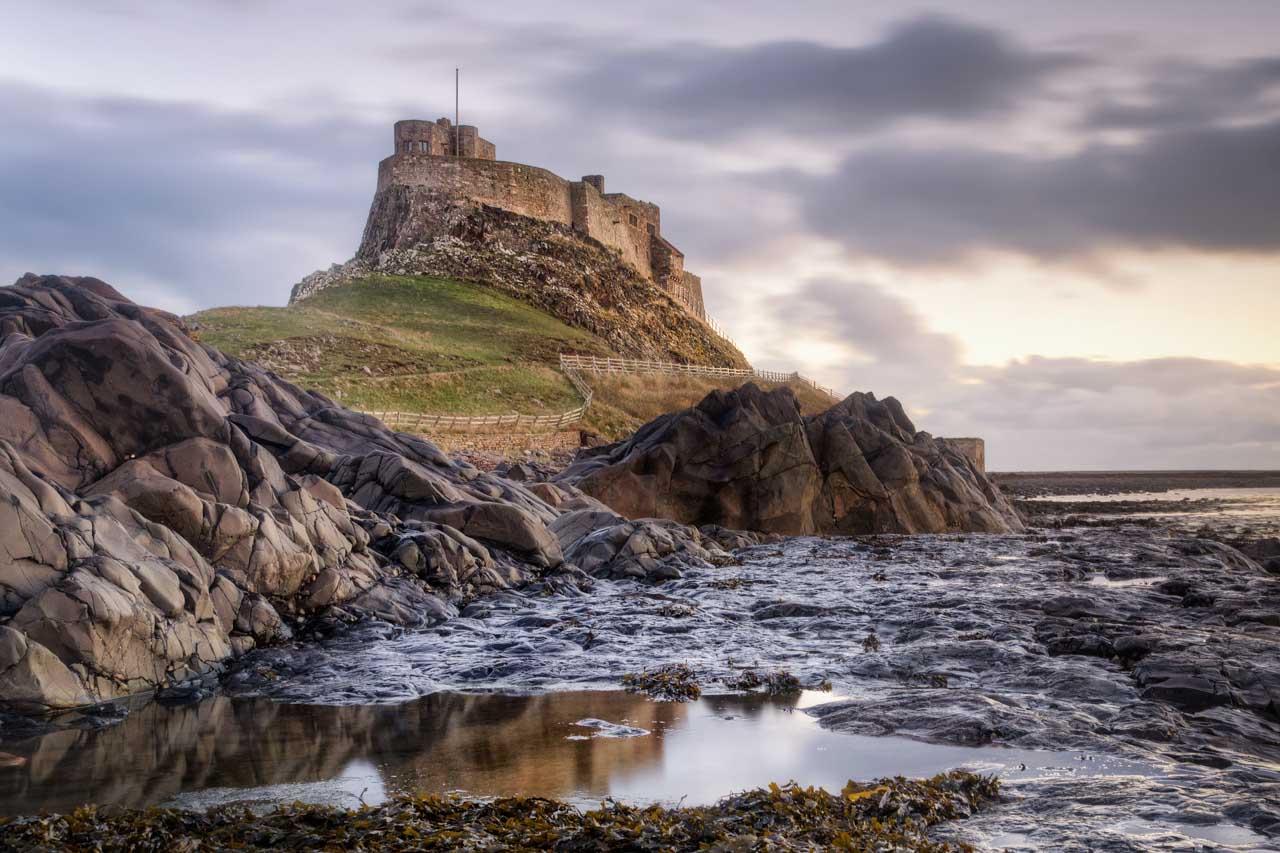
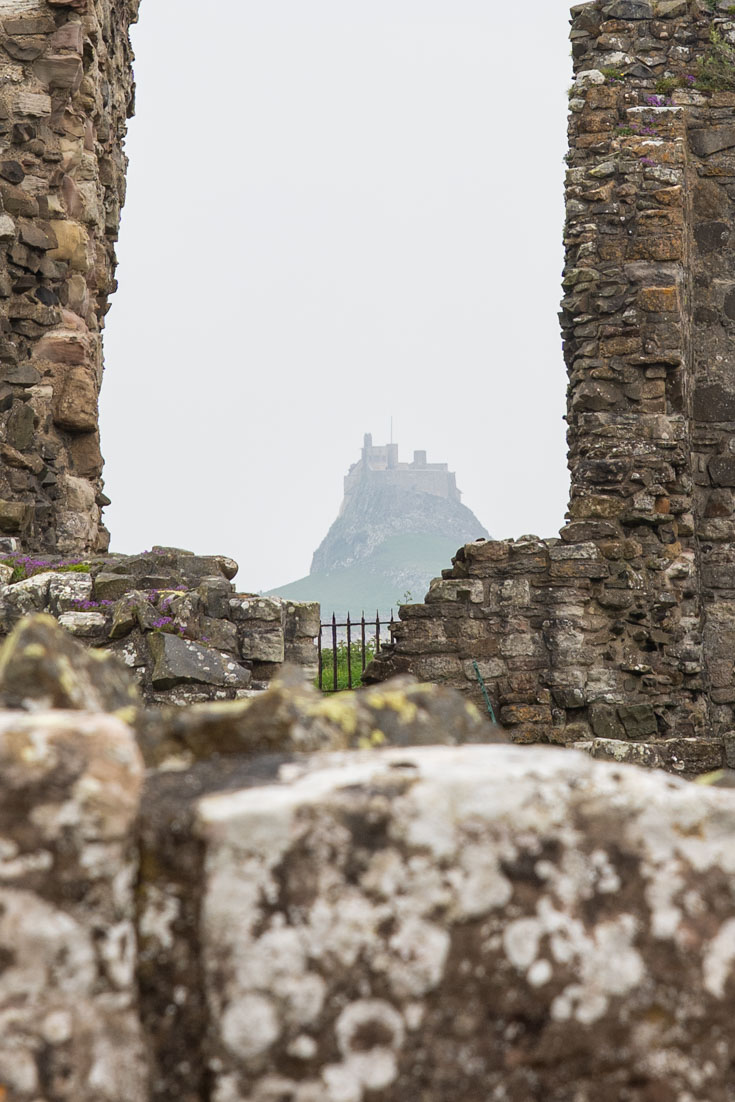
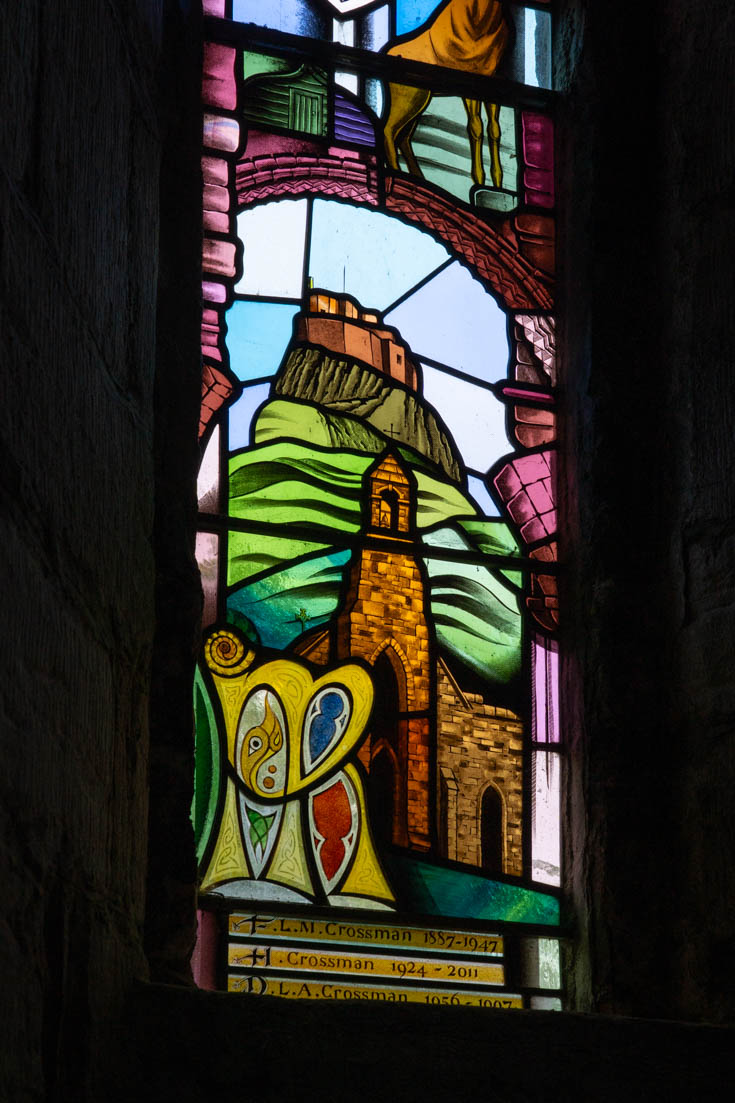
This 16th-century fortress is perched atop a rocky outcrop with stunning views of the surrounding landscape and coastline. See inside the Castle, wander it’s garden and explore the limestone kilns. Lindisfarne Castle is managed by the National Trust, see their website for seasonal opening hours and admission prices
Lindisfarne Priory
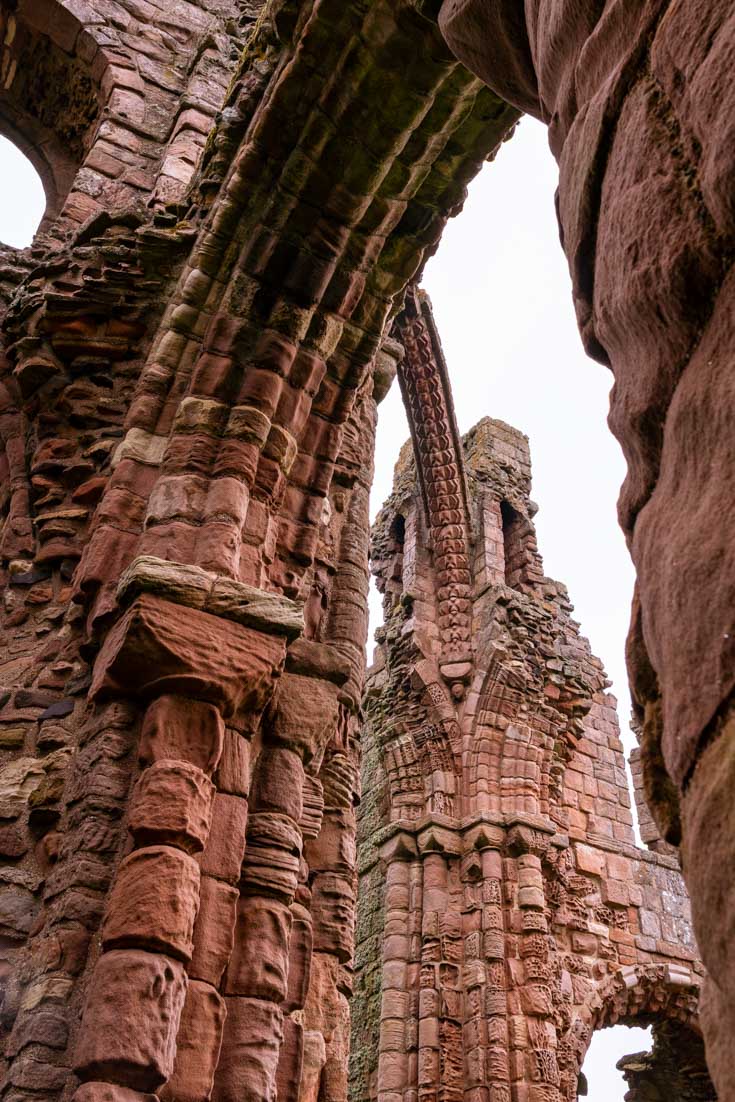
A ruined monastery that dates back to the 7th-century. This ancient religious site, with its hauntingly beautiful ruins and serene atmosphere, is a testament to the island’s spiritual significance and historical importance. Visitors can wander through the remains of the priory, marvel at its intricate stonework, and soak in the peaceful ambiance that pervades the site. Lindisfarne Priory is managed by English Heritage. Check seasonal opening hours on their website, and pre-purchase tickets for a 10% discount.
More things to do on Lindisfarne, the Holy Isle
If you have more time and good weather, explore some more of the Island’s natural beauty. The Holy Isle offers coastal walks, sandy beaches and a birdwatching.
Go walking
There are walks of various lengths from the 1.7-km (1-mi) Upper Foreshore Loop to the 8.5-km (5-mi) North Shore and Castle Circuit.
Tip: If you’re visiting between February and October, keep your eyes peeled for grey seals off the coast of Lindisfarne.
Birdwatching
Lindisfarne is a premiere birdwatching site with several spots for observing different species. See Birding Places for more details on the best locations and species.
If the weather is bad, check out Window on Wild for a sheltered spot to watch the birds over the marshlands on the outskirts of town.
The Snook
The Snook is the panhandle of the Island and is part of the Lindisfarne Nature Reserve. You’ll drive the length of The Snook when you cross from the mainland via the Causeway. There is a poorly-maintained, dirt side road that you take for a closer look at the dunes and salt marshes. Plus, you’ll find two historic buildings: Snook Tower and Snook House, dating back to the mid-19th-century. These buildings have also have featured as locations for the TV crime series, Vera.
Things to do near Lindisfarne
If you want to spend some more time in the region, see these things to do on the mainland, near Lindisfarne.
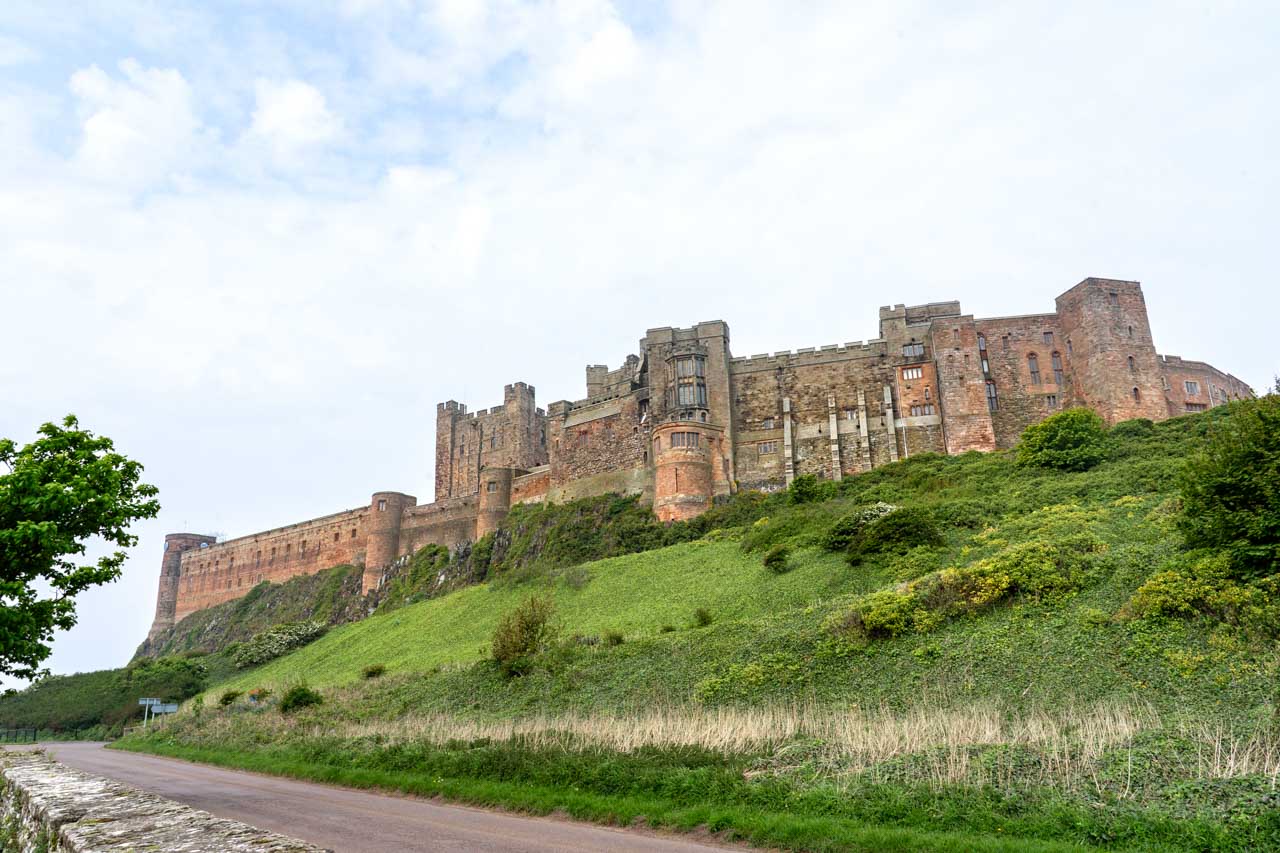
- Storm Bamburgh Castle
- Hike Hadrian’s Wall
- See St Cuthbert’s relics in Durnham Cathedral
- Explore Northumberland Coast National Landscape
- Walk St Cuthbert’s Way
- Discover Northumberland’s Lighthouses
- Stargaze from Northumberland National Park
- Cycle the 565-km (350-mi) of bike routes across Northumberland
Overnight stays on Lindisfarne
For those looking to extend their stay on Lindisfarne beyond a day trip, overnight accommodations are available on the island. However, it’s important to note that generally, the cost of accommodation on the Island tends to be high compared to mainland due to its remote location, seasonality and limited availability. It’s advisable to book well in advance, especially during peak tourist seasons, to secure your preferred lodging.
Visitors can choose from a few quaint bed and breakfast establishments, self-contained cottages, or even camping sites for a more adventurous experience. These accommodations offer a unique opportunity to immerse oneself in the peaceful ambiance of the Holy Isle after the day-trippers have departed.
Despite the limited options, staying overnight on Lindisfarne provides a magical experience, allowing visitors to witness the island’s serene beauty after the day-trippers have left, offering a unique perspective on this historic and spiritual destination.
Last tips for visiting Lindisfarne
- Don’t forget to check Island access conditions when planning your visit.
- Opening hours for key sights on Lindisfarne, such as Lindisfarne Castle and the Lindisfarne Priory, vary throughout the year. It’s advisable to check the specific opening times in advance to ensure you can explore these attractions during your visit.
- Consider seasonal variations in visitor numbers and weather conditions when planning your trip to make the most of your experience on the Holy Isle.
- Some sights offer discounts for purchasing your ticket in advance, online. Lindisfarne Priory is managed by English Heritage, so you may use your annual pass there.
- Public bathrooms are located in the accessible parking lot on Green Lane, and are the only public toilets on the island. Make sure you use the bathrooms in cafes and tea rooms, whenever you are making a purchase!
- If you find yourself in a dangerous or emergency situation while crossing the Causeway, seek out one of the refuge boxes and dial 999.
Exploring Lindisfarne Island, it is evident that this sacred destination offers a unique blend of history, spirituality and natural beauty. From its rich historical significance as a center of early Christianity to the tranquil landscapes that captivate visitors, Lindisfarne remains a place of profound serenity and reflection.
Peace, love & inspiring travels,
Madam ZoZo