
“It was the journey,” says art historian, Hikmet Sidney Loe in an interview for the Utah Museum of Fine Arts. Anyone who has ever travelled to see Robert Smithson’s Spiral Jetty in Utah cannot deny experiencing this same sentiment. This intriguing, Land Art on the rose-tinted North Arm of Great Salt Lake, may start out as the endgame for a short road trip out of Salt Lake City. However, the journey to get there forms the greater part of its beauty!
The earthen sculpture will draw you through breathtaking desert landscapes. It will lead you past a moment in American history not often considered. Even a panoramic photo doesn’t capture the broad, desolate vistas nor the eerie silence of its arid surroundings. You’ll just have to make the trip and experience it for yourself! Continue reading to learn everything you need to know for a visit to Spiral Jetty in Utah.
Table of contents
What is Spiral Jetty?
Robert Smithson’s Spiral Jetty is an example of Land Art, a movement that burgeoned in the US during the 1960s. The movement was otherwise known as Earth Art, Environmental Art or Ephemeral Art. It was a rebellion for some artists and more of an environmental statement for others.
Artists wanted to break out of commercial art scene of galleries and museums. They wanted to create pieces that drew attention to the natural environment–artworks that were an all-encompassing experience for the viewer. Artists of the movement created largescale outdoor works. They used materials found in the environment where the art was set. Thus, they redefined the idea of “working in plein air”.
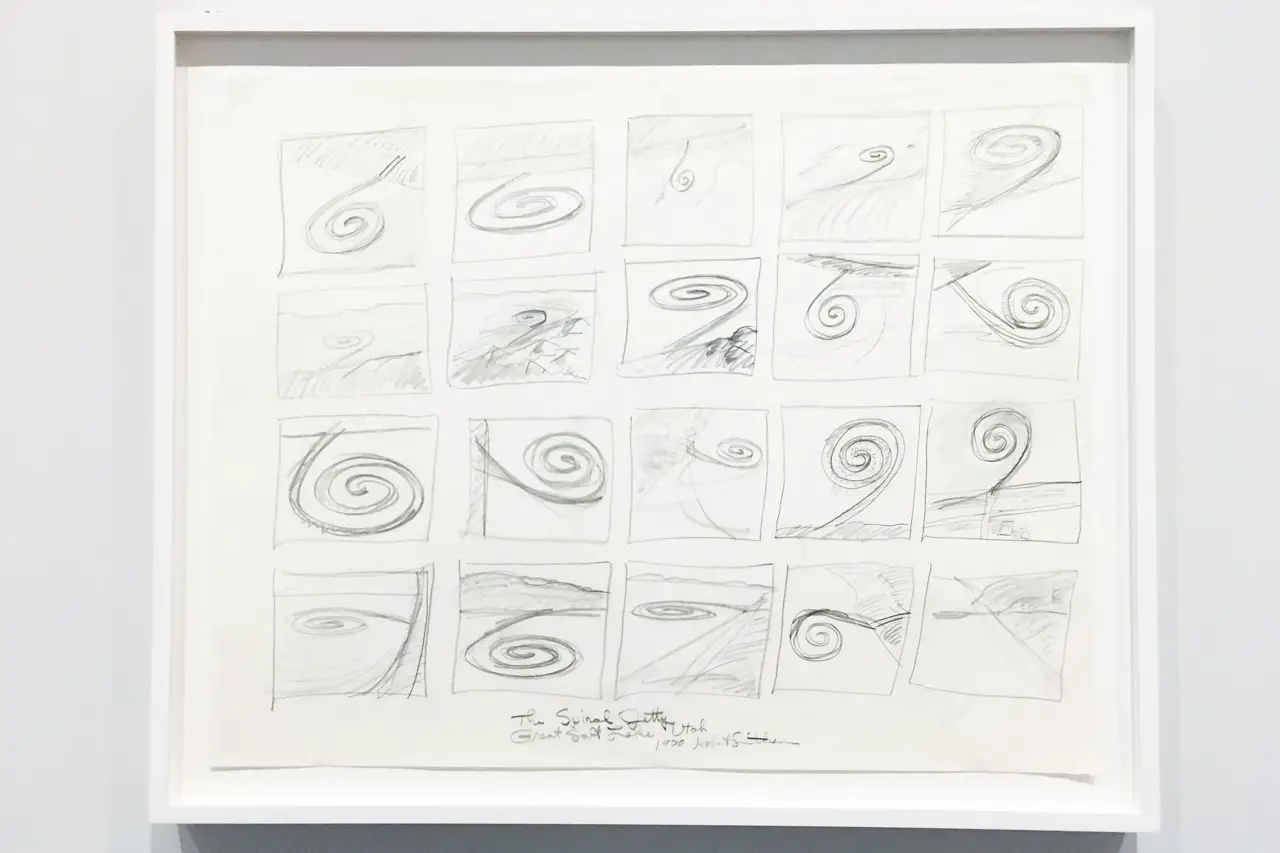
Spiral Jetty is an earthwork sculpture created in 1970 by renowned Land Artist, Robert Smithson. The basalt groin extends off a seemingly deserted northern shore of Great Salt Lake at Rozel Point. The location is a couple of hours drive from downtown Salt Lake City.
Not long after the work was completed Spiral Jetty was submerged by rising water levels. It remained that way for the best part of thirty years. In 2002, the onset of a drought revealed the piece again.
Unfortunately, Robert Smithson died in a plane crash surveying another potential artwork site shortly after Spiral Jetty was completed. He never got to witness the Jetty’s reappearance but the dynamic nature of the artwork was part of his concept from the beginning.
Directions to Spiral Jetty
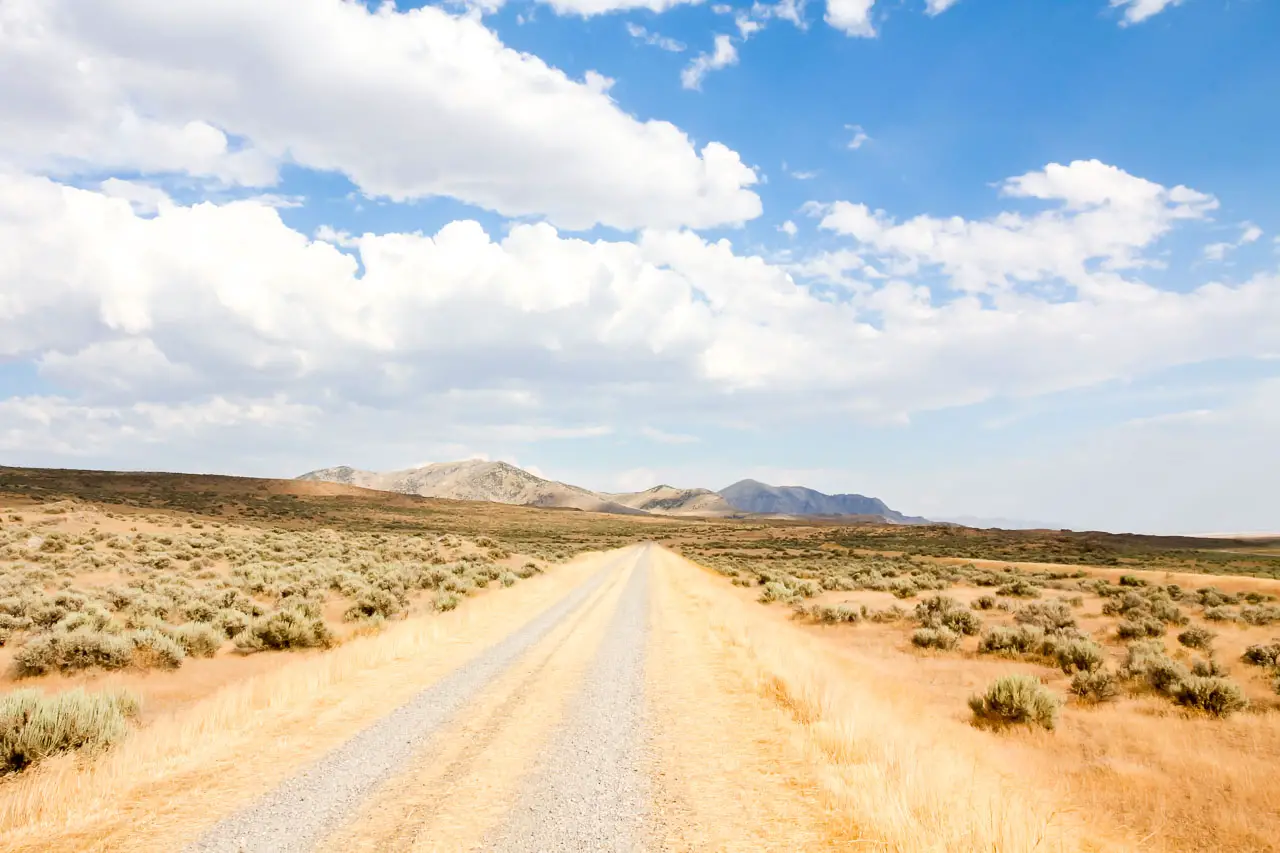
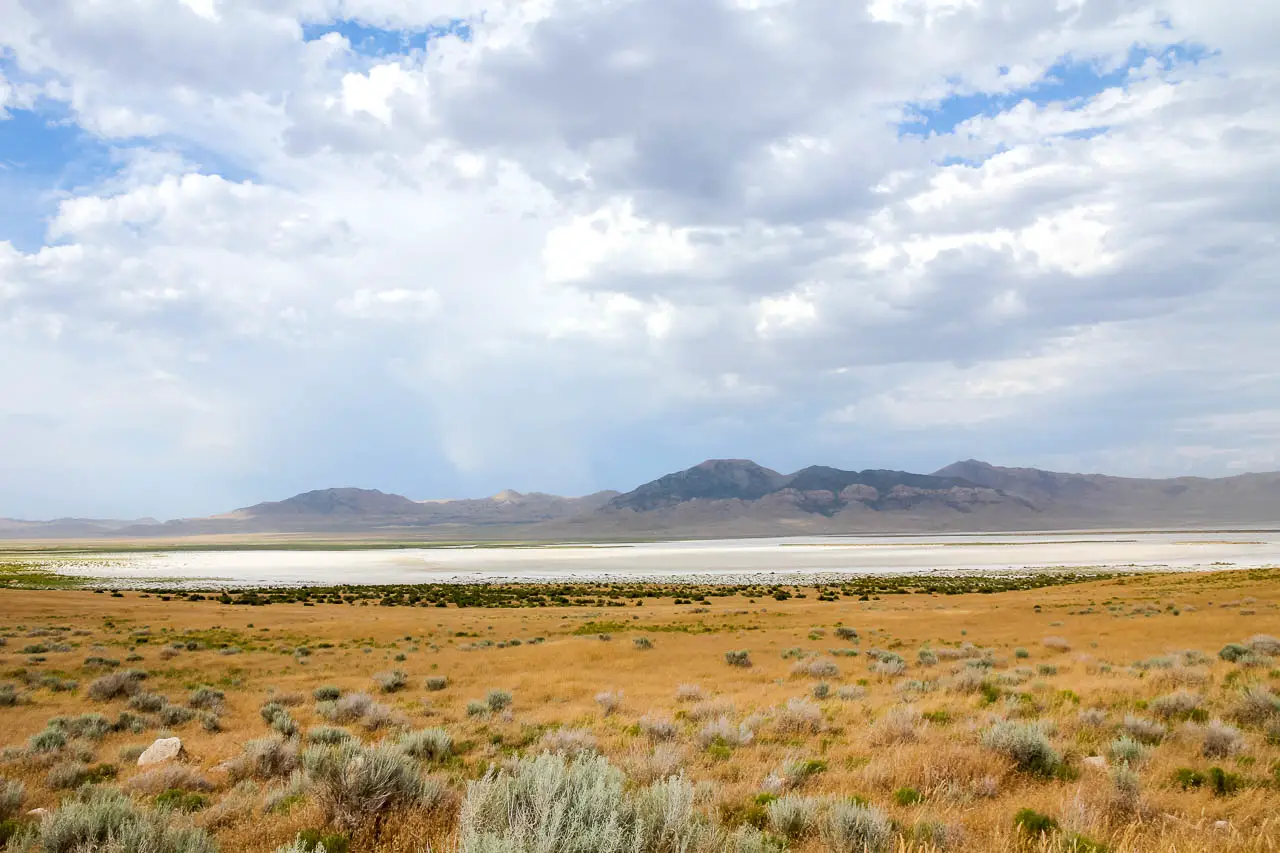
The journey to Spiral Jetty, Utah is no mere feat, especially if you’re not a Salt Lake City local. The road is surprisingly well maintained, and stretches on into an endless landscape of desert mountains and plains, with momentary glimpses of the Great Salt Lake.
The drive to Spiral Jetty will take about 2-2.5-hr from Salt Lake City without stops. I’ll elaborate on key parts of the journey in a moment, but first, here are some basic driving directions:
- Travel north on the I-15N and take exit 365.
- Turn right towards Corrine on UT-13 N/Promontory Rd. Note, the gas station in Corrine is your last chance to top up your tank.
- Travel west for about 18-miles, following the signs to Golden Spike National Historic Site.
- Make a left-hand turn onto Golden Spike Road at Lampo Junction and continue, keeping right at the fork.
- Continue 7.5-miles to the Golden Spike Visitor Center. This is your last chance for using bathrooms or receiving any mobile phone service.
- Continuing west from Golden Spike for about 5.6 miles, keep left at the fork and follow signs to Spiral Jetty.
- Drive another 1.5-miles and turn right at the fork, continuing for a further 9-miles to the end of the road which is the parking lot for Spiral Jetty.
Golden Spike stopover
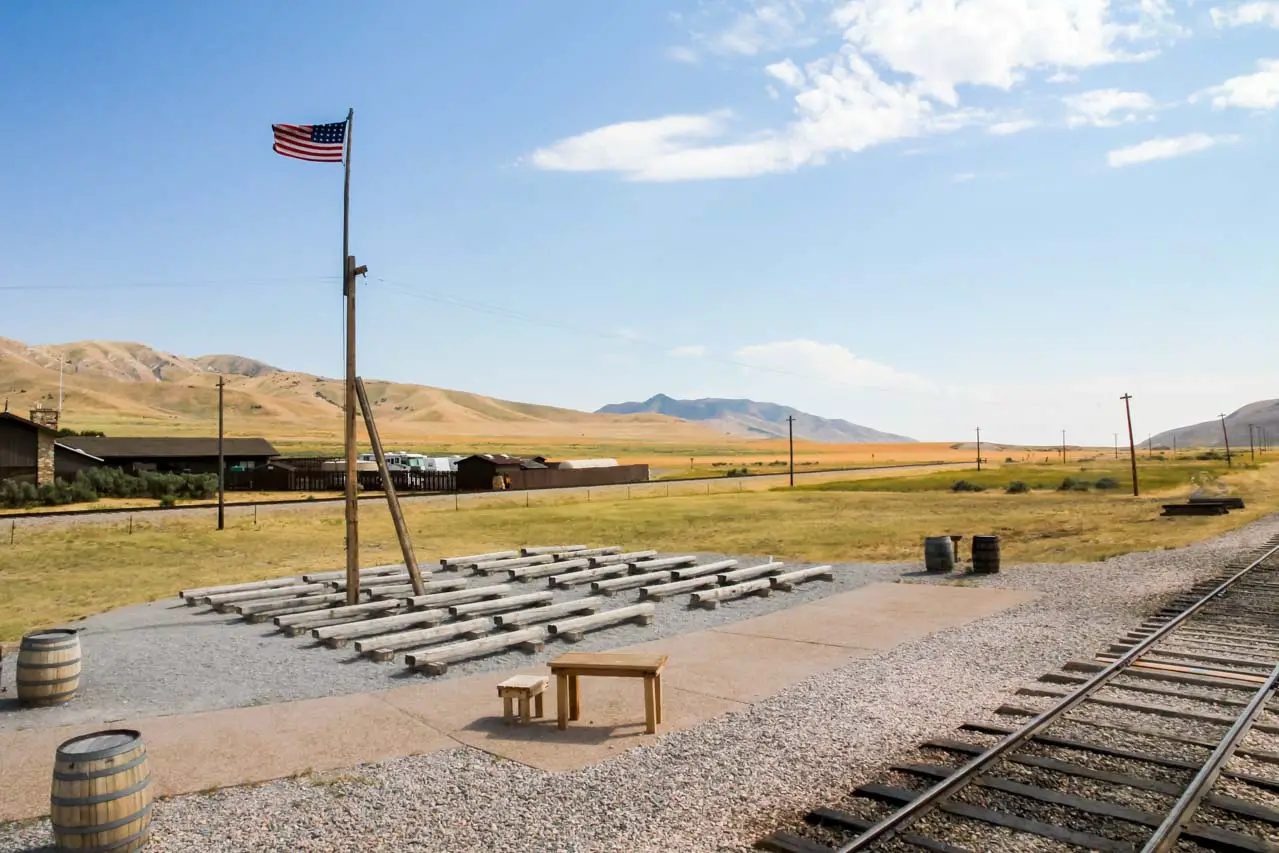
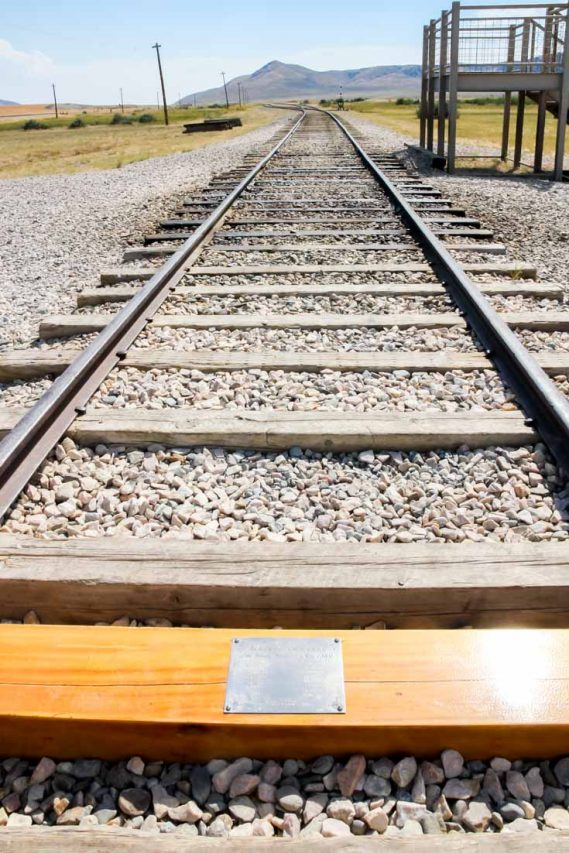
Golden Spike National Historic Site is located where the first transcontinental railway was completed. Here, the east and west of the United States were joined by rail, in 1869. The historic completion of the Railroad turned a six-month ox-drawn wagon ride into a six-day train journey. This paved the way for exploration and settlement of the wild west.
At this very spot, a symbolic golden spike was tapped, and the last track laid. It joined 1776 miles of railroad, built inward from Omaha in the east and Sacramento to the west. That’s longer than the horizontal distance between London and Kiev!
The Visitor’s Center attempts to present a balanced account of the Railroad’s history, including: dangerous working conditions, mass culling of Bison and invasion of Native land. However, the overriding message is that the Railroad is a triumphant victory, which in one clean sweep sends the previously mentioned issues of colonialism under the rug.
Overall, Golden Spike is a worthwhile stop. Even if you pass on the history lesson, it is the last chance to use a bathroom and refill your water bottle before proceeding to Spiral Jetty. In addition to the Visitor’s Center and location of the railway join, there are also two short self-guided drive routes that will take you along sections of the former railroad route which I will discuss next.
Spiral Jetty and Golden Spike map
Auto Tour Loops
If you don’t know much about the Transcontinental Railroad, The Auto Tour Routes make more sense after visiting the Golden Spike Historic Site. Therefore I recommend taking them on the return journey from Spiral Jetty. Depending on the time of year you are travelling, the West Tour is commonly closed during the winter months. The East Tour is less regularly closed. You don’t need a map, just follow the signs.
East Auto Tour Loop
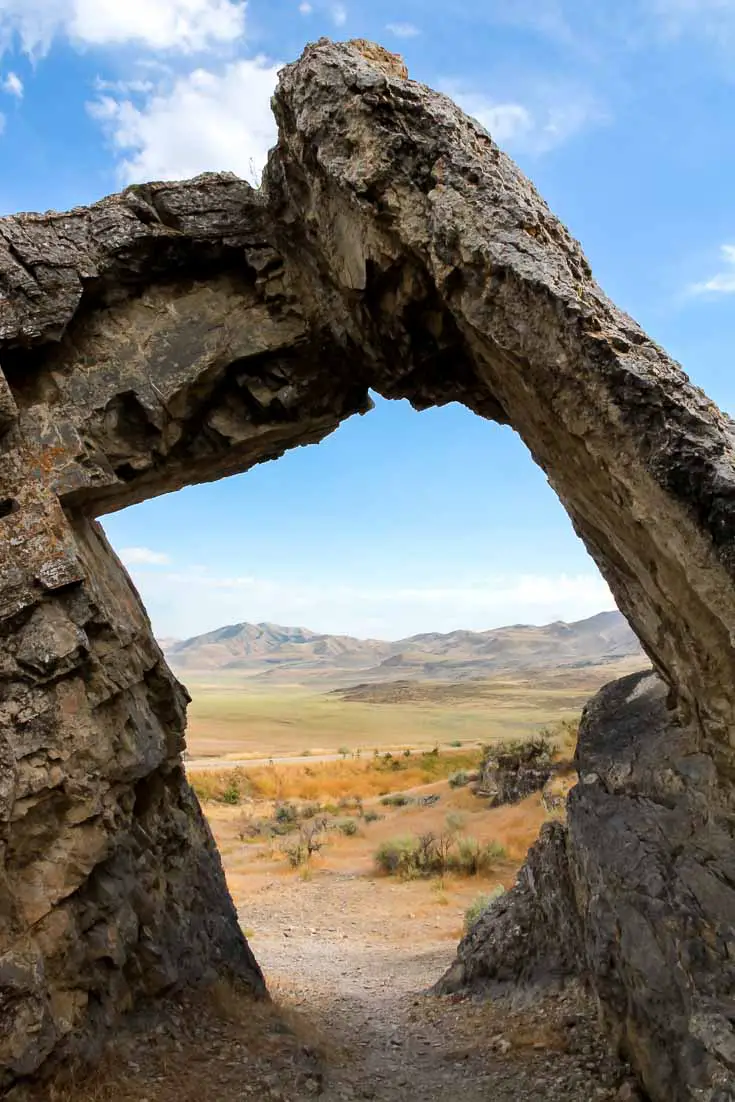
The East Auto Tour is a short 2-mile loop that runs parallel to Golden Spike Road. The route follows the old railbed that was removed in 1942. It features The Last Cut and Chinese Arch, a natural rock formation named in honour of the many Chinese immigrants who worked on the nearby railroad
West Auto Tour Loop
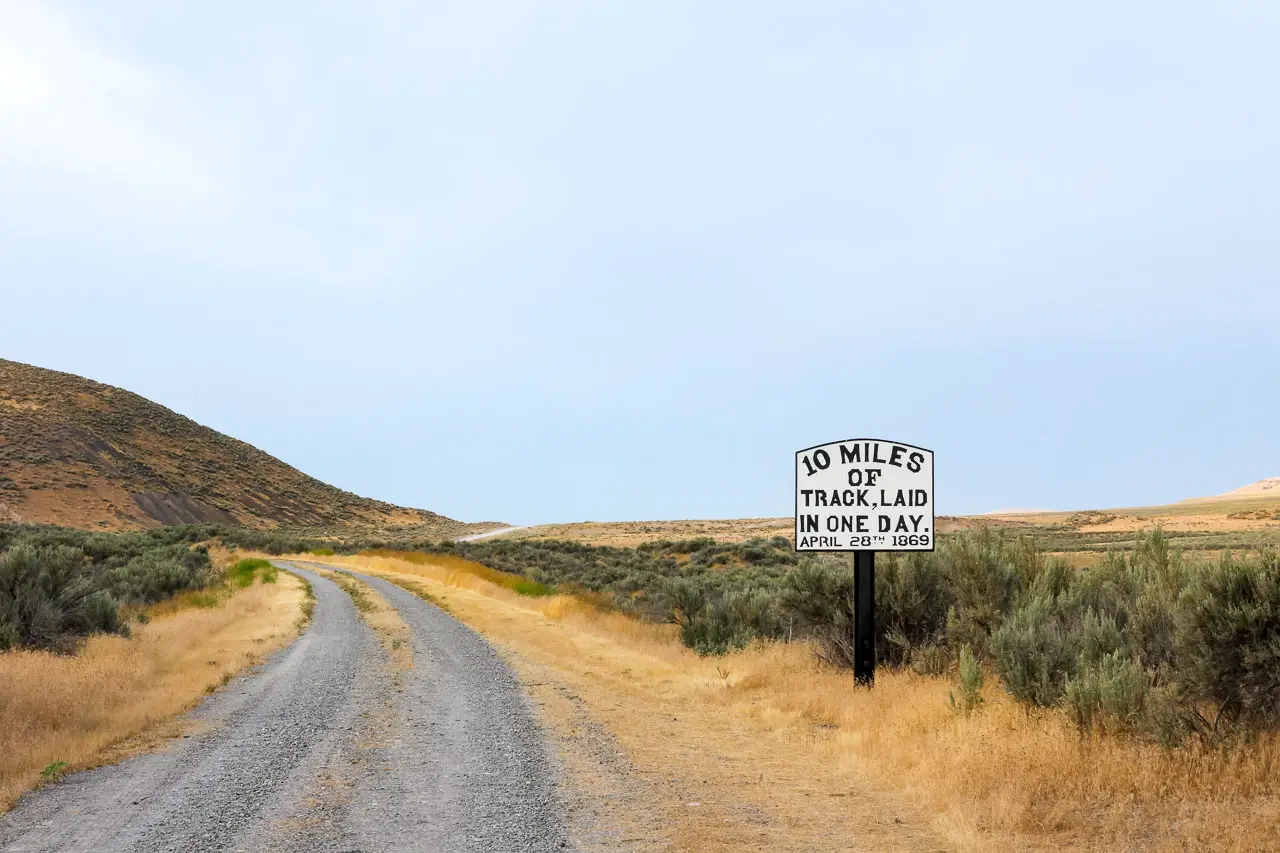
The West Auto Tour is a longer 7-mile loop that passes the spot where a record 10-miles of track were laid in a single day.
ATK Rocket Garden
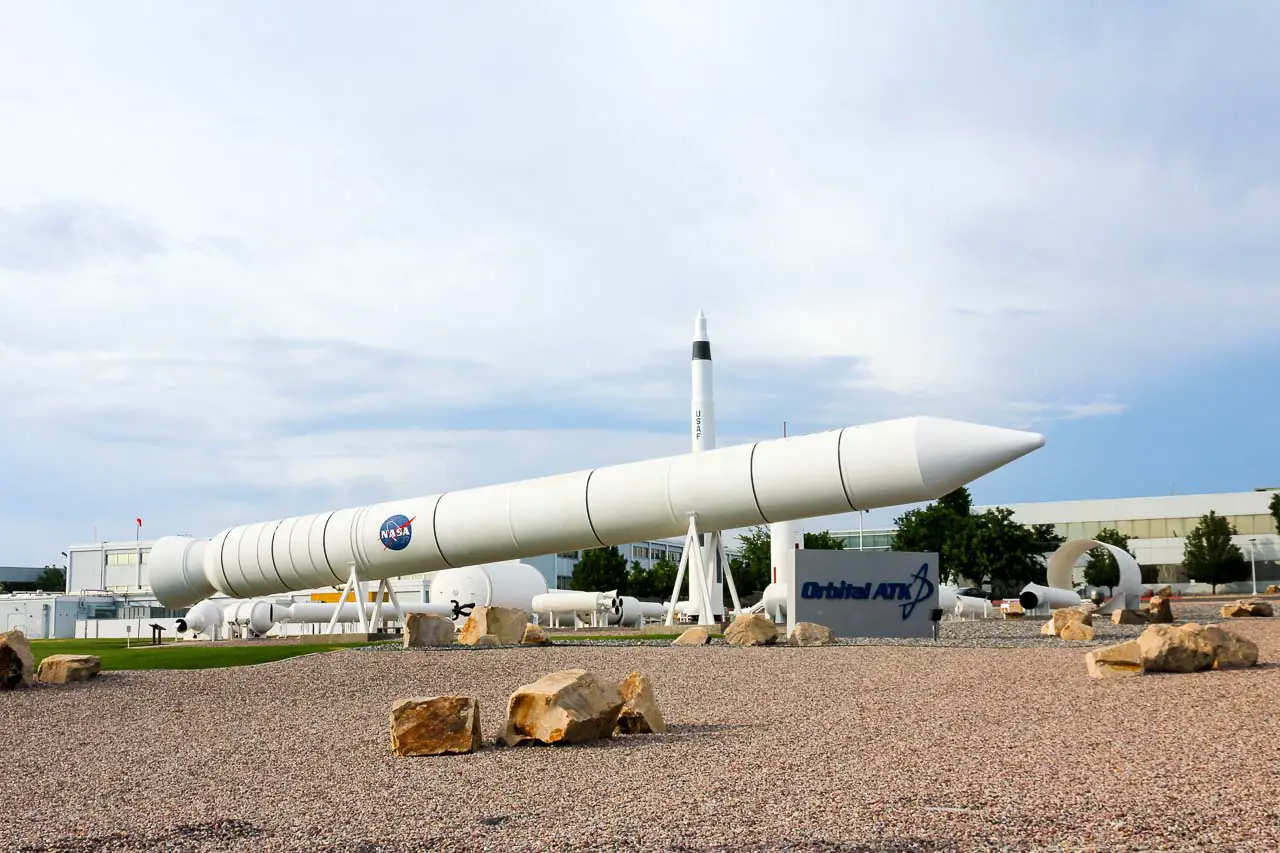
If you take the East Auto Tour, you’ll also happen upon the ATK Rocket Garden. If you don’t take the Auto Tour, it’s a short detour (about 4-miles return) up UT-83 S. The Rocket Garden is part of the Northrop-Grumman rocket testing facility that has been located here since the 1950s. The Garden is a small display of military and space exploration equipment right on the roadside–you can’t miss it.
The Spiral Jetty experience
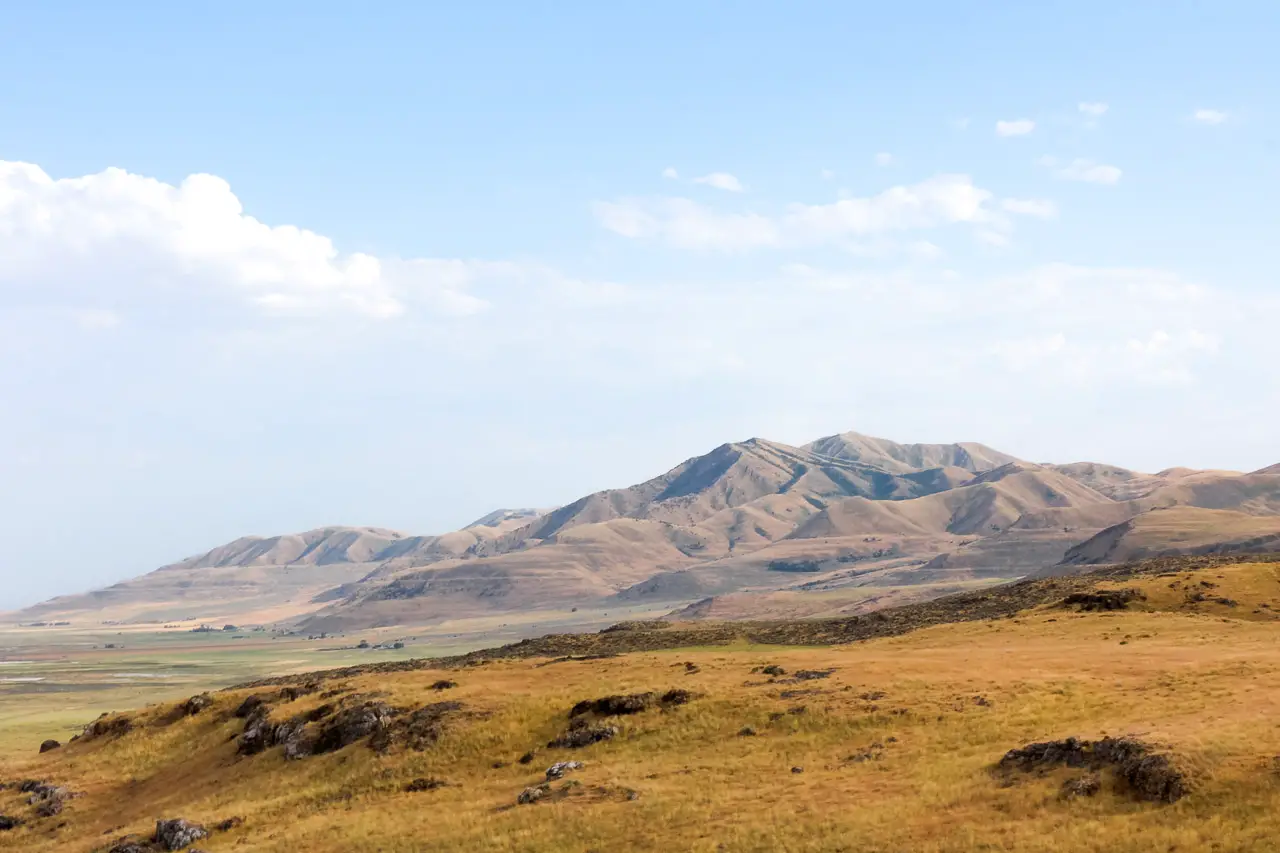
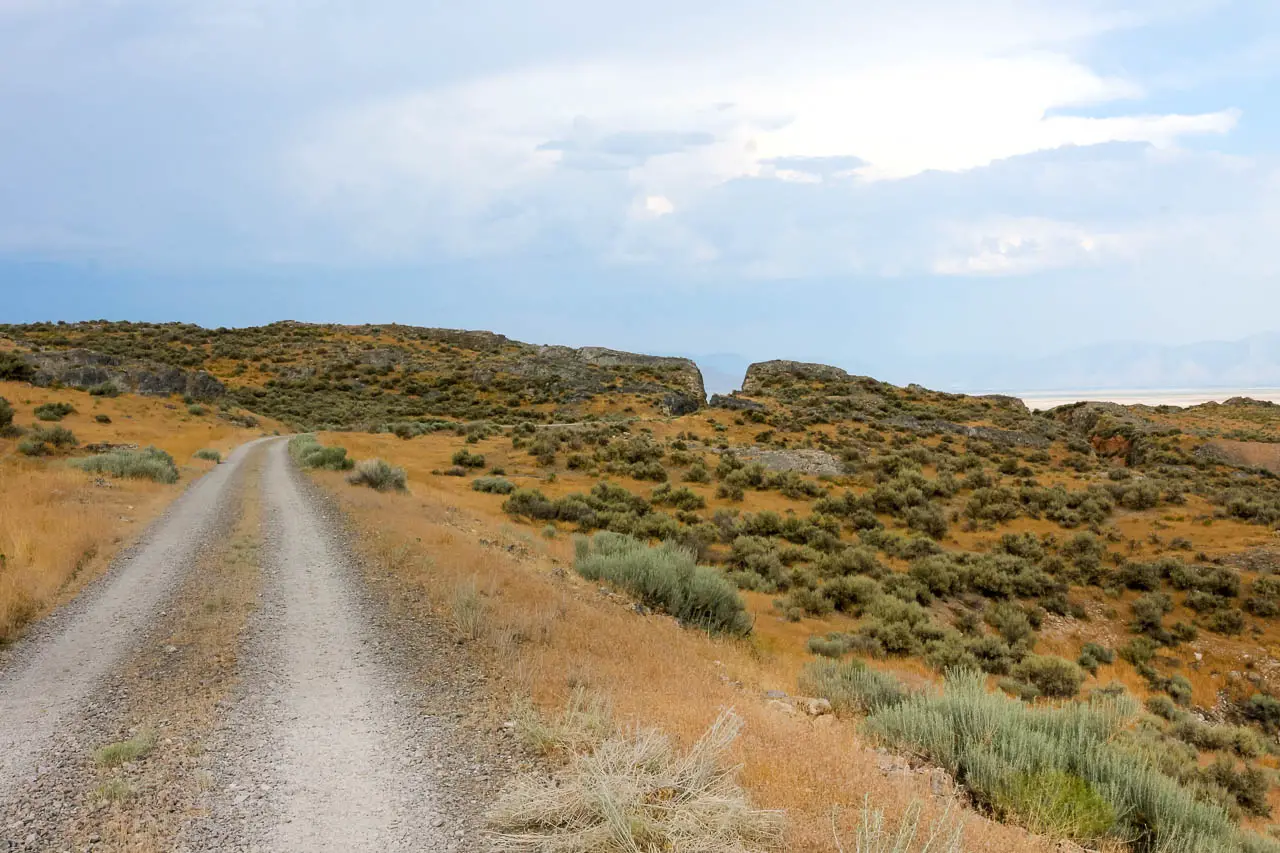
Continuing on to Spiral Jetty beyond Golden Spike, the road is well-graded gravel and passes through a rancher’s private property to reach the Lake. Every turn in the road I expected to catch first sight of the Jetty, but it seemed to go on forever. The vastness and silence of the landscape is awe-inspiring.
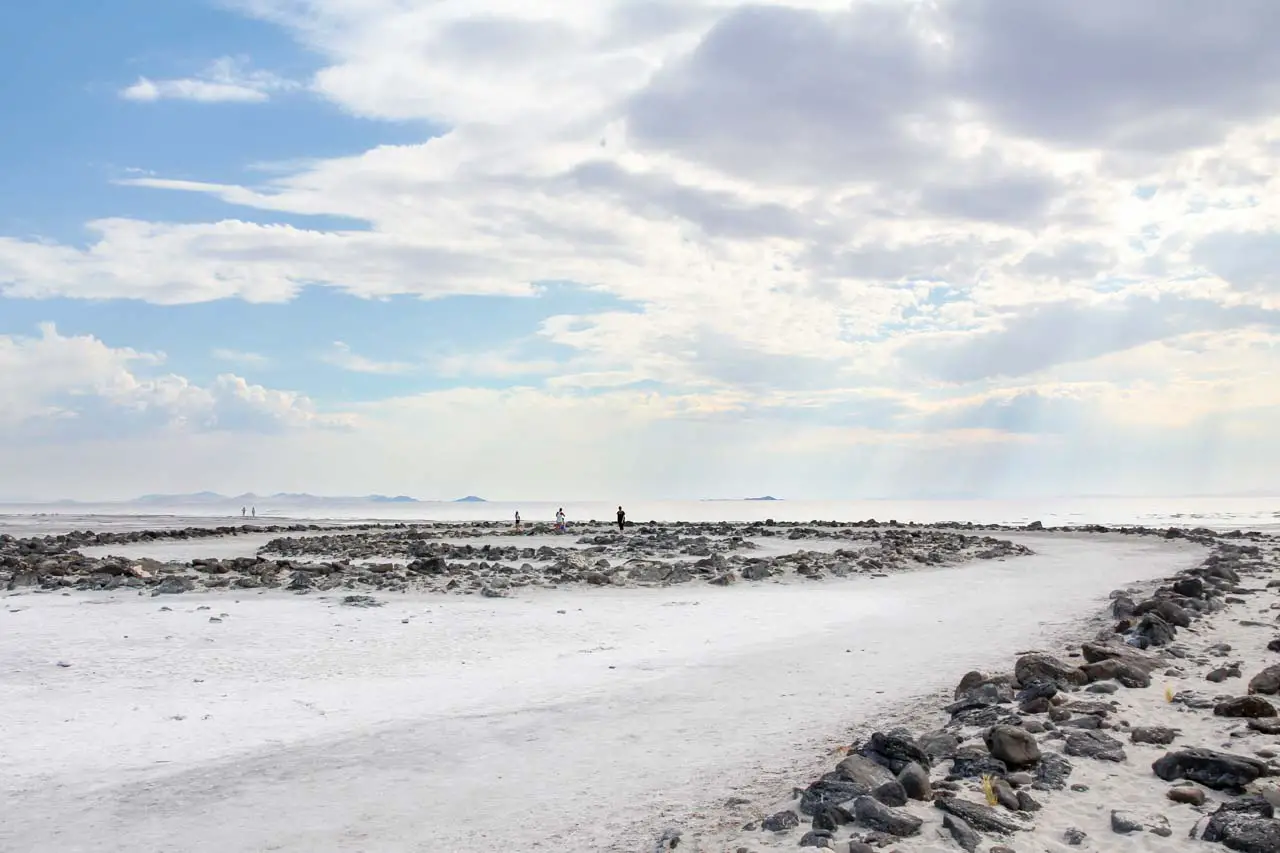
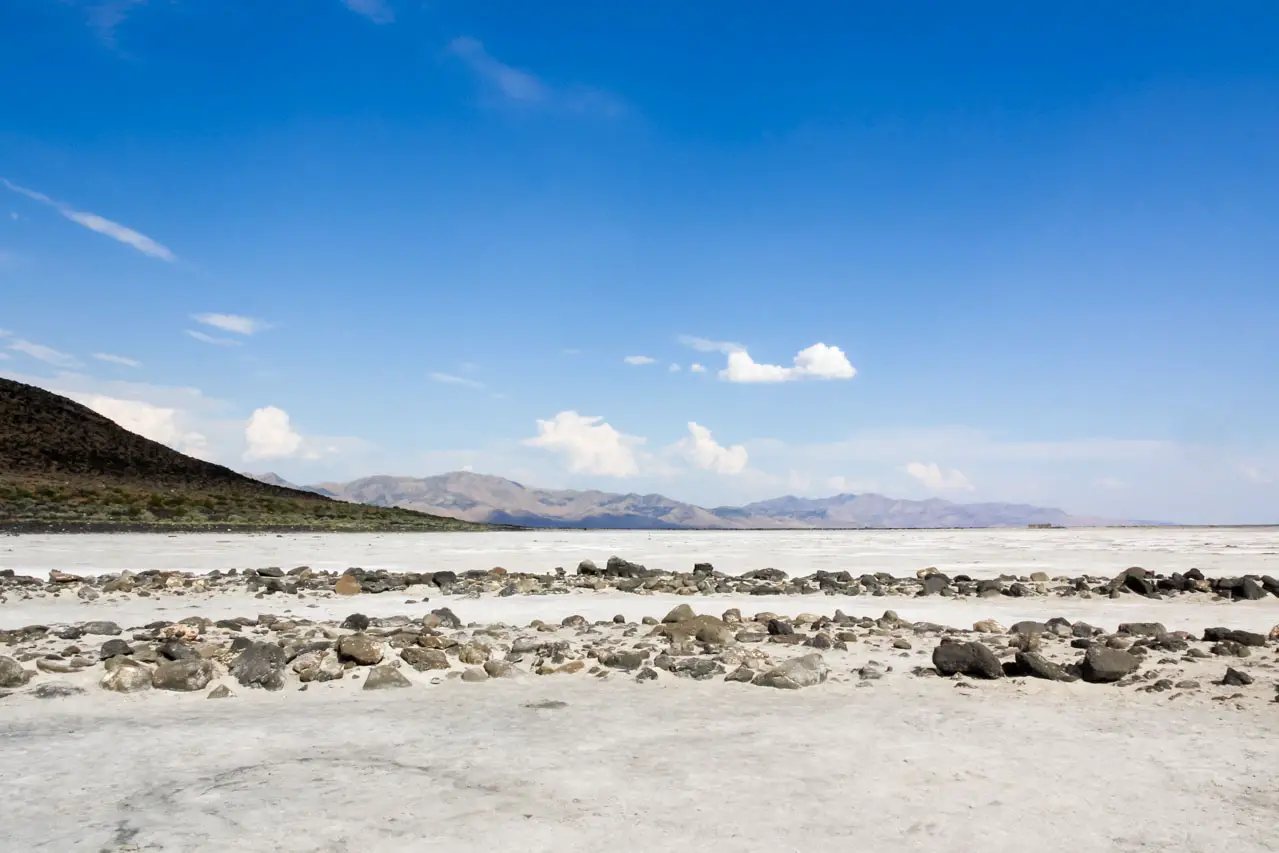
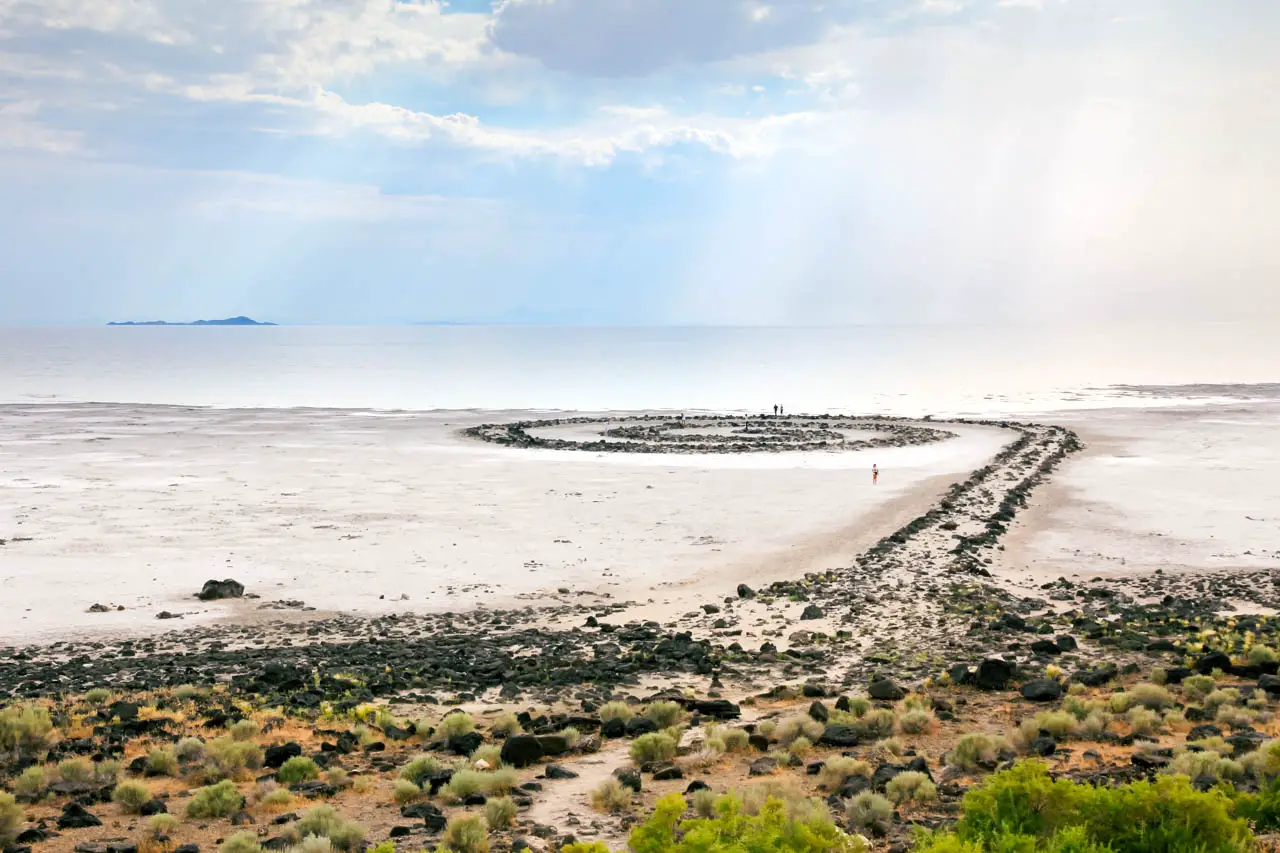
Finally, rounding Rozel Point, Spiral Jetty comes into view. On our visit the Lake had receded leaving the basalt Spiral behind in the salt-crusted shore. The 1500-foot long groin is not as large as I had expected from looking at pictures but still dwarfs human figures at a distance.
Spiral Jetty itself is nothing more than a well organised pile of basalt, barely raised from what would be the Lake’s surface. It’s easy to see how it became submerged for so many years. There’s also evidence of sedimentation around the groin, which has lowered its profile.
Great Salt Lake
Meanwhile the Lake is a cloudy cinnamon colour and is bathwater-warm (we visited in early July on a partly cloudy day). The colour is due to salt-loving microorganisms that flourish in the North Arm of Great Salt Lake. The carotenoid pigments (like those that make carrots orange) in their cell membranes colour the water hues of orange through pink and brown.
The blush hues of the water were one of the major attractions for Robert Smithson when deciding on a location for Spiral Jetty. He likened it to a primordial sea, referring to oceans at a time in earth’s history prior to the first land-based life forms.
The sun makes brief appearances and the saline Lake disappears into the cloud shrouded mountains and sky on the horizon, allowing us to play with the optical illusion of walking on water.
This is why, depending on the weather conditions and water levels, you might have a completely different experience. That is part of Land Art’s charm! It would be fascinating to return seasonally and witness the changes to Spiral Jetty and the surrounding landscape.
Tips for planning your trip to Spiral Jetty in Utah
- Find out more about visiting the Golden Spike National Historic Site including directions and entry fees through the National Parks Service website.
- Spiral Jetty is only visible when Lake water is 4195 feet or lower. Before you embark on your trip to the remote spot, check the USGS website for water levels.
- Prepare for your trip with a full tank of petrol, plenty of water and food. There are no amenities at Spiral Jetty! Again, the last gas station is in Corinne and final access to bathrooms and drinkable water is at the Golden Spike Visitor’s Center.
- The warm, pinkish water is irresistible, especially if you’re a child or child at heart. Take a towel and extra water to wash away the salt. Best to also bring a change of shoes and/or clothes too.
- I would recommend water shoes to protect your feet. Although the Lake has a soft, sandy bottom, there are rocks and gravel around the Jetty, not to mention the salt crust really heats up in the sun.
The joy of Spiral Jetty comes, in many ways, from its isolated setting. Few people are aware of the piece and even fewer go out of their way to experience it in person. The Spiral Jetty itself wasn’t as monumental as I had imagined from pictures. The real beauty of the piece is in its location, the surrounding landscapes and the adventure of getting there.
Peace, love & inspiring travel,
Madam ZoZo