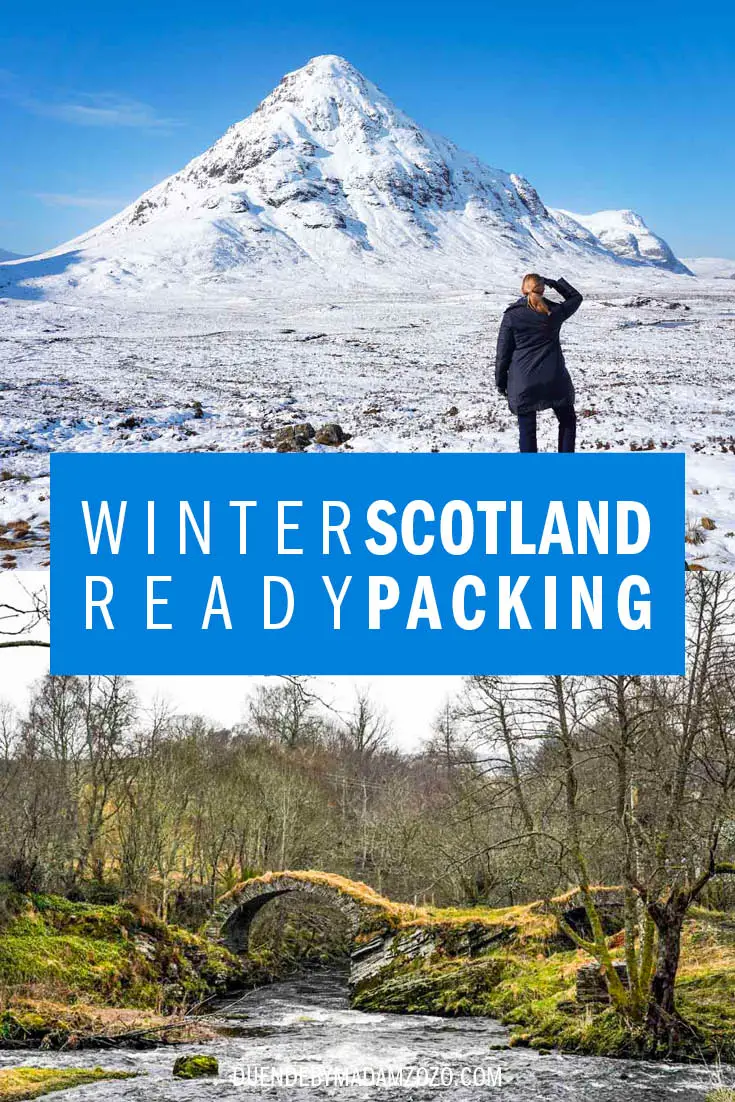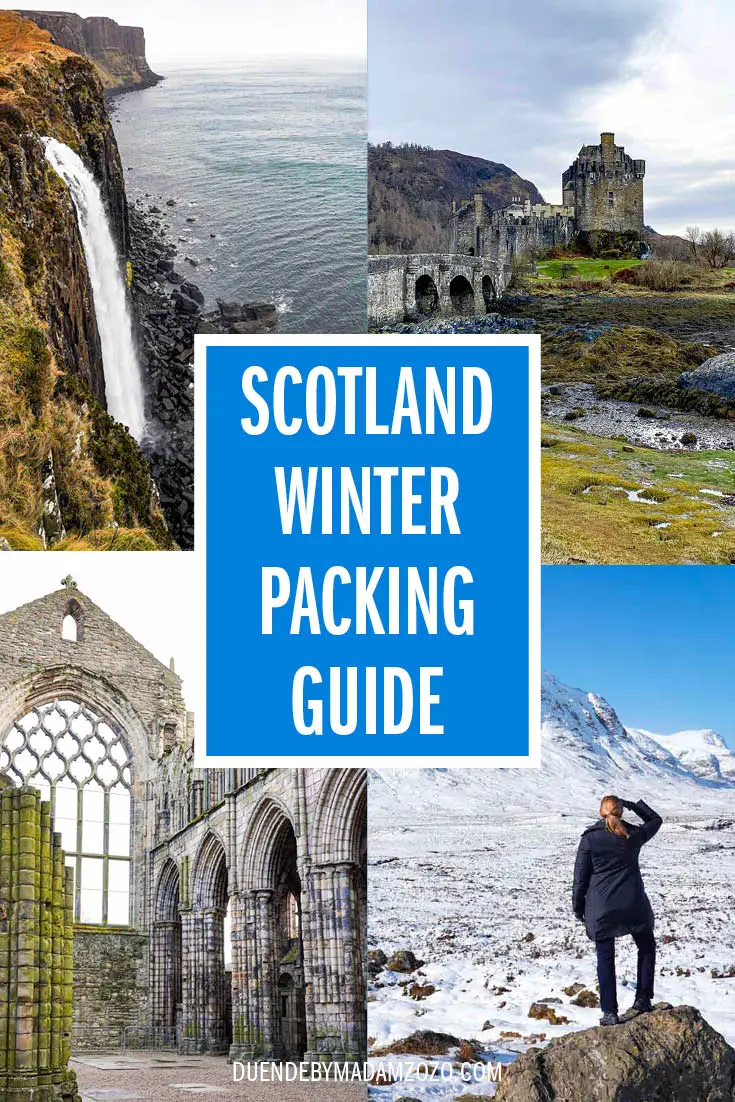

If you like your holiday destinations free of crowds and queues, and don’t mind a few weather-dependent attractions being closed for the season, then Scotland, in winter, is for you. Get a jumpstart on preparing for your Scotland adventure with this guide and packing list (which you can download as a printable checklist at the end of this post).
General Scotland packing tips for winter
Climate
Scotland generally has a temperate oceanic climate, which translate to cold, wet and moody. It’s one of those place that if you don’t like the weather, wait 5 minutes and it will likely change. The western side of the country is slightly drier and cooler than the east, but assuming you will be sightseeing right around this beautiful country, we will be working off winter averages for this Scotland packing list.
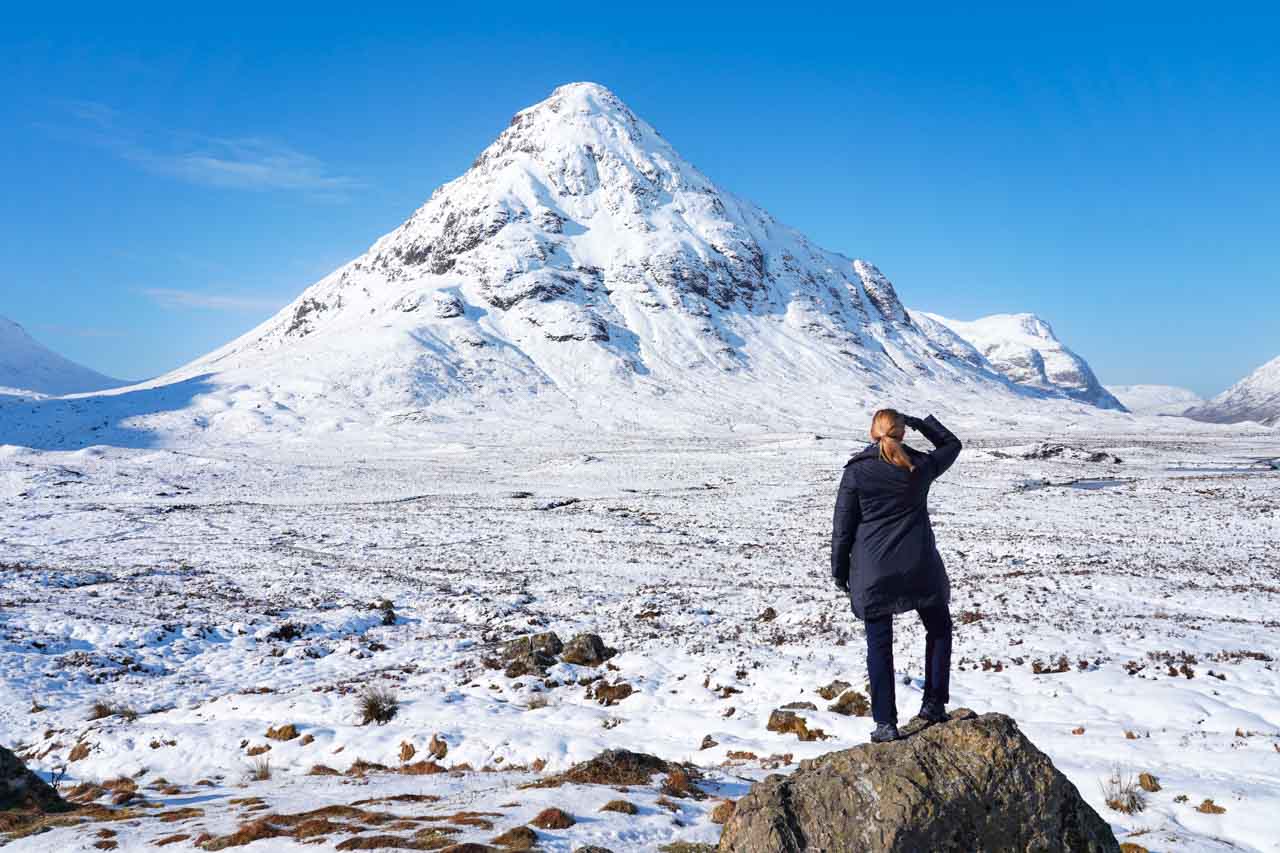
Winter temperatures usually max out between 5-7ºC (41-45ºF) and rainfall is likely. January and February are the coldest months. Snow falls an average of 15-20 days a year, but expect more if you’re travelling in the Highlands – which we highly suggest you do. See here for weather and climate information specific to different areas.
Clothing and comfort
Scotland is cold and wet in winter, but buildings are well heated. Pack lightweight clothes that can be layered to provide warmth, under thick outer layers that are waterproof. Down can be made less effective if it becomes wet, so ensure you pack a coat that can stand getting a little wet at times – wool is a great option. Don’t bother with an umbrella, it will blow inside out in the first moment you raise it. Instead go for a long rain jacket and waterproof shoes such as those with Gore-Tex or even a cute pair of rubber boots.
Currency
The Pound Sterling (GBP) is the official currency of the United Kingdom including Scotland. Withdrawing local currency from an ATM (cash machines, as they are referred to in the UK) usually offers the best international exchange rate. For the most part, cards are accepted but you may come across cash-only situations in smaller rural towns. If you intend on using a card to pay for things throughout your trip, make sure it is one with no international fees.

Electronics
Electricity in Scotland is delivered at 230 volts, 50Hz. Depending on where you are travelling from and the kind of appliances you are carrying, you may need a voltage converter. Generally, newer phones, tablets and laptops are made for both 110-127V and 220-240V, but it is wise to double check. Scotland uses a Type G plug/socket, so don’t forget to pack your international adaptor (this one will cover you for most destinations globally).
Environment
Think about minimizing packaging and disposables as much as possible – these guides will assist: 8 Essential Eco-Friendly Travel Products and 5 Steps to More Sustainable Travel.
Passport and visas
Ensure your passport has at least 6 months validity and plenty of blank pages. Check here whether you require a visa for entry into the UK – it will depend on the country of your passport.
Security
Keep your passport, extra cash and other valuables in your hotel safe. Pickpocketing gangs are active in Edinburgh and Glasgow, so secure any valuables you must carry with your during the day. Ensure your bag is zipped up and within reach at all times. Cross-body styles are preferable as they can’t easily pulled off your shoulder. Read up on these common tourist scams in Scotland and see these general travel security tips.

Winter-ready Scotland packing list
Clothing and accessories
- Underwear, bras and socks—pack just one week’s worth and wash in the shower or bathroom sink. Cotton socks are terrible for cold, wet climates as the fabric does not dry. Instead choose woolen or synthetic socks for Scotland in winter.
- Thermal base layer—thermal underwear or longjohns are essential for keeping warm, especially in the Highlands and Hebrides.
- Sleepwear—including sleep mask and earplugs.
- Shirts—pack 1 long sleeve shirt for every 2-3 days of your trip.
- Sweaters—pack 2-3 jumpers (Merino wool or cashmere are ideal). You’ll find plenty of lovely wool products to buy all round Scotland if you find yourself short.
- Pants—pack 1-2 pairs of long pants or jeans. I chose a combination of jeans for casual sightseeing and a pair tailored wool pants for dressier occasions. If you intend to spend a lot of time outdoors, a pair of rain pants are also recommended.
- Coat—1 heavy winter coat to keep you warm and buffet the wind, ideally water resistant at a minimum.
- Shoes—depending on the activities you have planned, you need a pair of shoes that have thick, grippy, winter-ready soles, are waterproof and comfortable for walking. I survived in my Gore-Tex Trail Runners, but really wished I’d packed my Sorel snow boots (similar to these). You might also want a nicer pair of boots or similar for evening/indoor activities.
- Sunglasses—UV rated to protect your eyes and polarizing to reduce glare from water, ice and snow.
- Scarf, gloves and warm hat—pack 1-2 scarves to vary your outfit day to day and keep you warm, along with a pair of gloves and warm, wind-friendly hat or two.
- Accessories—jewellery (preferably costume jewellery) or other accessories to dress up an outfit in the evening.
Toiletries
- Deodorant
- Toothpaste and toothbrush
- Shampoo and conditioner
- Body wash or soap
- Face wash
- Moisturiser
- Hair accessories (ties and pins)
- Menstrual products
- Shaving cream and razor
- Makeup and perfume
- Laundry soap—a cake of laundry soap is great for washing your smalls in the hotel basin and doesn’t add to your liquid/powder count if you’re travelling carry-on only. I’ve been carrying around a bar of this for years now, it lasts and lasts
Gadgets
- Camera – along with accessories such as charger, spare batteries; SD cards; and tripod
- Phone – including accessories such as a charger.
- International adaptor—remember Scotland requires a Type G plug
Day bag
- Refillable water bottle
- Hand sanitizer and mask
- Bandana/ cloth napkin/ handkerchief
- Headphones
- Travel medical kit
- Sunscreen
- Lip balm with SPF 15+
- Flashlight or headlamp
- Money belt – alternatively a bra pouch or other secure wallet
- Rain jacket—rain is often accompanied by wind, so choose a longer length rain coat.
- Medications and prescriptions
Miscellaneous items
- Book
- Sketch pad and pencils/paint
- Notebook/diary
- Tablet device
Inside my suitcase
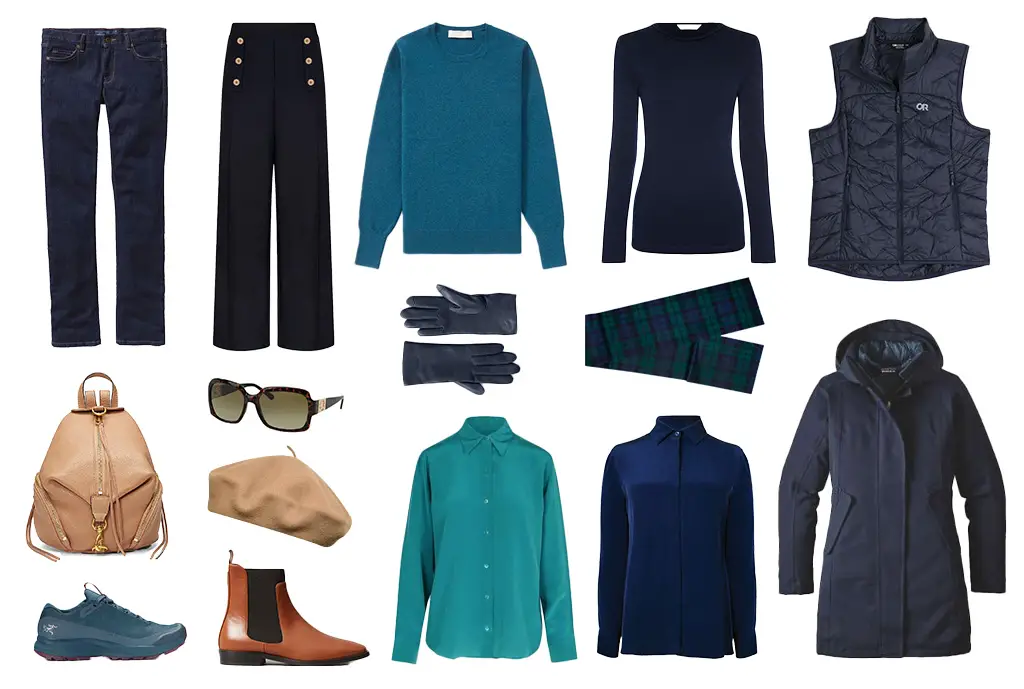
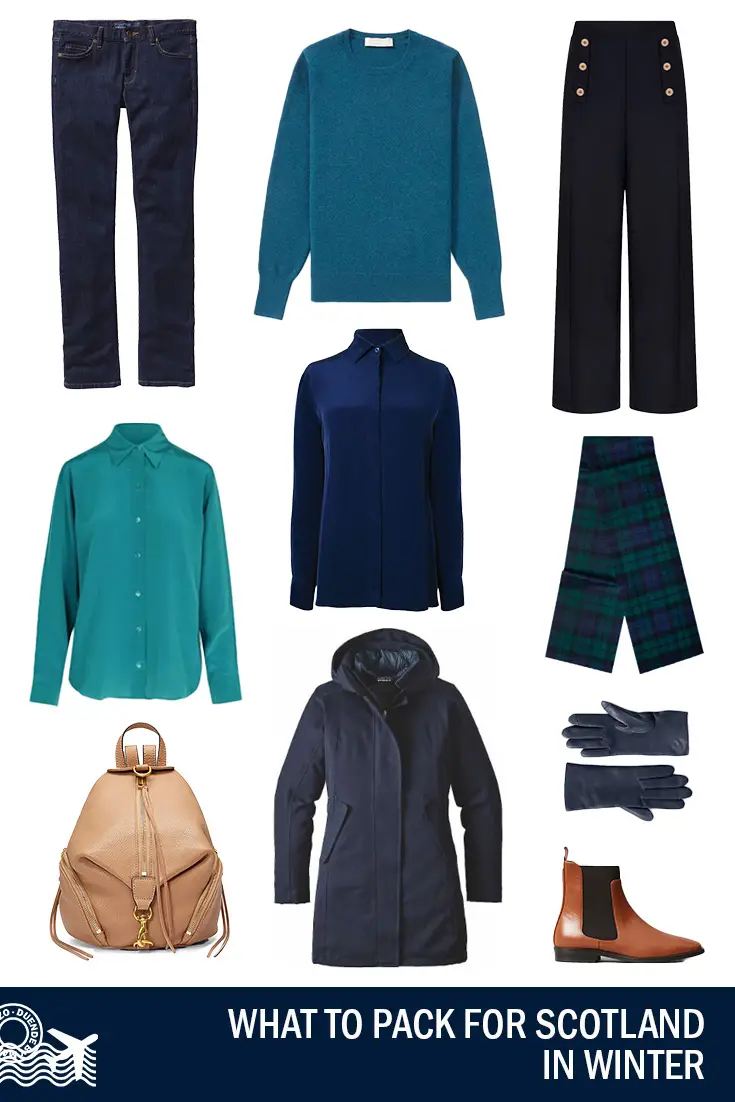
The following items are (mostly) what I packed with a few corrections I would make if I had a do-over:
- Patagonia Tres 3-In-1 Parka
- Everlane wool wide leg pants in navy (no longer available)
- Levi’s 314 jeans
- Everlane cashmere crew
- Woolerina Merino wool thermal base layer
- OR VerticalX SuperStrand vest
- Grana long sleeve, silk shirts
- Black Watch tartan wool scarf
- Lands End leather gloves
- Tory Burch polarised sunglasses (gifted by a friend, no longer available)
- Rebecca Minkoff Julian backpack
- Arc’teryx GTX waterproof trail shoes
- Everlane Square Toe Chelsea Boot
- Kangol Modelaine wool beret
I hope this guide has helped simplify packing for your Scotland trip – please let me know any questions or feedback in the comments below.
Peace, love & inspiring travel,
Madam ZoZo
Pin me for later