
Early morning mist to blazing sunset, Inle Lake couldn’t be more picturesque. Myanmar’s second-largest lake at 22-km long and 10-km wide is a shallow, freshwater mountain reservoir. Not only does Inle Lake exhibit natural beauty and biological uniqueness that has earnt it UNESCO biosphere reserve status. The locals’ way of life also sets the area apart from the rest of the country, making Inle Lake a must-visit on your Myanmar itinerary.
Disclosure: I may earn compensation from the purchase of any product or service linked on this website, at no extra cost to you. I only link to products I use and love, therefore feel comfortable recommending.
A blissful 48-hours on Inle Lake
Day 1
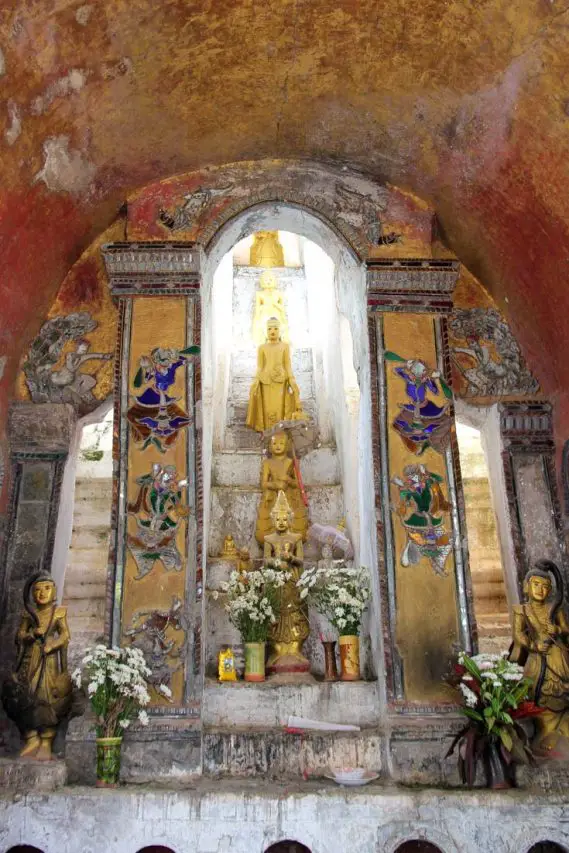
An early morning flight took us from Mandalay to Heho and we arrived in Nyaung Shwe just before lunch. On the way into town, we made a brief stop at Shwe Yan Pyay. This teak monastery was built in 1882 with a pagoda that has lovely, colourful mosaics inside. After a lunch of traditional Myanmar cuisine at Golden Kite, we took to the water to check into our lakeside hotel.
Life on the water
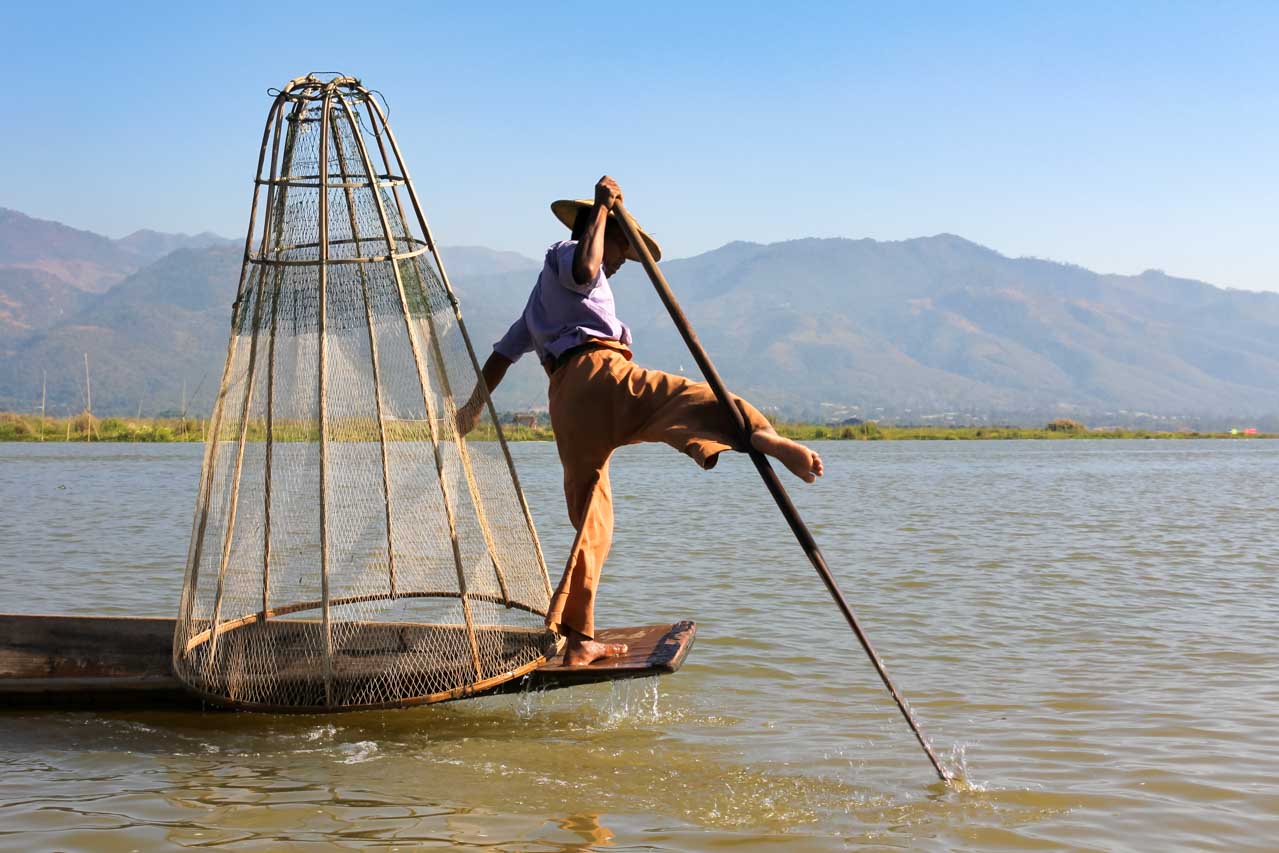
Relaxing in that boat on the glassy water, being warmed by the winter sun would be nice at any time of year. But it was a particularly perfect tonic for two weary travellers recovering from the flu. As the river channel leading from Nyaung Shwe opens into the Lake we immediately passed Intha fishermen demonstrating their one-legged, rowing style. Of course, this was purely a theatrical performance for tips, but the rowing method is genuinely unique to the Lake.
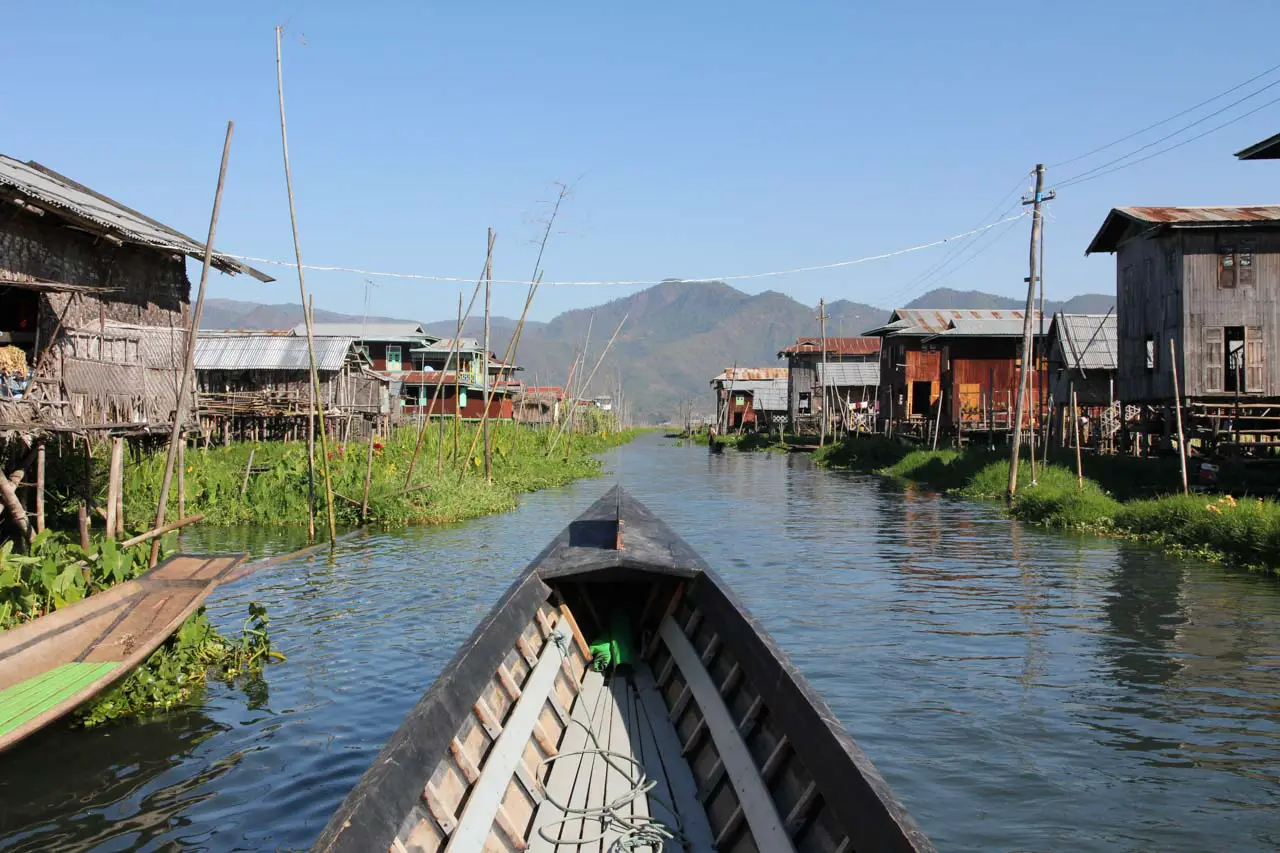
As we made our way to the hotel by boat we got our first glimpses of life on the Lake. Homes and businesses on gangly stilts tower over the water’s surface and floating gardens sprout hydroponic crops including tomatoes and squash. Relaxing by the Lake and soaking in the quiet mountain surrounds, we were treated to the most beautiful sunset.




Day 2
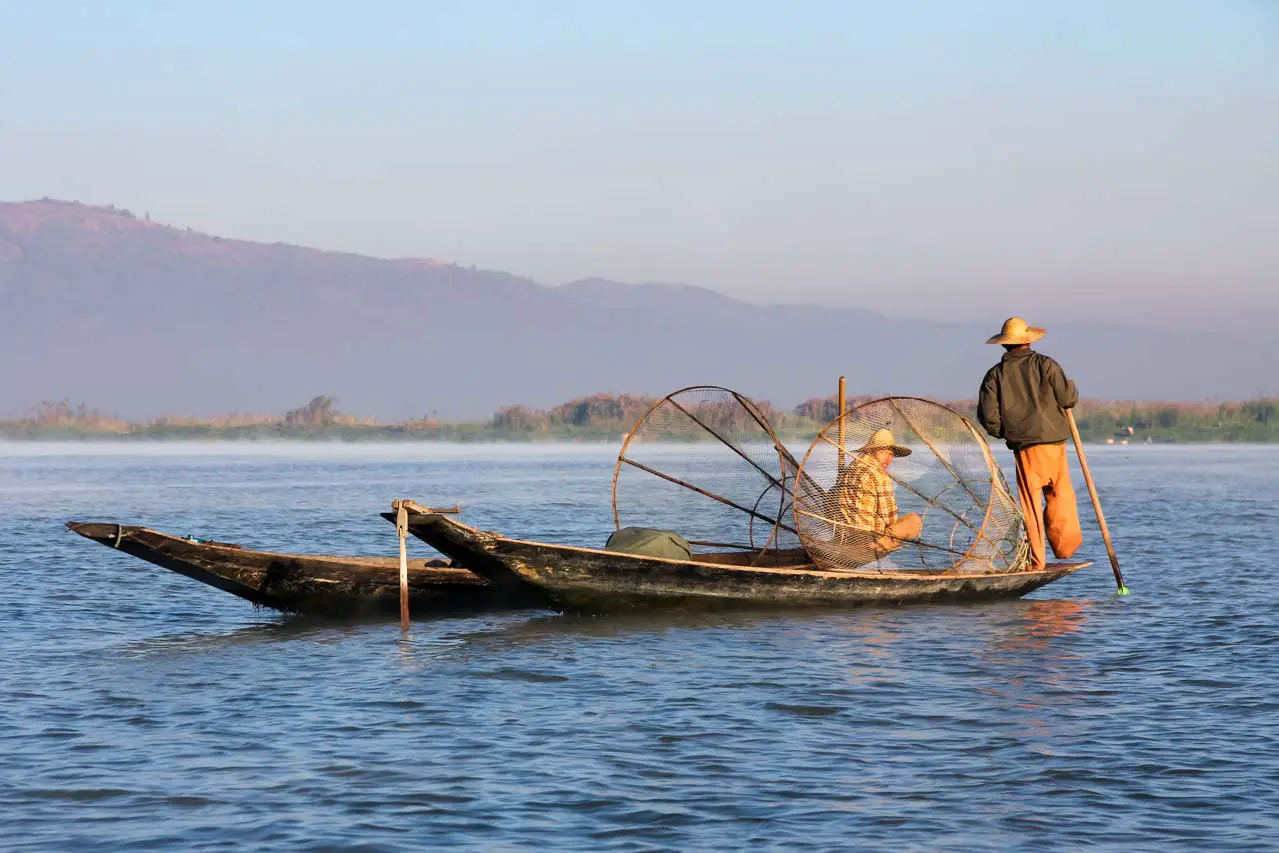
The morning was cool and a mist had settled low on the surface of Inle, obscuring the mountains beyond. Motoring into the fog on our early morning boat gave the Lake an entirely new look and feel. It was only an hour later the sun shone and mist evaporated, leaving us with the same perfect weather we had the day before.
Rotating market
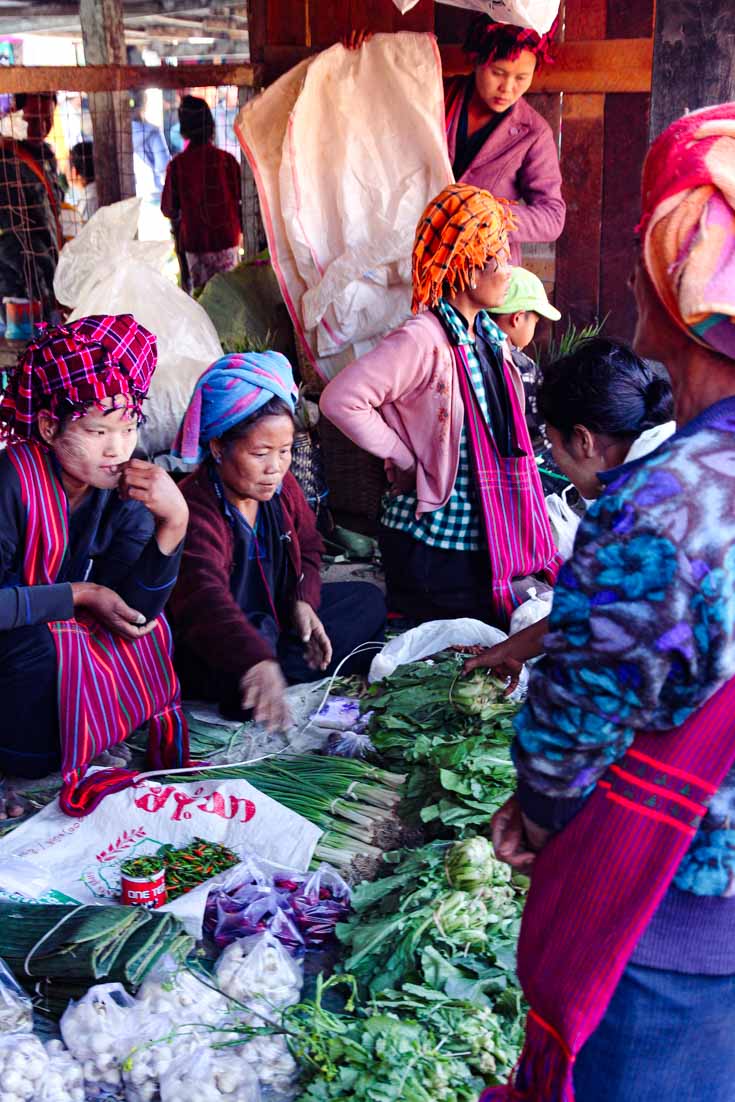
First up we headed straight for the rotating market. The moving market cycles through locations around the Lake on a 5-day schedule. Beyond the Intha folk, market-goers descend from the surrounding mountain villages to buy and sell on the Lakeside. Women of different tribes such as Pa-O and Pa Laung are somewhat distinguishable by their different coloured headdresses. Our guide explained that many of the tribes have their own dialect and cannot understand one another’s language. The selection of fresh produce, flowers, household goods and attire for sale is fascinating. The market is not only a superb place for people watching and photography but also shopping jewellery and handcrafted ornaments.
Artisan workshops
As the day-trippers arrived at the market we were finishing up and on to our next destination. Being a textile fanatic, I wrote an entire post on lotus weaving, an artisan practice that can only be found in very select locations including Inle Lake. The resulting fabric is ultra-soft but the labour-intensive process makes it more expensive than other, more widely available textiles such as silk and cotton.
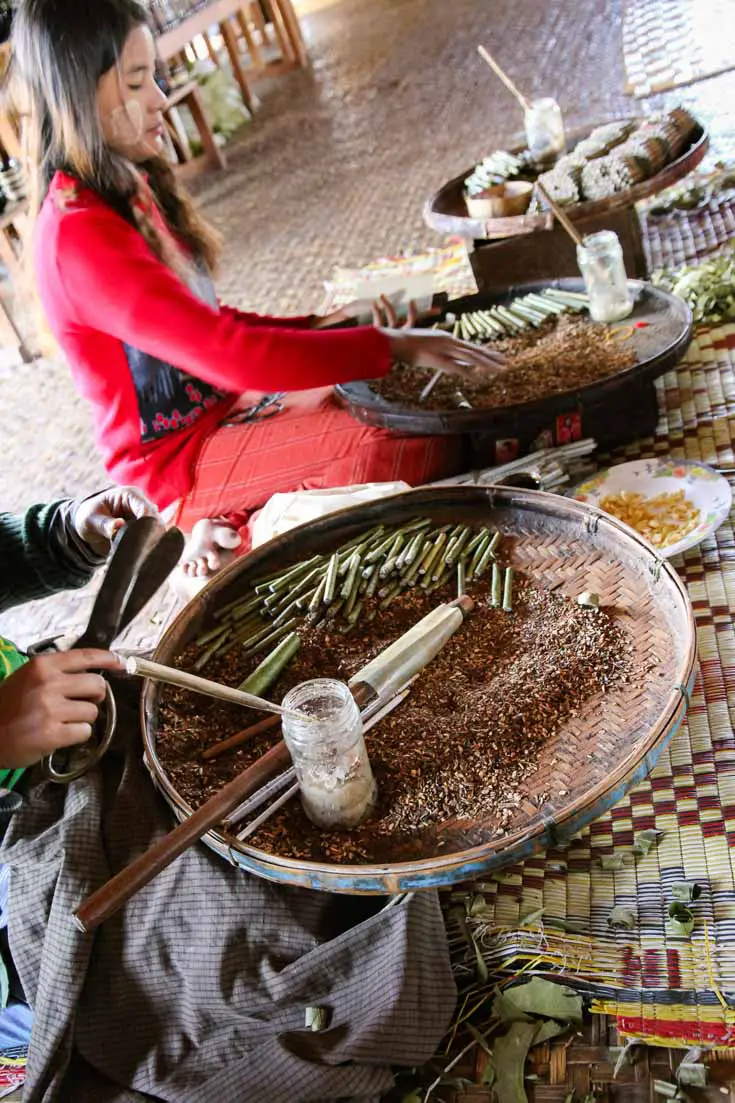
After another delicious local meal at a restaurant in a stilted township over the calm Lake waters. We visit workshops showcasing other artisan crafts practised on Inle Lake, ranging from cigar rolling to lacquerware.
Not-so-Jumping Cat monastery
The many opportunities to visit Buddhist stupas (inaccurately referred to as “pagodas” in English) on Inle Lake, are evidence of how important religion is to the Intha. We visited the Nga Hpe Kyaung monastery aka Jumping Cat monastery, where monks formerly taught cats to jump through hoops for tourists (this is no longer practised and cats roam freely around the premises). As someone who firmly identifies as a “dog person”, I wasn’t impressed. However, the modest building that houses Nga Hpe Kyaung monastery is an over-water, wooden structure has impressive heritage, dating back to 1890 and said to have the oldest Shan-style Buddha images and alters.
Golden Buddhas
Our second stupa stop was Phaung Daw Oo, which is one of the holiest stupas on the Lake. The five Buddha images housed there are over 800 years old and have been covered in gold leaf. You can barely get near the 22-45cm images for the male pilgrims (women aren’t permitted to participate) who are jostling to apply gold leaf to the images. The Buddha’s are now so gilt that they are unrecognizable.
Another cruise across the Lake and we are back at our hotel in time for a second blazing sunset. The following morning we reluctantly return to Nyaung Shwe by early morning boat, sadly bidding farewell to our newly found paradise in the Myanmar highlands.




Getting to Inle Lake
You will likely be flying into Heho Airport, a small Shan town about an hour’s drive from the Inle Lake. From there you will need a transfer into Nyaung Shwe, another Shan town and gateway to the northern end of the Lake.
Where to stay on Inle Lake
My number one tip for a full Inle Lake experience is to stay on the Lake itself. If you’re going to splurge on accommodation, then this is the place to do it. Don’t cheap out and stay in Nyaung Shwe, because sunrises and sunsets are some of the most serenely beautiful times to be out there on the water and you’ll have a head start on other tourists who are sightseeing from Nyaung Shwe during the day. Note that in peak travel periods there are not enough hotel rooms for the influx of tourists, so ensure you book well ahead of time.
Inle Lake weather
Inle Lake has a monsoonal climate and experiences most of its rainfall from May to September. Being in the highlands at around 99m in elevation (about 3000ft), it tends to be slightly cooler than other regions of Myanmar. Most travellers prefer to visit between November and February when it is dryer and cooler. We visited in December and had glorious sunny days with chilly mornings and evenings.
Peace, love & inspiring travel,
Madam ZoZo