Arches National Park is a desert landscape carved by time. It’s a living museum of nature’s finest sandstone sculptures, exhibiting gravity-defying stone arches and sandstone formations. With over 2,000 documented arches throughout the Park, each trail and overlook reveals something unique and special. Visitors come for the glow of The Windows at dawn, the drama of Delicate Arch at sunset, and everything in between. In this guide, you’ll find the best things to do in Arches National Park and top tips for enjoying your desert adventure.
Disclosure: I may earn compensation from the purchase of any product or service linked on this website, at no extra cost to you. I only link to products I use and love, therefore feel comfortable recommending.
Table of contents
Where is Arches National Park located?
Arches National Park is located in southeastern Utah, just outside the desert town and adventure-basecamp, Moab. The Park sits aloft the Colorado Plateau and covers over 30,750-hectares (76,000-acres) of dramatic high desert terrain. Many travellers combine Arches with neighbour, Canyonlands National Park, for a longer Utah road trip.


Getting to Arches National Park
Arches is about 375-km (240-miles) southeast of the State capital, Salt Lake City. The closest airports to Arches National Park are as follows:
Canyonlands Regional Airport (CNY): A small regional airstrip in Moab that receives small flights from Denver, Phoenix and Salt Lake City.
Salt Lake City International (SLC): The closest major airport, about a 4-hour drive.
Denver International (DEN): Around 5.5–6 hours, ideal for combining with Colorado road trips. I don’t recommend this option in late-Fall through Spring, as a winter storm can easily shut down roads over the Rockies – I speak from experience.
Phoenix Sky Harbor (PHX): About 7-hours north, with scenic routes through northern Arizona.
Las Vegas Harry Reid (LAS): Roughly 6.5-hours drive, making it a popular entry for Southwest road trips.
Albuquerque Sunport (ABQ): 6-hours by road, great if you also want to drop in Mesa Verde National Park in the very southwestern corner of Colorado.
Durango-La Plata County Airport (DRO): Just over 3-hours drive to Arches (4.5-hrs if you drop in on Mesa Verde NP). Durango-La Plata receives direct flights from Dallas, Phoenix and Denver.
Note: The closer, regional airports often sound great in theory. However, the rental car pool in these smaller centers is restricted. We found it was easier and cheaper to get an appropriate rental by flying to the larger cities and driving from there, even if it cost us an extra few hours in travel time.
Best time to visit Arches National Park
The best time to visit Arches National Park are the transitional seasons, thanks to milder daytime temperatures and cooler nights. However, spring (April–May) and autumn (September–October), are also the busiest months. Though the new timed-entry system should limit crowds in those peak periods. Try March or November for a quieter visit but with less predictable weather. May to November sees the clearest skies for stargazing.
Summer is hot, hot, hot—with daily highs regularly topping 38°C (100°F), you’ll need to plan early morning and late evening activities, carrying plenty of water. It’s also monsoon season and you will need to be aware of changing conditions. That said, summer also offers long daylight hours for tackling the National Park’s iconic hikes.
Winter transforms Arches into a quieter, more serene landscape. While snow is rare, occasional dustings create striking contrasts against the red rock. Trails are less crowded, but some services and facilities may be limited.
If your schedule allows flexibility, spring and autumn strike the best balance of comfortable weather, open facilities, and manageable crowds — making them the best times to explore Arches National Park.


How long to spend at Arches National Park
How long to spend at Arches National Park depends on your pace and priorities. If you’re short on time, you can drive the scenic road and stop at key viewpoints in half a day. This gives you a taste of the Park’s scale and a glimpse of some iconic formations like Balanced Rock and The Windows. Don’t be surprised if it leaves you wanting more though.
For a full day, you’ll have time to hike Delicate Arch, explore The Windows Section, and fit in a longer trail such as Park Avenue or a portion of Devils Garden. Many travellers find one day in Arches is enough for the highlights, especially if they’re also visiting Canyonlands nearby.
If you prefer a more relaxed itinerary, two to three days is ideal. This allows time for sunrise and sunset photography, ranger-guided walks, and tackling longer trails without feeling rushed. You’ll also have flexibility in case of hot midday temperatures or crowded trailheads.
Whether you dedicate a few hours or a long weekend, Arches rewards every visit — but two days is often the sweet spot for balancing the must-see in Arches National Park with a comfortable pace.

What to See in Arches National Park
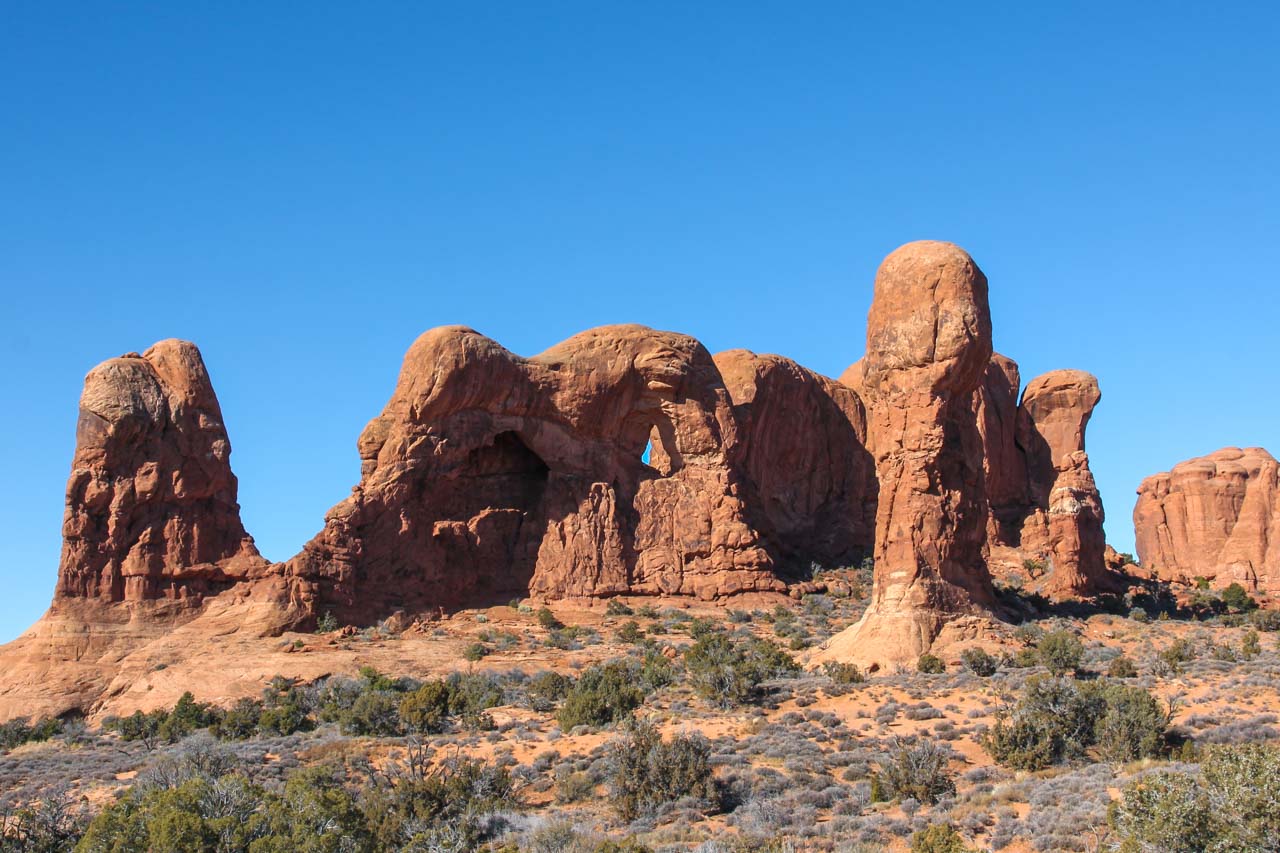
There are over 2,000 documented arches in the Park, along with spires, fins and balanced rocks adding to the sculptural landscape. Here are the must-see highlights:
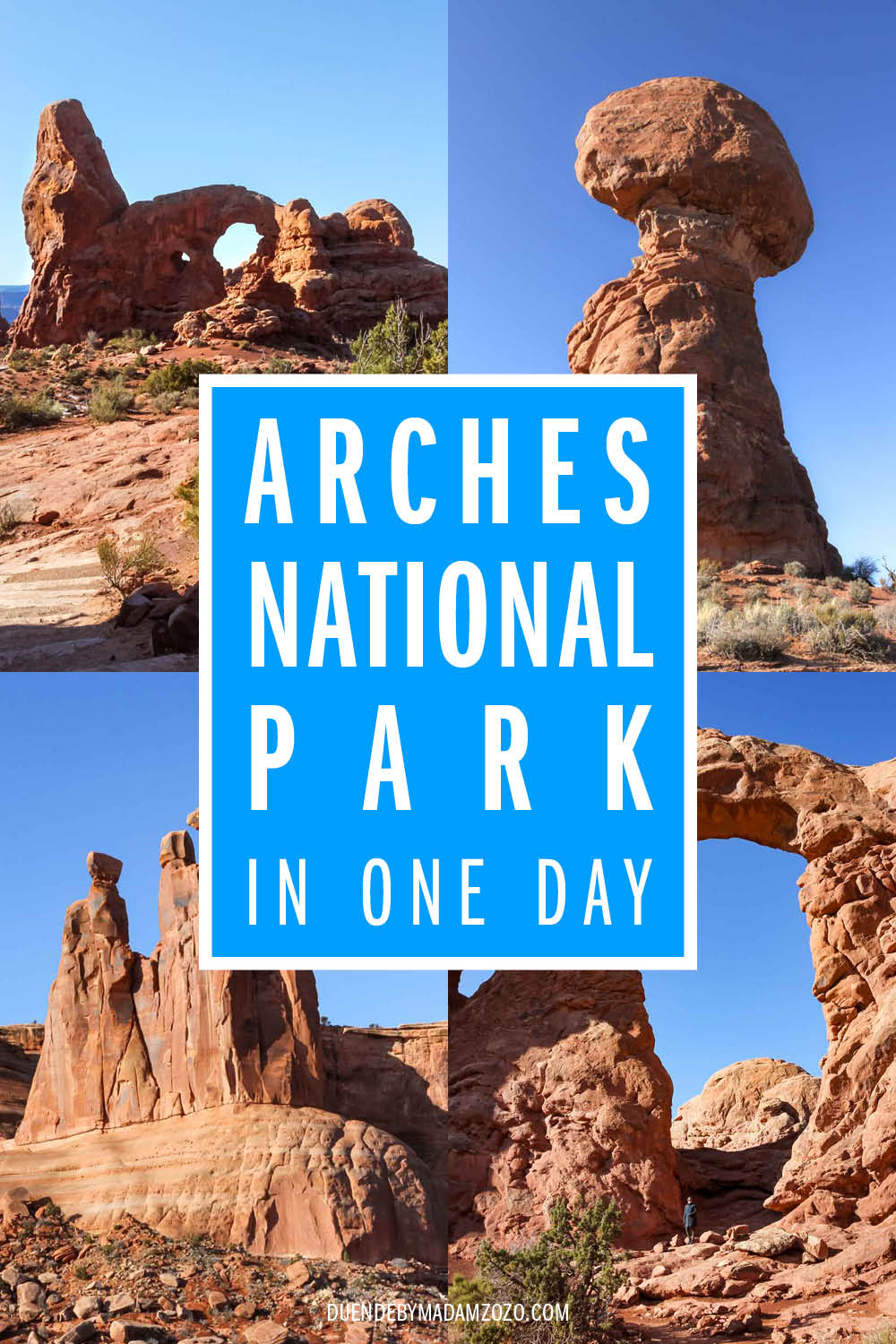
Courthouse Viewpoint – Stop for morning views of Three Gossips, Tower of Babel, The Organ and Sheep Rock.
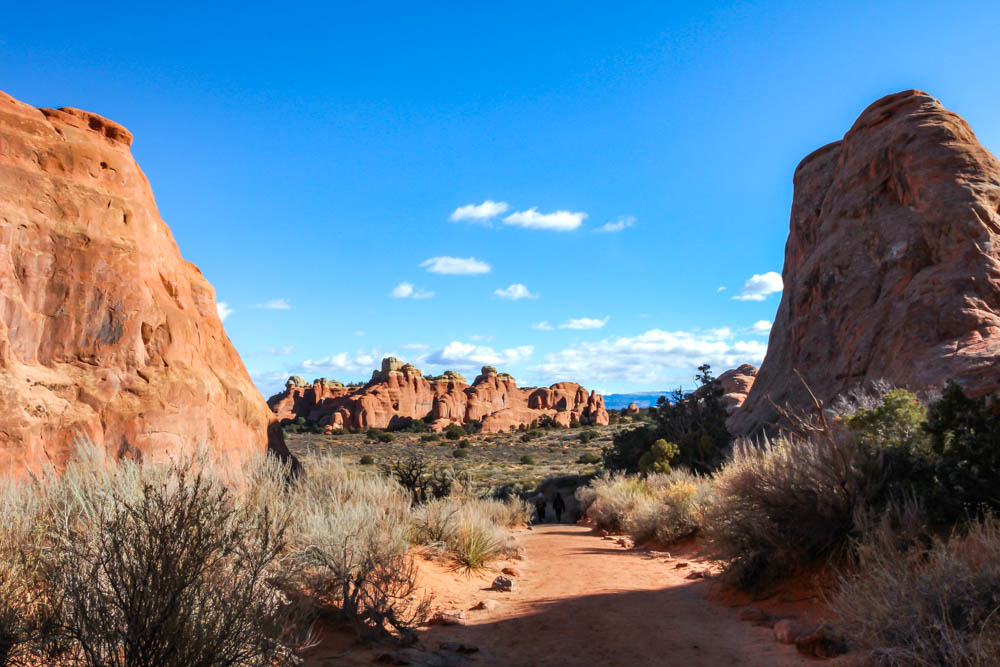
Park Avenue to Courthouse Towers – Up the ante with a short hike for big, red rock views! Though these rocks are easily seen from the viewpoint, but a little extra walking (3.2-km/1.8-mi return) gives you a cool new perspective.
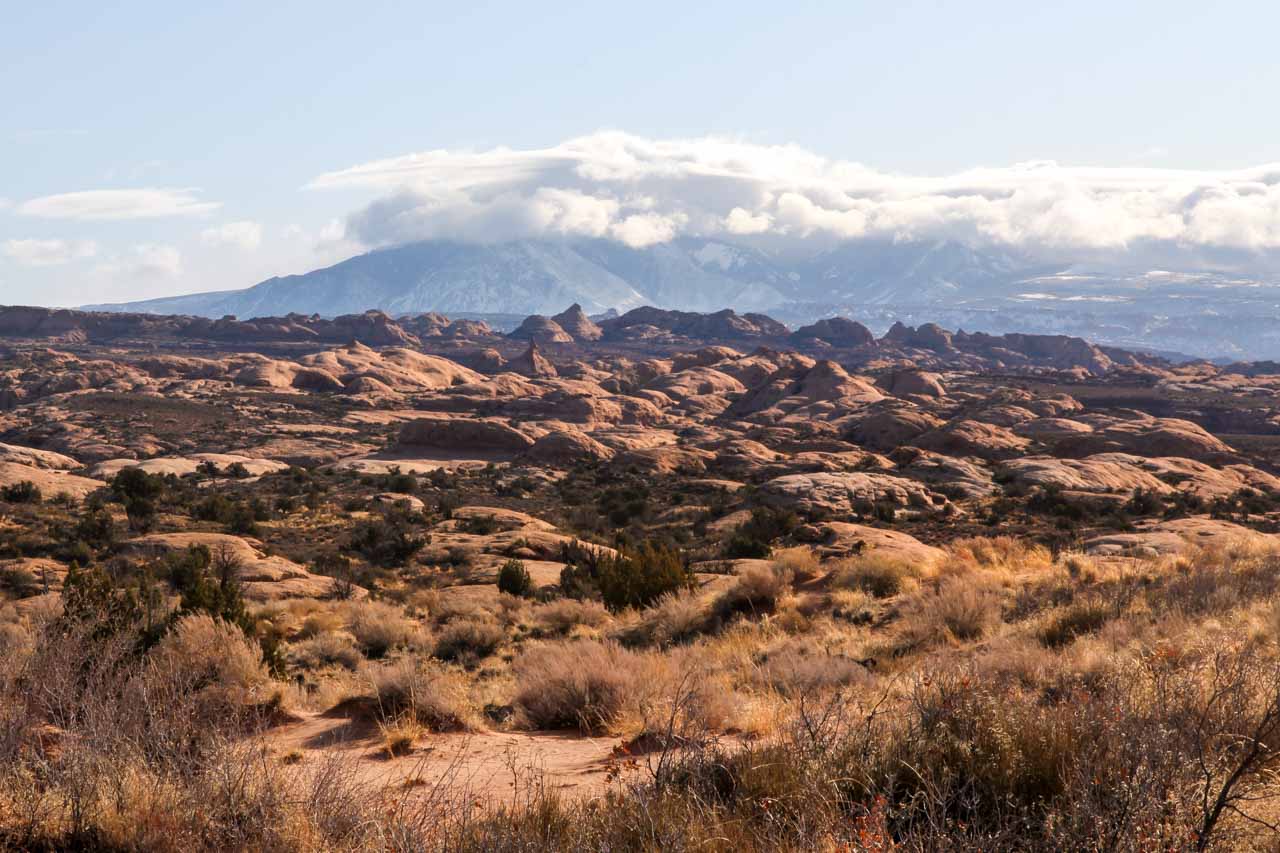
Petrified Dunes Viewpoint – Maybe it’s just me, but I think petrified (technically lithified) dunes are a beautiful geological feature especially when backed by the La Sal Mountains. This viewpoint is a minor pull-out, so be on the lookout for the signs. Also, check out my post about things to do in Moab, if you want to get up close and really personal with these blonde fins while you’re in the region.
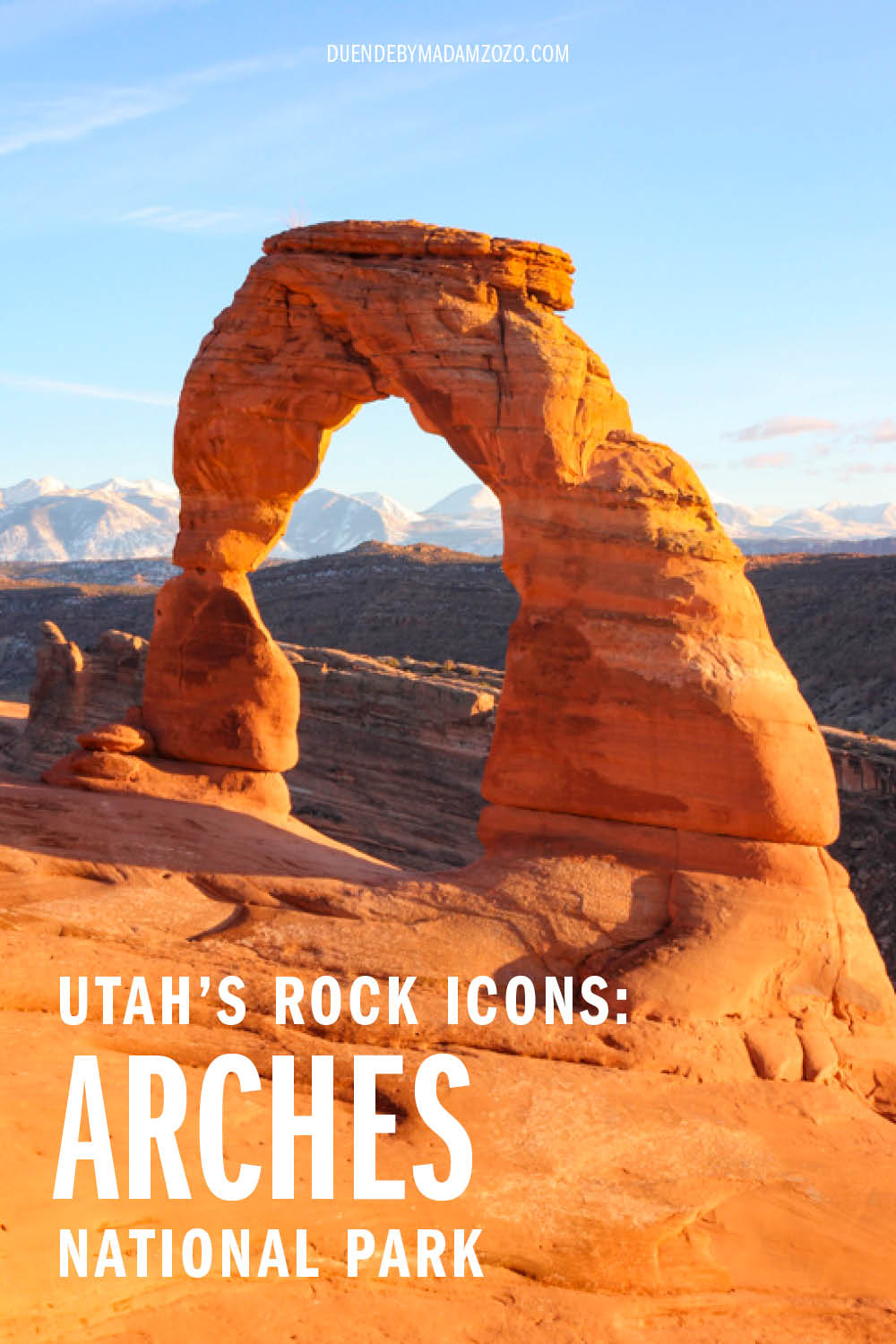
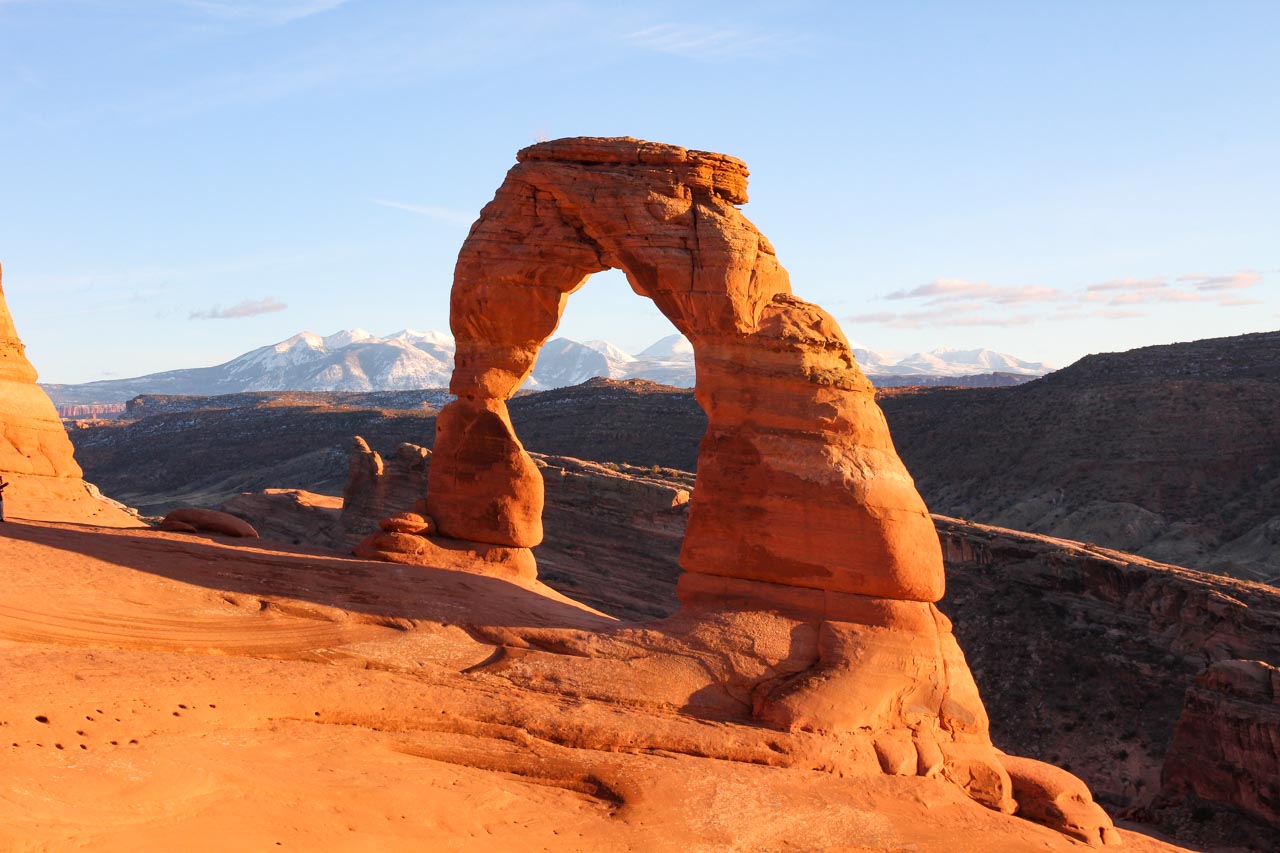
Delicate Arch Viewpoints – If you don’t plan to make a trek up to the top, make sure you drop into the viewpoints to see the most famous arch in the park at a distance. Lower Delicate Arch Viewpoint is a level 61-m (200-ft) walk and wheelchair-accessible. the Upper Viewpoint requires a little more effort with a roundtrip distance of 0.8-km (0.5-mi) and elevation gain of 52-m (171-ft).
Delicate Arch – The most famous arch in the Park and Utah’s state symbol. It requires a relatively short by strenuous 4.8-km (3-mi) round-trip hike, with 164-m (538-ft) of elevation gain. This trail is best timed for either golden hour (morning or evening) because it’s east-west aspect makes for great photos. Make sure you have a light source with you.
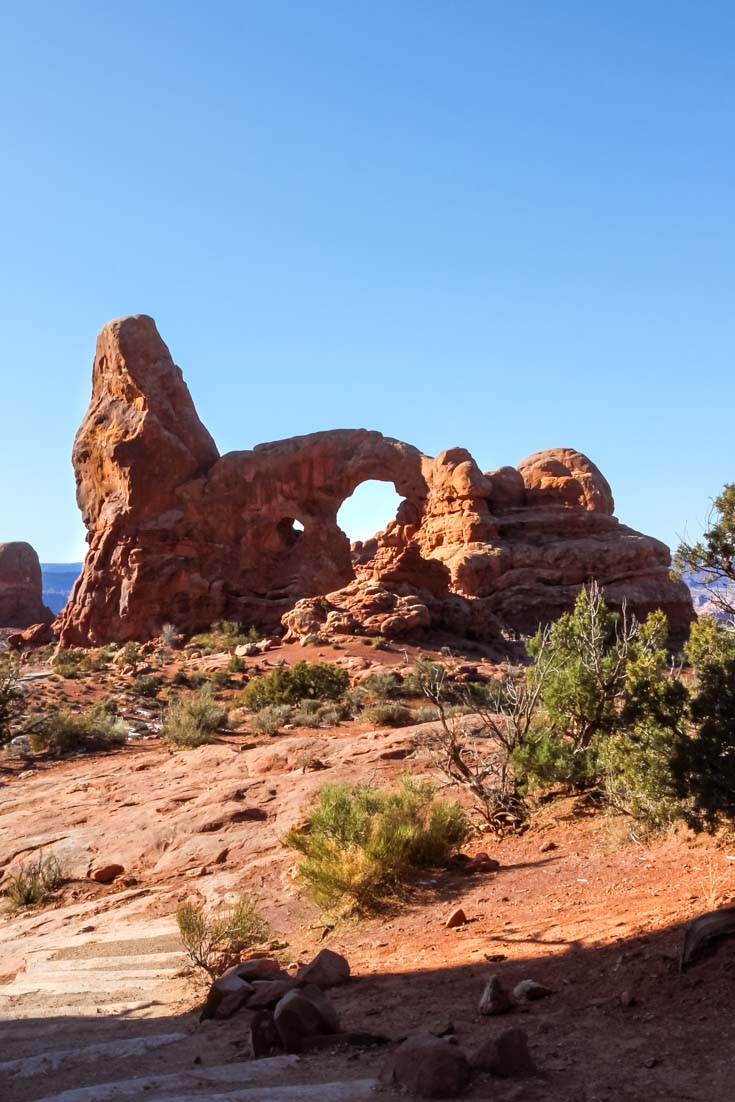
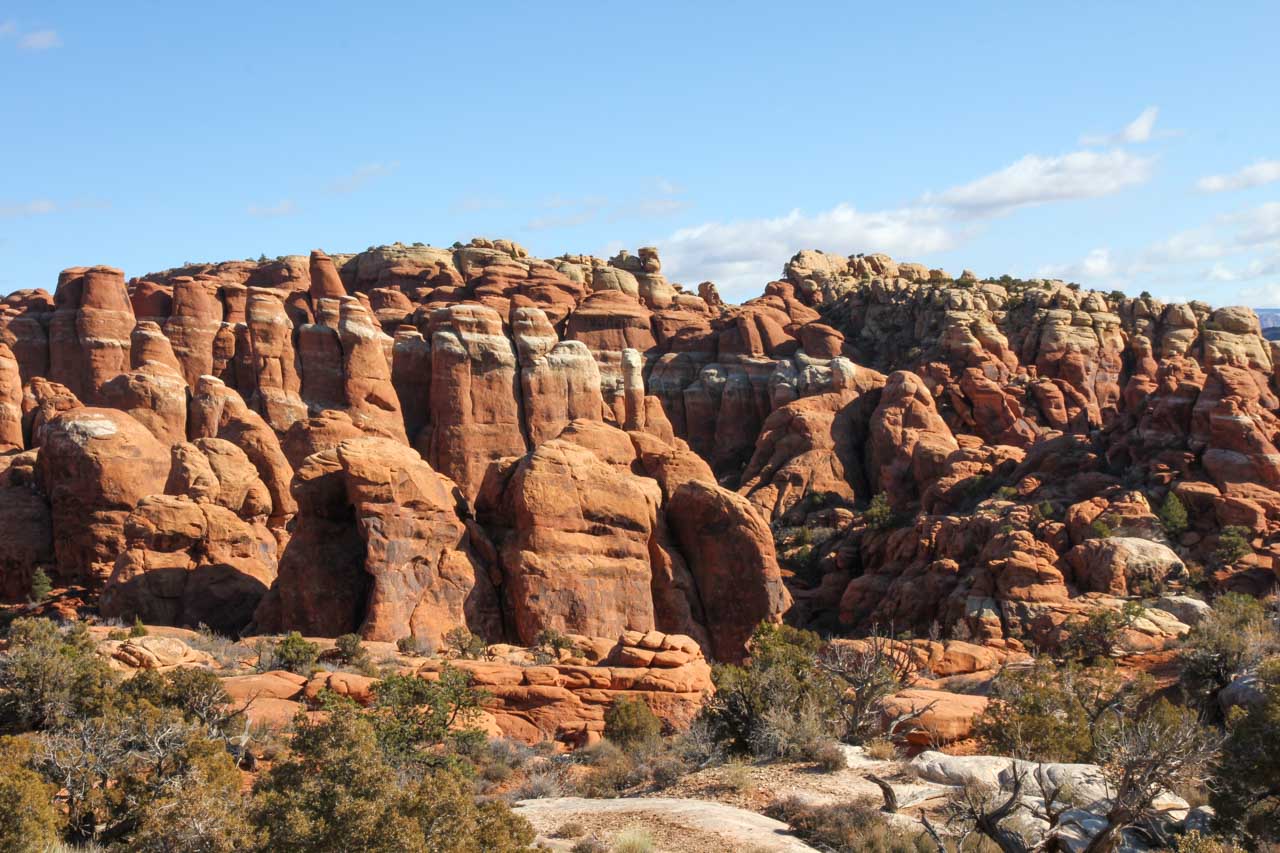
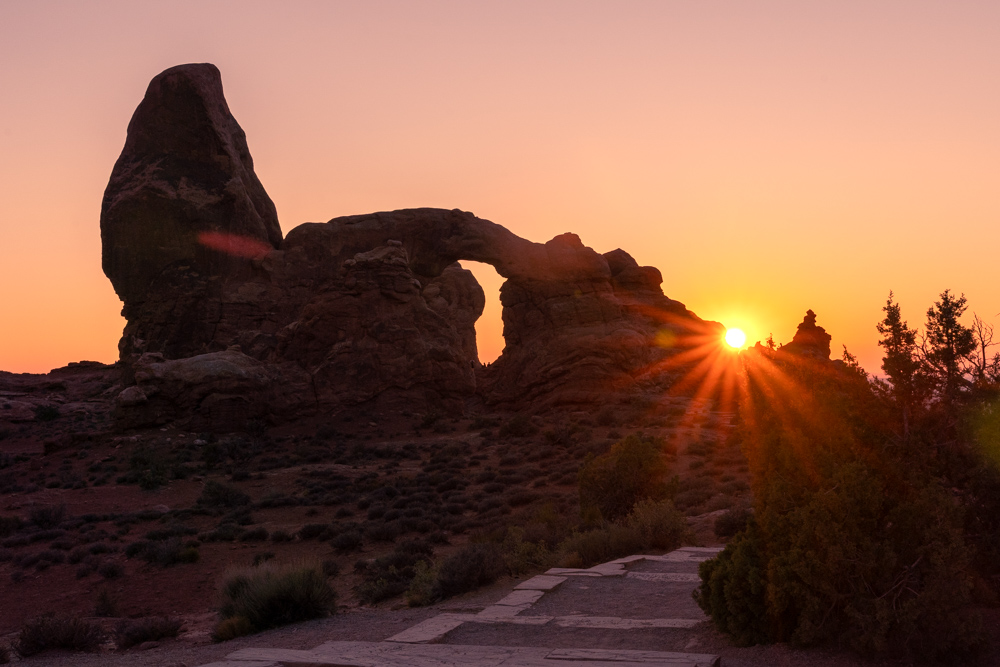
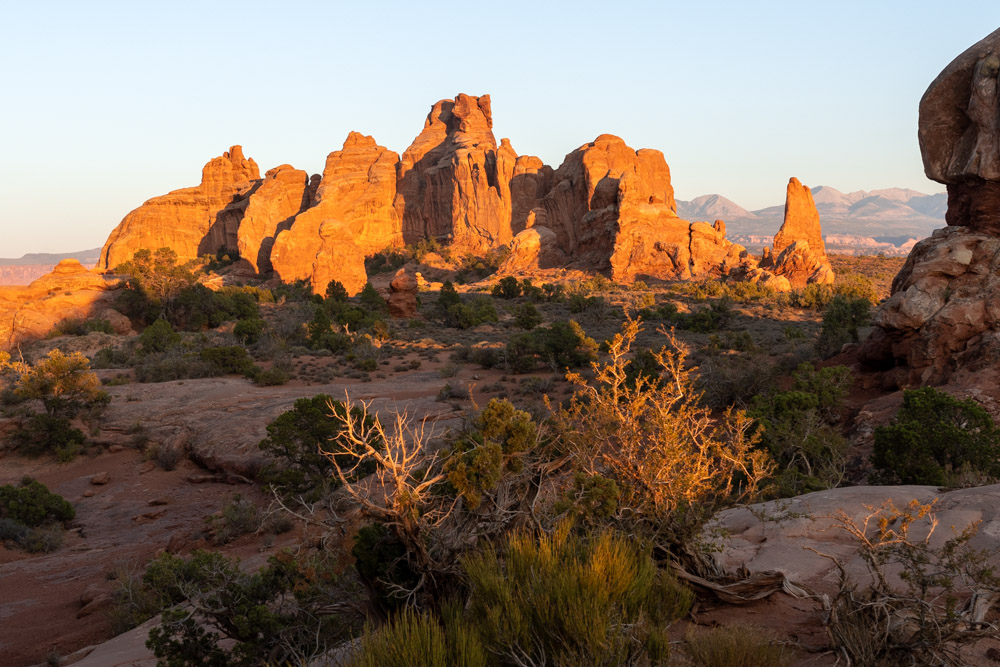
The Windows Section – A short, easy walk brings you to North Window, South Window, and Turret Arch. This area glows beautifully at sunrise. Personally, I think the Garden of Eden (a sub-section of the Windows Section), is a wonderful place to watch sunset. Not for the sunset itself, but for the changing colours on the rock spires that make up this part of the Park.


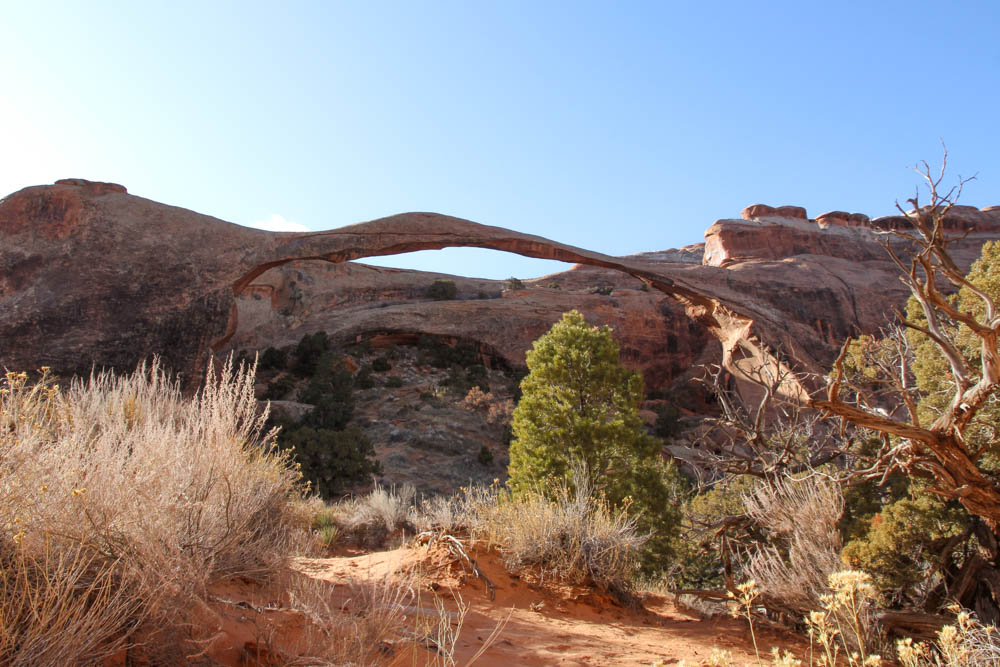
Devil’s Garden and Landscape Arch – Landscape Arch is North America’s widest recorded natural stone span. The trail to reach the arch through Devil’s Garden is relatively easy, scenic and perfect for families.
Balanced Rock – A quirky (read “phallic”), gravity-defying formation right off the main road. A little overrated but quick and easy to access for some cheap thrills.
Fiery Furnace – A labyrinth of narrow sandstone canyons. You’ll need a ranger-led tour or special permit to explore safely. Still on our list for the next visit, this navigational hazard looks like a hoot to explore with someone who knows their way around the maze.
Sand Dune Arch & Broken Arch – Short trails lead to modest arches tucked among tall sandstone fins. The spur to Tapestry Arch looks like a worthwhile diversion too, although we didn’t have time. Skyline Arch is another short out-and-back trail in this area that is worth the 20-minute-ish round-trip hike.
Things to Do in Arches National Park
Here are the top activities to make your visit to Arches National Park memorable:
Hiking
Trails range from short strolls to longer treks. See our top suggestions above.
Photography
Sunrises and sunsets bring incredible light, especially at Delicate Arch and Turret Arch. But a lot of rock formations fall into shadow. Do your research for the time of year you’re travelling and aim for golden hour or earlier, rather than sun-down/sun-up.
Stargazing
Arches is a certified International Dark Sky Park. Stay after dark to see the Milky Way shimmer across the desert sky. Take note astrophotographers, artificially lighting/light painting rock features in the Park is prohibited. Again, May to November sees the clearest skies for stargazing.
Scenic driving
Driving the Park’s 26-km (18-mi) of paved roads is one of the top 5 things to do in Arches National Park. Along the way, you’ll find numerous pull-offs and viewpoints showcasing balanced rocks, towering fins, and panoramic vistas.
Ranger-guided walks
Joining a ranger-guided program is one of the best things to do in Arches National Park if you want to learn about geology, wildlife, and cultural history. These free programs run seasonally and often include guided walks through Fiery Furnace — a maze of narrow sandstone passages that requires a permit if you explore independently.
Picnicking
There are no restaurants or food outlets in Arches National Park. Pack a lunch to enjoy at the Devil’s Garden area, Panorama Point or Delicate Arch Viewpoint. Note, there is not shade – bring lots of sun protection.
Arches National Park itinerary
How long you spend depends on your schedule, but here’s a flexible guide:
Arches in a Day: Start early before crowds and heat set in. Check out The Windows Section, Balanced Rock, and finish with Landscape Arch in Devil’s Garden. Time your trek to Delicate Arch for golden hour and sunset.
Two Days in Arches: Add in Fiery Furnace (ranger tour), Sand Dune Arch and Broken Arch. Spend an evening stargazing.
Three Days or more: Explore all major areas at a slower pace, enjoy sunrise and sunset at different viewpoints, and take time for overlooked trails like Park Avenue to Courthouse Towers and the further end of Devil’s Garden (passed Landscape Arch). If you’ve got a four-wheel drive vehicle, get out into the backcountry and hike to Tower Arch.
Tips for visiting Arches National Park
Timed entry reservations: From April through October, you’ll need a timed entry ticket. Book online in advance to secure your spot. You can enter before 7am and after 4pm without a timed-reservation.
Start early or stay late: Beat the crowds and avoid the hottest part of the day by exploring early and late. You’ll also catch the best light for photography.
Pack smart: Bring plenty of water (more than you think you’ll need), sturdy footwear, sun protection (lots of it) and a flashlight if hiking at dusk.
Combine with Moab adventures: Extend your trip with rafting, mountain biking or exploring Canyonlands nearby.
Accommodation: There are no lodges in Arches National Park, only campgrounds. Moab is just a few miles away for convenient accommodation, dining and amenities.
From the iconic arches to sandstone sculptures, there are tonnes of fun things to do in Arches National Park. Drive the scenic roads, check out the viewpoints, and gaze at the Milky Way under desert skies. Arches offers an unforgettable adventure for all kinds of travellers.
Peace, love and desert sun,
Madam ZoZo
Pin for later…