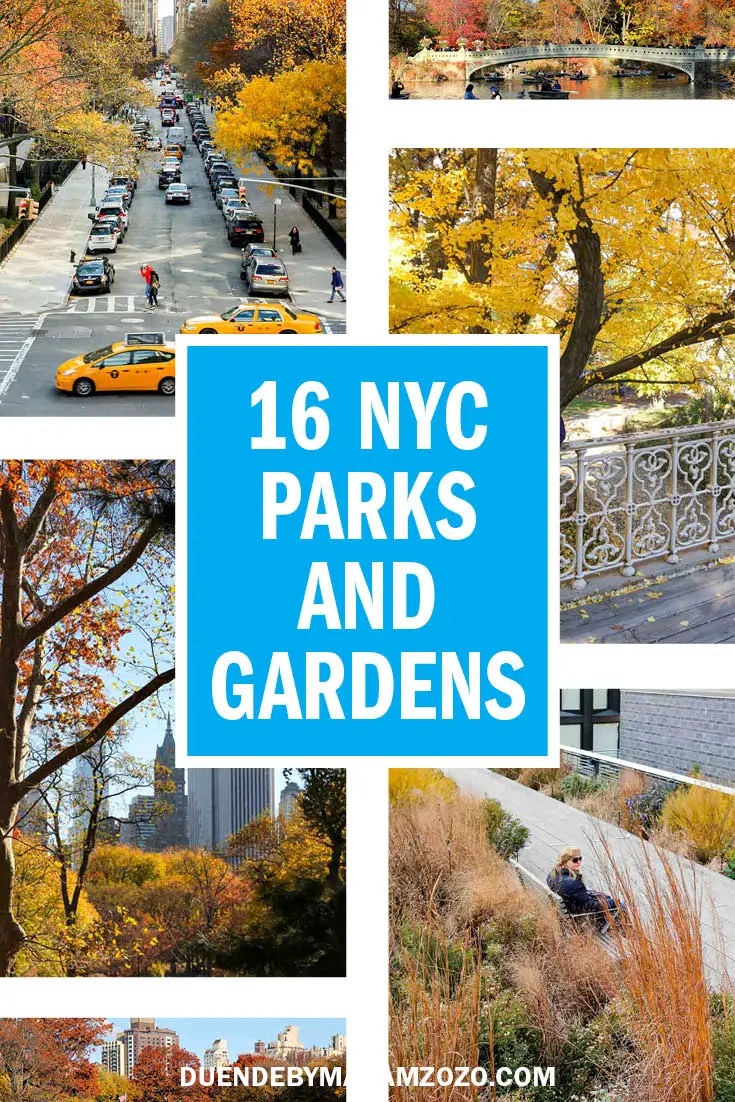

When you think of New York City, it’s unlikely green spaces immediately come to mind. But let me assure you, this metropolis is full of emerald gems. If you’re looking for outdoor things to do in New York, start by exploring these cool Manhattan parks, islands, community gardens and natural attractions.
According to NYC Parks there are over 1700 parks, playgrounds and recreation spaces across the city’s five boroughs. Officially, the city sets aside 27% of its land for parks and greenways. In this post, I’ll focus on parks in Manahattan Borough, as there are so many to explore. For more things to do in New York City, see these posts:
Must See NYC: New York City Guide
Top Things to do in New York City (the Second Time)
City Break: How to Spend a Weekend in NYC
NYC Holiday Lights & Sights | Decorations, Markets & More
What to Pack for NYC – All Season Packing Guide
Central Park
Address: From N 11th St to Central Park S St
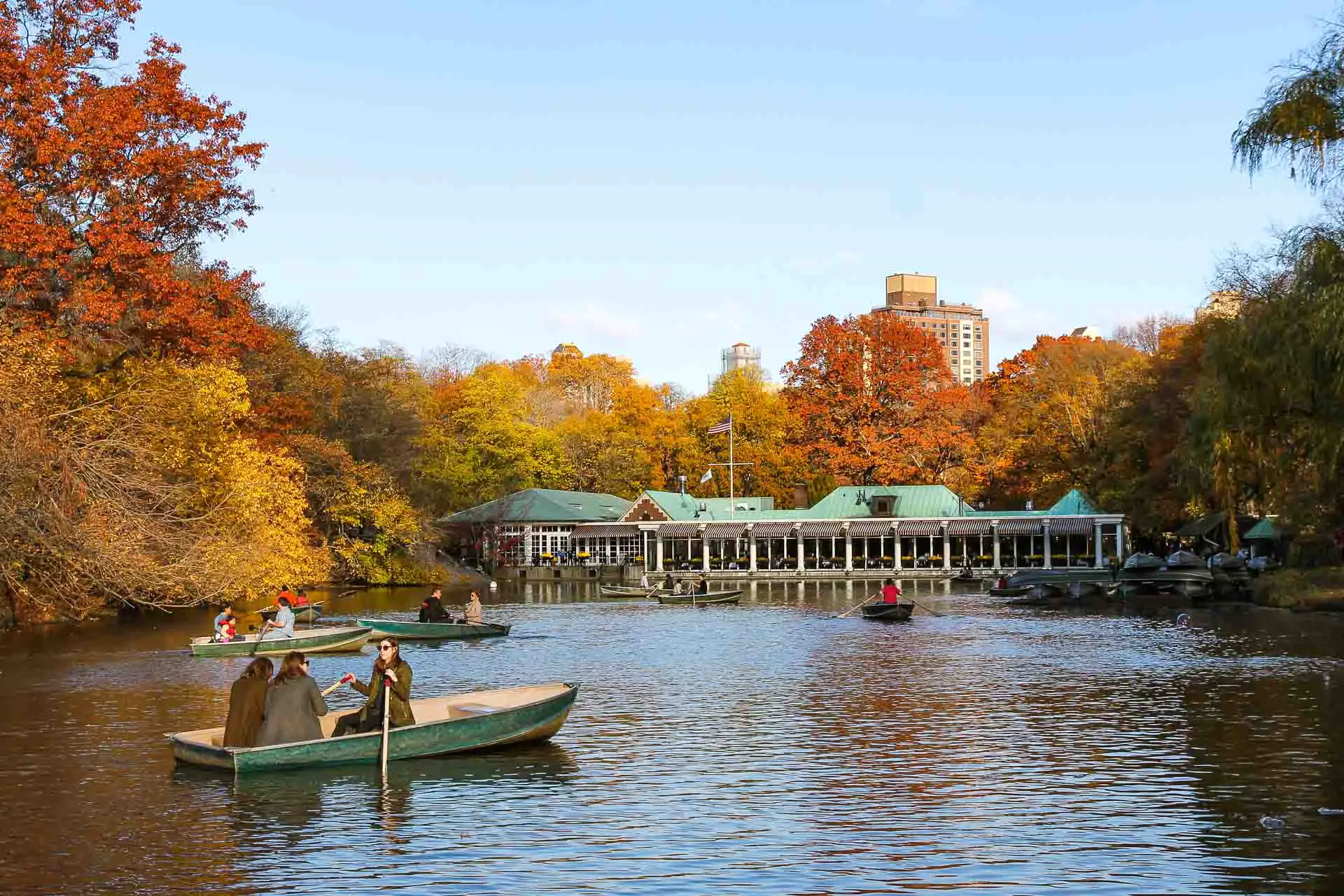
It’s unlikely you missed the memo, but just in case… Central Park is the biggest urban park in Manhattan and the fifth largest in greater NYC. Landscape architects Frederick Law Olmstead and Clavert Vaux came up with the winning design for the 843-acre park (that’s bigger than Monaco) in the 1850s.
The world-famous parkland is thought to be the most filmed location in the world and everything you’ve probably seen of it in pop culture is probably true. From the dog walkers to horse and cart rides, buskers to holiday season ice skating.
The enormous green space includes the Jacqueline Kennedy Onassis Reservoir, Central Park Zoo, eight lakes and ponds, open meadows, woods, formal gardens, playgrounds, baseball diamonds, along with seventy statues and monuments.
Tip: Don some comfortable shoes, maybe rent a bike and start with these top attractions: Bethesda Fountain, Loeb Boathouse, Strawberry Fields, The Mall & Literary Walk, Belvedere Castle, Cleopatra’s Needle, Alice in Wonderland statue and so much more.

The High Line
Address: Cnr of Gansevoort St and Washington St to W 34th St
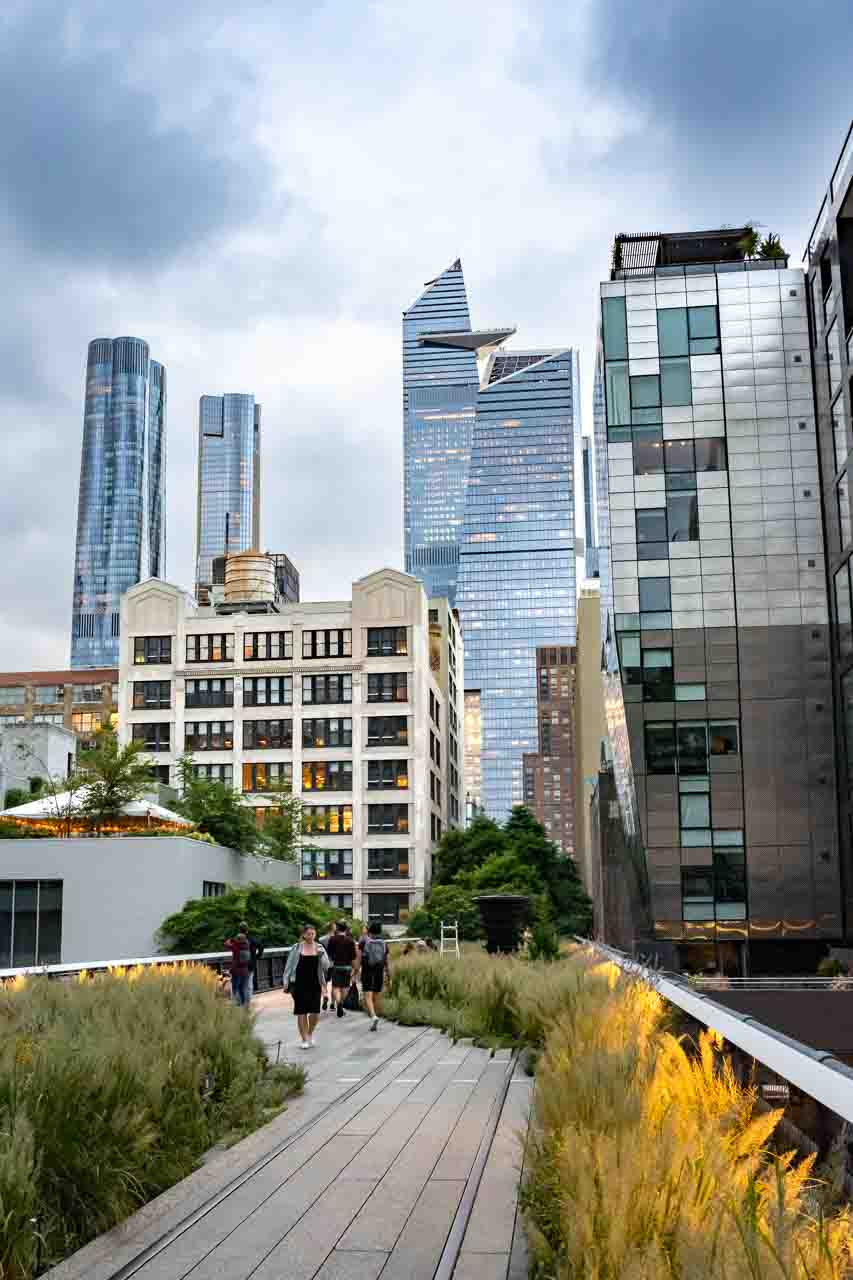
The High Line, built on a disused, elevated rail line, is one of New York’s most popular green spaces for residents and tourists alike. During the mid-1800s, freight trains rumbled through the streets of Manhattan, terrorizing pedestrians. In the Roaring 20s, elevated railways were installed, but decades later were abandoned as trucking became the dominant form of freight transportation.
The idea of transforming it into a recreational area was seeded in the 1980s but didn’t sprout until the late-1990s when Friends of the High Line was established. After rescuing the High Line from demolition, a design competition fielded ideas for repurposing the space. In 2009, the first completed section opened to the public and the rest is history.
The 2.3-km (1.45-mi) greenway houses over 500 species of plants and an everchanging line-up of public art. It provides uniquely elevated views to Manhattan’s streetscapes and hosts public events. The High Line is a fun stroll at any time of the year, and a lively place to observe seasonal changes in what might otherwise be a concrete jungle. See accessibility info on the High Line website.
Tip: Even though it’s not quite at the end of the High Line, I like to start or end my walk at Chelsea Market for delicious things to eat and shopping the work of local makers at Artists and Fleas.


Washington Square Park
Address: Bound by 5th Ave, Waverly Pl, W 4th St and Macdougal St
Washington Square Park is prime for people-watching, protests and performance. The Park was a marsh near the Native American Sapokanikan village before colonial settlers turned up. Following the American Revolution, it evolved from a place of public executions and burials, through to a military parade ground. Eventually it became a public park in 1827.
The Triumphal-style arch long associated with Washington Square Park came about in the 1890s. It was constructed to honour President Washington at the centenary of his inauguration. The Manhattan park is also known as a venue for public protests, including that of labour unions following the devastating Triangle Shirtwaist Factory fire of 1911. Subcultures such as The Beat Generation and Folkies hung out in the Square during the mid-20th century, furthering its reputation for performance and protest.
While not the greenest of the parks on this list, Washington Square Park is a great spot for people watching.
Madison Square Park
Address: Bound by Broadway and Madison Ave, between E 23rd St and E 26th St
Madison Square Park is a lovely swatch of green adjacent to the famous Flatiron Building and other historic NYC architecture.
Named for fourth US President, James Madison, the Manhattan park served various purposes throughout its history. Much like Washington Square Park, it was a potter’s field (cemetery for poor and unidentified people), before becoming a military parade ground. It opened as a public park in 1847 and hosted various high-profile events in its early years.
Madison Square Park has long been an outdoor gallery of sculpture and monuments. It blooms with crabapple, cherry and apricot blossoms each spring.
Tip: Grab something delicious from Eataly, right across 5th Ave, and settle in for a picnic.


Bryant Park
Address: Bounded by Fifth Ave and Sixth Ave between 40th St and 42nd St
Public property since 1686, the area that is now Bryant Park was another potter’s field. The burial ground was discontinued when preparations for the Croton Distributing Reservoir began. The 4-acre, human-made lake was contained by 7.5-m (25-ft) thick granite walls and completed in 1842. The Reservoir played a critical role in water supply to NYC residents until it was removed in 1900.
Also part of Bryant Park’s history was the US version of London’s Crystal Palace exhibition hall. At the time it was completed in 1853, it was the largest building in the country. Unfortunately, it burnt down in 1858. Finally, in 1884, Reservoir Square became Bryant Park named for poet, editor and civic reformer, William Cullen Bryant.
In 1911, the glorious, Beaux-Arts New York Public Library building was completed, backing onto the park. A 1934 redesign introduced the French Classical structure of the park we see today. The design incorporates a central lawn, formal pathways, stone balustrades, allées of trees and a beautiful fountain.
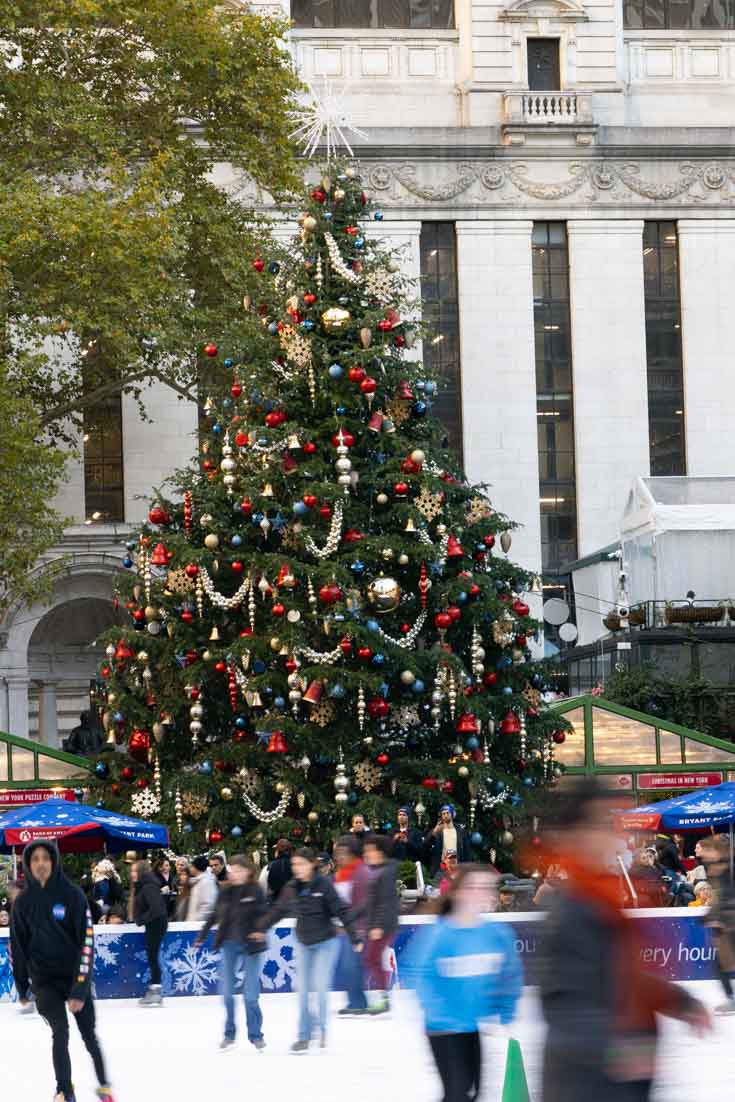
Bryant Park is 9.6-acres of Manhattan green space bordered by some of the city’s amazing historic architecture. This is my favourite Manhattan Park during the holiday season, when it becomes a festive Winter Village with ice skating and performances.
Tip: While you’re in the area, visit the New York Public Library flagship, Stephen A. Schwarzman Building. Tour the Hollywood film-worthy, Rose Main Reading Room and explore the free Polonsky Exhibition of Treasures. The ongoing exhibit showcases items from the libraries archives ranging from a Gutenberg Bible to the soft toys that inspired A.A. Milne’s Winnie-the-Pooh characters.

The Battery
Address: State St and Battery Pl
Prior to colonisation, the Lenape and Munsee Native American peoples hunted and fished on these grounds on the southern tip of Manhattan. They established a trading path to north of the island, known as a “broad” way—giving Broadway avenue the name still used today.
In 1626, after European settlement began, Fort Amsterdam was built at The Battery to serve the Dutch West India Company. Following British takeover and the Revolutionary War, the fort was demolished and The Battery became a public space. In fear of another British invasion, a new fort was constructed in the early 1800s but never saw military aggression. It was renamed more than once including the monikers Castle Clinton and Castle Garden.
The disused fort was repurposed time-and-again as an entertainment venue; for immigration processing; and as an aquarium. In the 1960s the site was added to the National Register of Historic Places and restored by the National Park Service.
You’ll likely visit The Battery if you plan to take the ferry to the Statue of Liberty or Ellis Island. Take the time to look inside restored Castle Clinton and enjoy the surrounding gardens.
Tip: My personal favourite is The Battery Bosque, a 4-acre woodland designed by Dutch landscaper Piet Oudolf planted with perennials and native flora, framing views to the Statue of Liberty.


Rockefeller Park and the Irish Hunger Memorial
Address: River Terrace
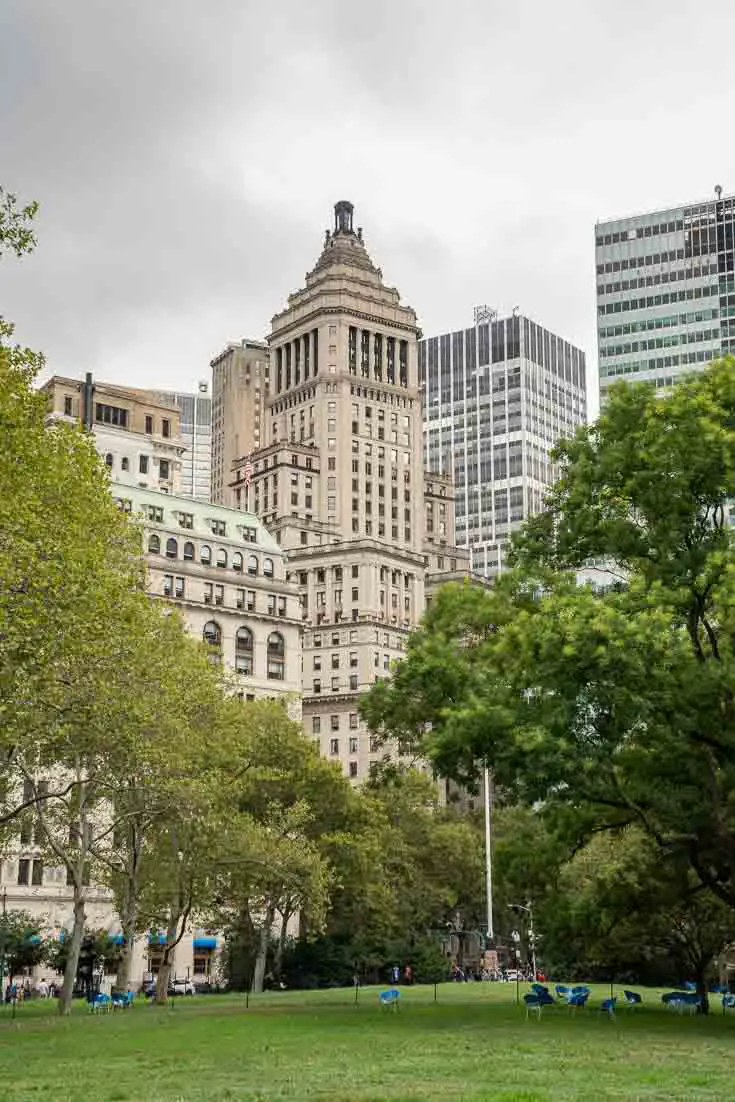
If you wander along the Battery Park City Esplanade towards the north, you’ll eventually reach Rockefeller Park. This pretty Manhattan green space incorporates a large expanse of lawn, Sculpture Park, basketball court, and lily pond.
Opened in 1992, Rockefeller Park has a large lawn, playground, public art and gardens. There are public restrooms available too.
Don’t miss the Irish Hunger Memorial, built to raise awareness of the Great Irish Hunger, a famine between 1845-1852 that saw well over a million Irish citizens starve. The Great Hunger compelled many Irish people to seek migration opportunities to places such as New York City, in order to survive. This stunning and poignant memorial includes a 19th-century Irish cottage and 60 plants native to Ireland. The monument’s walls are constructed of stones taken from all counties of Ireland.

First Street Green Cultural Park
Address: E 1st Street
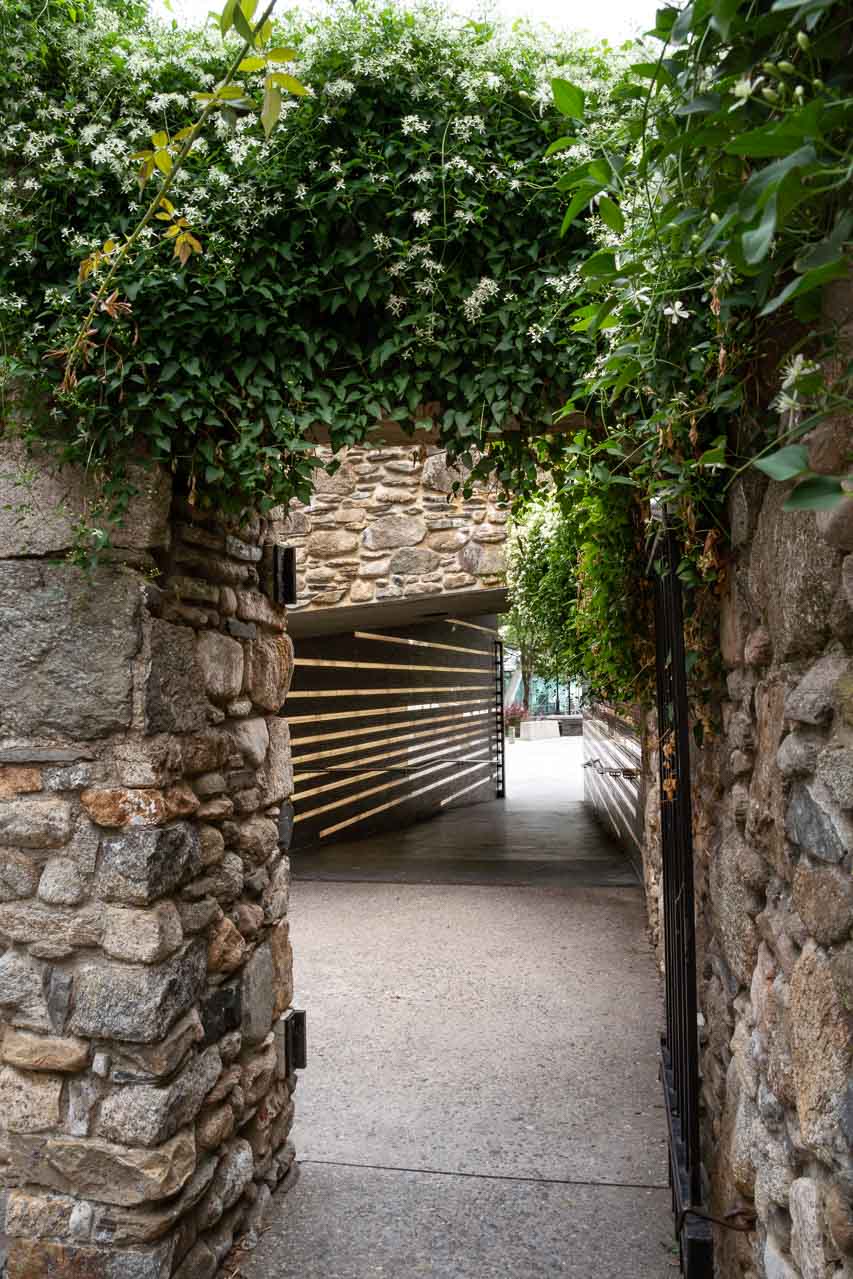
If you’re into street art, I highly recommend checking out First Street Green Cultural Park (First Street Green or FSG for short) on the Lower East Side. The lot was formerly occumpied by a derelict building which was demolished in 2008 and transformed into a garden with open-air art space. It hosts a program of workshops and events including a Community Mural School.
Tip: I try to visit this park each time I’m in NYC to see the rotating line up of murals. There’s always something new and it runs parallel to a strip of iconic Jewish eateries.


Liz Christy Garden
Address: E Houston St, between Bowery and Second Ave
Right across from First Street Green is New York City’s first ever community garden. In 1973 this lot was filled with garbage and old cars. Liz Christy, a young artist at the time, recruited a group of like-minded residents dubbed the Green Guerillas.
Together, they set out to transform the lot into Bowery Houston Farm and Garden. Multiple times throughout its history, the Garden has been threatened by development but community support saved the green space that is now named after its founder.
Tip: Liz Christy Garden and First Street Green Cultural Park are a stone’s throw from New York Jewish food institutions: Katz Deli, Russ & Daughters and Yonah Schimmel’s Knishery.


Little Island
Address: Pier 54 in Hudson River Park at W 13th St
Little Island is one of NYC’s newest green spaces, opening in May 2021. The two acre “island” in the Hudson River rose out of the destruction of Hurricane Sandy.
Pier 54 was once the embarkation/disembarkation for trans-Atlantic ocean voyages run by the British Cunard-White Star line (yes, the one that ran the Titanic). The steel arch you will see at the pier entrance is a remnant of that time. Abandoned in the 1970s and revived as a public park in the 1990s, the pier was struck down by Sandy in 2012.
Today it has been reimagined as Little Island, an innovative New York City park that incorporates outdoor performance spaces into its design. Raised up on distinctive, funnel-shaped concrete pillars, the Park’s multilevel topography, landscaping and views have quickly made it an Instagram darling.
Tip: The Whitney Museum of American Art, Chelsea Market and the southernmost point of the High Line are in the Little Island vicinity.


Pier 57
Address: Pier 57 in Hudson River Park at W 13th St
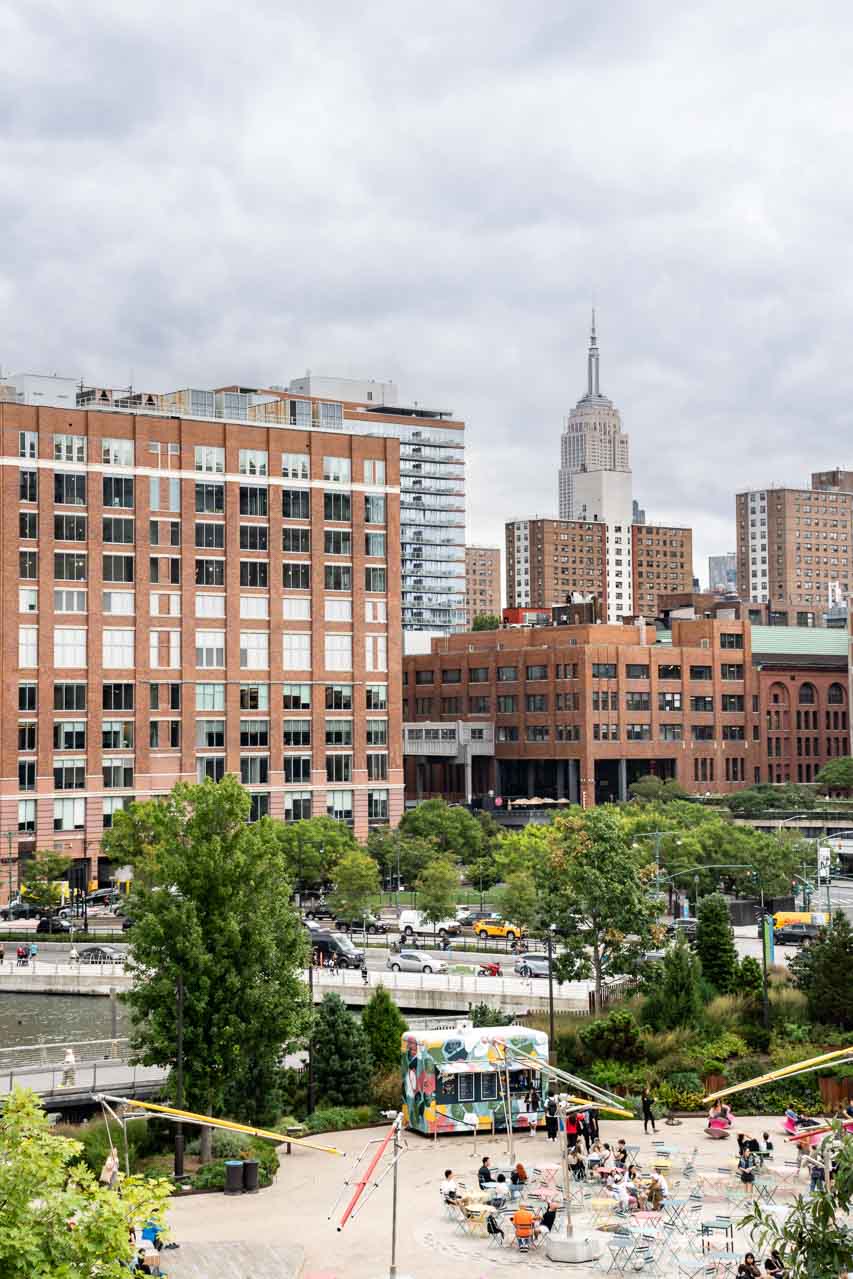
Pier 57 is a Manhattan park and cultural precinct, located right alongside the aforementioned Little Island. The multi-story facility consists of an indoor food market (curated by the James Beard Foundation no less); community space; Google offices and a 2-acre rooftop park open to the public.
The reimagined pier is an official historic site dating back to 1907. It’s crowning park has two levels with lawns, gardens, and plenty of seating. The elevated green space offers expansive views down to the Manhattan financial district and across the Hudson River to New Jersey. In addition, the park’s westerly aspect makes it the perfect sunset picnic spot.
Among various events hosted at Pier 57, the rooftop greenspace has been a TriBeCa Film Festival outdoor screening location since the site opened in 2022.
Tip: Make sure you bring sun protection—most of the rooftop is open with only a small shaded area on the upper level.

Gramercy Park
Address: E 20th St to E 21st St, between Gramercy Park West and Gramercy Park East
Gramercy Park is a private park located on a former swamp and developed in the 1830s. The square was deeded to the owners of the surrounding 66 parcels of land as a sort-of shared front yard. Even today, the owners of the surrounding homes are co-owners of the Park and hold the keys to the annually changed locks.
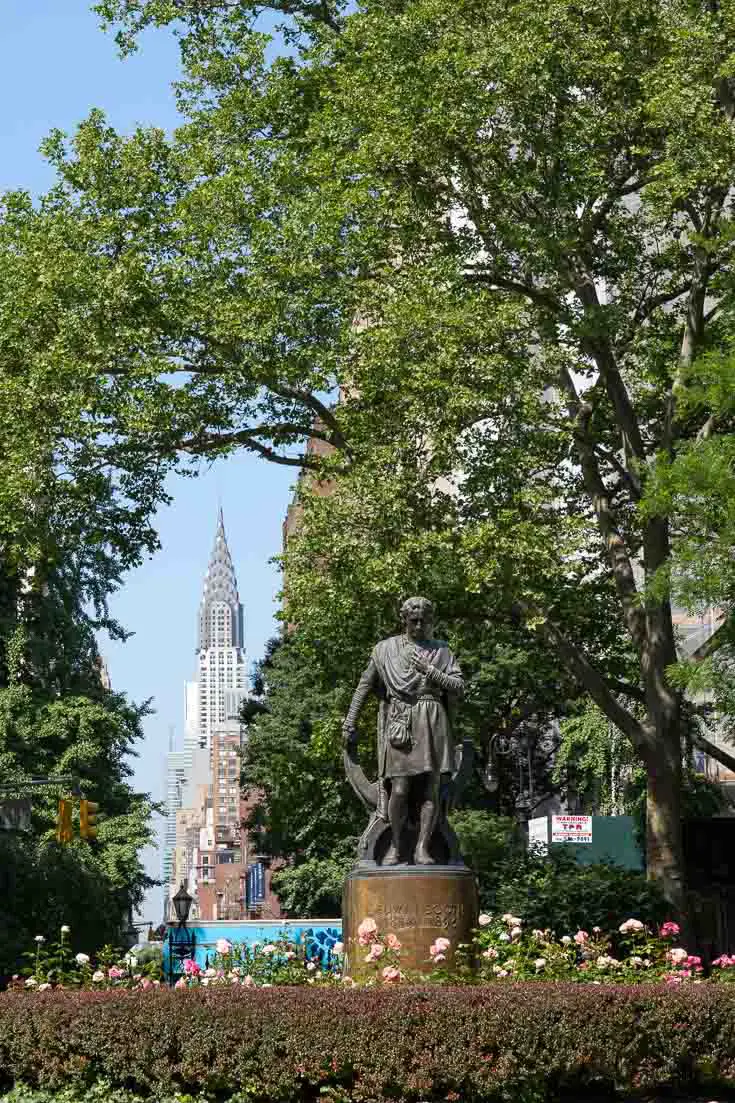
You can’t actually get into this exclusive park (unless you have friends who are co-owners)—that’s part of the allure. The 2-acre emerald is visible from the skirting sidewalks, so you can still enjoy the greenery while browsing the historic architecture of the residential district and views straight up Lexington Ave to the art deco Chrysler Building.
550 Madison
Address: 550 Madison Ave
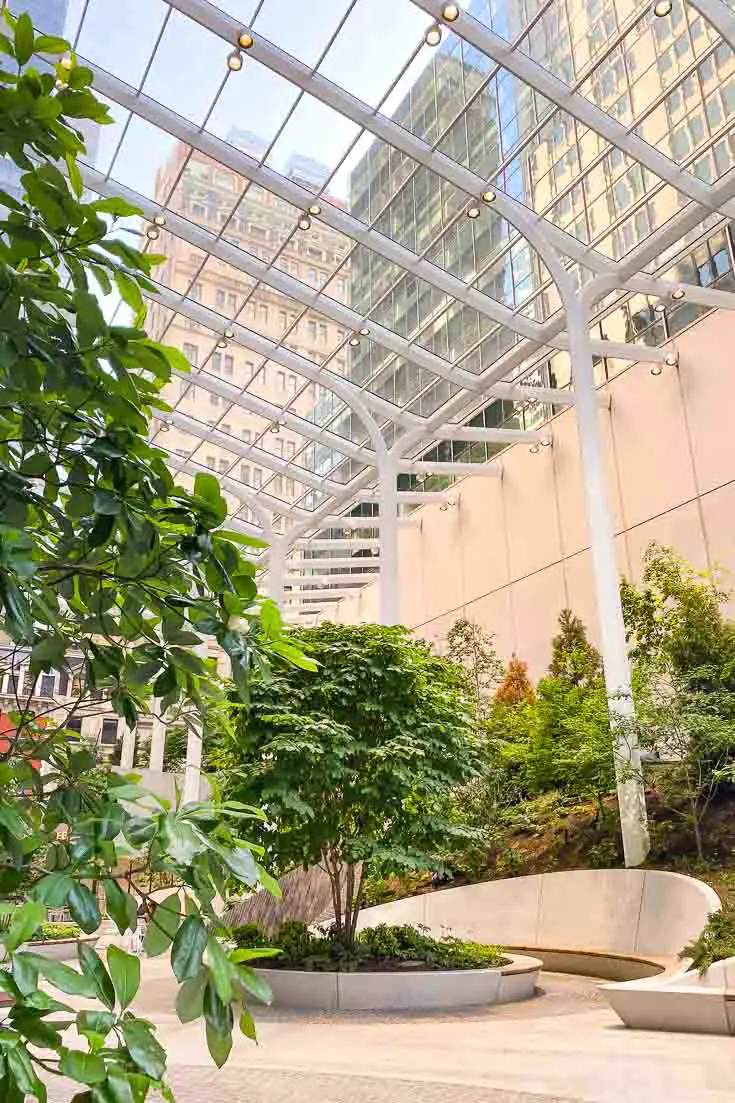
If the weather isn’t crash hot, make your way to 550 Madison in Midtown. There you’ll find a newly-opened, half-acre public garden covered by a 21-m (70-ft) glass canopy. The garden is said to contain 48 trees, 200 shrubs, 6300 bulb plants and 10,000 herbaceous plants. Plus, you can grab food from three kiosks and use the gender-inclusive restrooms.
Fort Tyron Park
Address: Riverside Dr to Broadway, between W 192 St and Dyckman St
Uber-wealthy industrialist, John D. Rockefeller, began buying up the 67-acres of land that now makes up Fort Tyron Park in 1917. He envisioned a large park with views over the Hudson River and the Palisades (those are the steep cliffs on the west bank of the Hudson).
Rockefeller commissioned a design by brothers Frederick Law Olmsted Jr and John Charles Olmsted (sons of the Central Park designer), who supervised its construction through the 1930s. Rockefeller gifted the land to the City of New York and dedicated it to public use upon completion.
As one of the highest points in Manhattan, the Park has outstanding views of the Hudson, Palisades and George Washington Bridge. It boasts the city’s largest dog run and is home to The Met Cloisters, a branch of The Metropolitan Museum of Art exhibiting its Medieval collection. The Cloisters is a purpose-built structure designed to evoke the Medieval art it contains and is well worth an hour or so of your time.


Roosevelt Island
Address: East River
Roosevelt Island squeezes its skinny land mass into the East River between Manhattan Island and Queens. It’s roughly 3.2-km (2-mi) long and a narrow 240-m (800-ft) wide. The island is largely free of vehicular traffic and has three Manhattan parks of note (Roosevelt Island is technically withing Manhattan Borough).
At the southernmost end of the Park, is the Franklin D. Roosevelt Four Freedoms Park. This 4-acre park contains a memorial to Roosevelt and the Four Freedoms he articulated in his 1941 State of the Union address. The Park has great views back to Manhattan Island and in particular, the United Nations HQ building.
Adjacent to Four Freedoms Park is the ivy-strewn ruins of an old Smallpox Hospital. The hospital was bult in 1856 with a Medieval flair. It was the first hospital in the US to receive patients suffering from smallpox and was a quarantine facility for New York residents. After vaccines rendered the hospital unnecessary, it was abandoned. The crumbling ruins have now been stabilized and are being revitalized as part of a park called “Wild Gardens, Green Rooms”.
At the northernmost point of Roosevelt Island, you’ll find Lighthouse Park housing a 15-m (50-ft) lighthouse. The beacon was built in 1872 by inmates of the island’s then penitentiary. The lighthouse was built to help mariners navigate the East River, that was a gauntlet of granite boulders at the time.
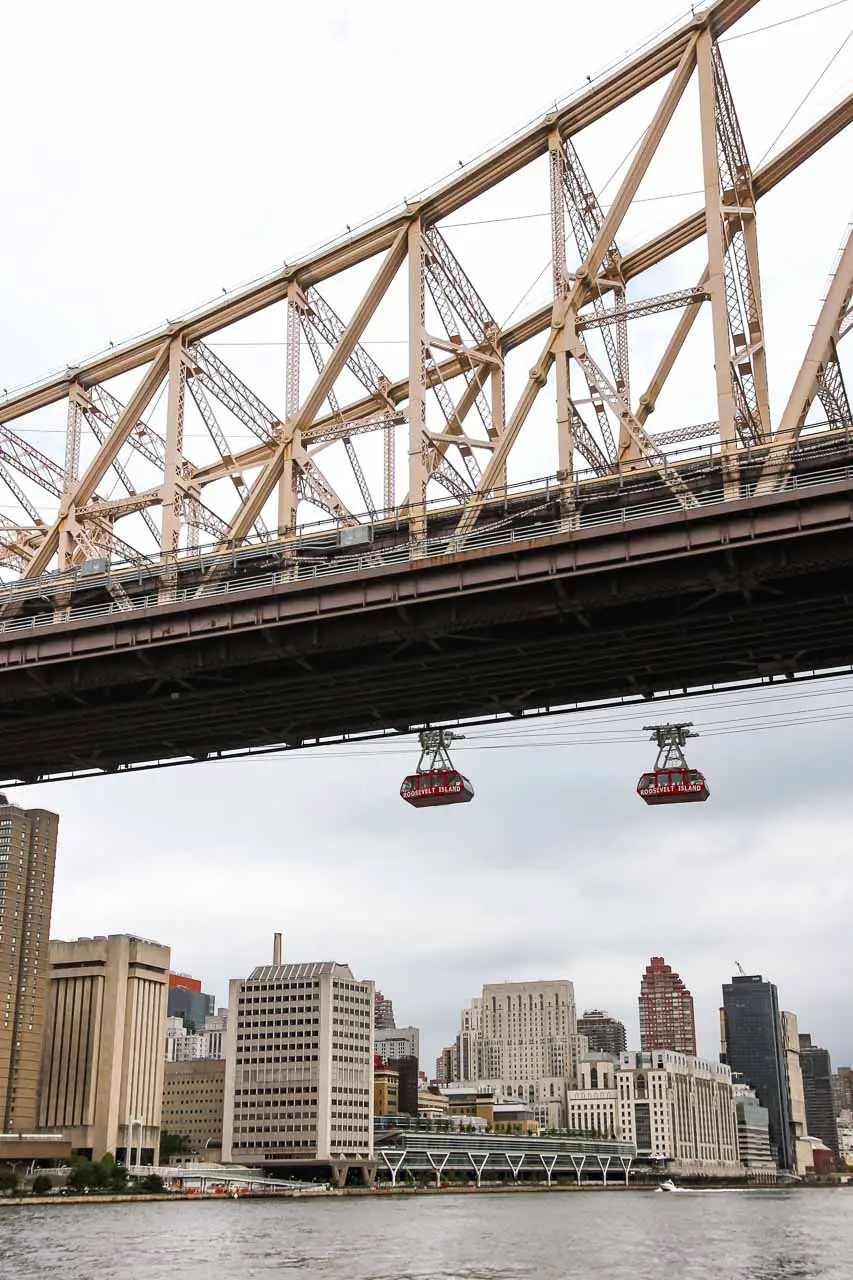
Tip: Accessing the island is part of the fun! Take the Roosevelt Island (aerial) Tramway, the United States’ oldest commuter tramway, from Manhattan Island for cool views over both Manhattan and the East River. If heights don’t agree with you, stick with the F Train or take the NYC Ferry.

Andrew Haswell Green Park
Address: E 60th St at the base of Queensboro Bridge
I first spotted this Manhattan park from the Roosevelt Island Tramway and had to investigate. It turns out that the Alice Aycock Pavilion, with its rooftop lawn and monumental sculpture that initially caught my eye, was once a waste transfer station. In 1985 it was decommissioned and a failed hotel project that followed, led to the site being repurposed as a public green space and event venue.
The Pavilion is part of a larger park named after Andrew Haswell Green, a lawyer and city planner who led projects such as Central Park, the New York Public Library, Bronx Zoo, The Met and the American Museum of Natural History. This is one of those unexpected New York City green spaces that is fun to discover.

Governors Island
Address: New York Harbor
The Lenape Native American people inhabited this island when the Dutch arrived in 1624 and the Dutch West India Company later purchased the land. After the British captured New Amsterdam in 1664, they took control of the Island and reserved it for the use of “His Majesty’s Governors” renaming it as they saw appropriate.
Following the American Revolution, Governor’s Island became part of a coastal defense system and housed other military facilities and personnel up to the 1960s when it was transferred to the US Coast Guard. In the mid-1980s it became a recognized National Historic District and in 2001 was placed under management by the National Parks Service.
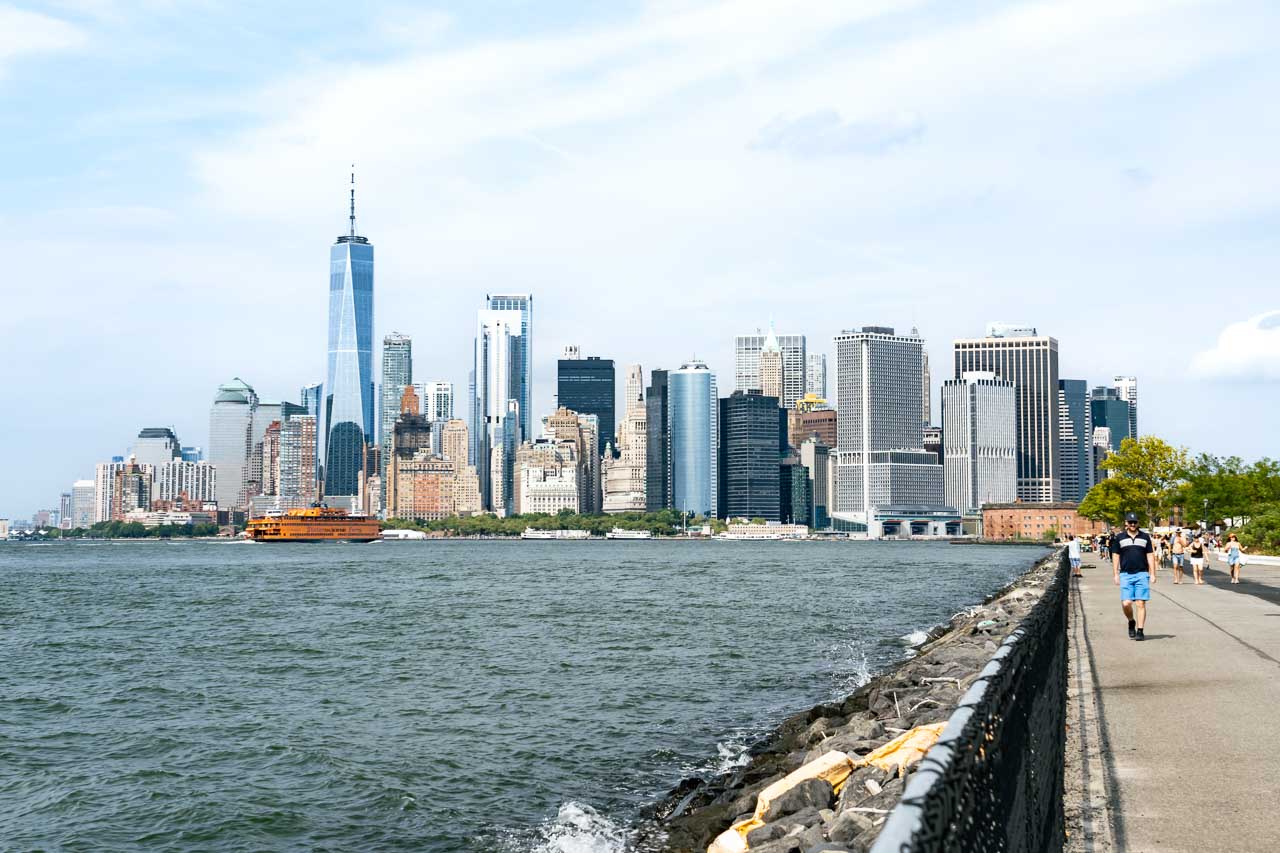
Today the 172-acre island is open year-round to the public and serviced by NYC Ferry. There are walking and bike trails, bars and food trucks, a glamping campsite, spa and an orchard. Governors Island also hosts art exhibitions, workshops and events. It has opened some of its historic buildings to visitors and houses the Center for Climate Solutions.
If you’re looking for wide open spaces, training for some athletic pursuit or want to while away a nice weather day in the city, but not IN the city—Governors Island is for you.
Which of these Manhattan parks and gardens do you most want to visit? Let me know in the comments below.
Peace, love & inspiring travel,
Madam ZoZo